Concrete Pool Demolition San Jose: 7 Critical Steps
Is your aging concrete pool in San Jose becoming a costly liability that consumes thousands in annual maintenance while sitting unused for most of the year? San Jose homeowners are removing concrete pools at record rates, with concrete pool demolition San Jose projects increasing 28% annually as Silicon Valley residents prioritize functional outdoor spaces over expensive, deteriorating pool structures. Understanding the critical steps involved ensures your project succeeds without costly delays, permit complications, or substandard results.
This comprehensive guide walks you through all seven critical steps of concrete pool demolition San Jose projects, from initial site assessment and permit acquisition through professional demolition execution and final site restoration. Whether your property is in Willow Glen, Almaden Valley, Evergreen, or anywhere throughout San Jose, this guide provides the insider knowledge needed to plan your project confidently and select the right contractor.
Ready to discover how professional concrete pool demolition San Jose services can transform your property? Continue reading to learn the critical steps that ensure successful outcomes and maximum property value.
What Is Concrete Pool Demolition San Jose?
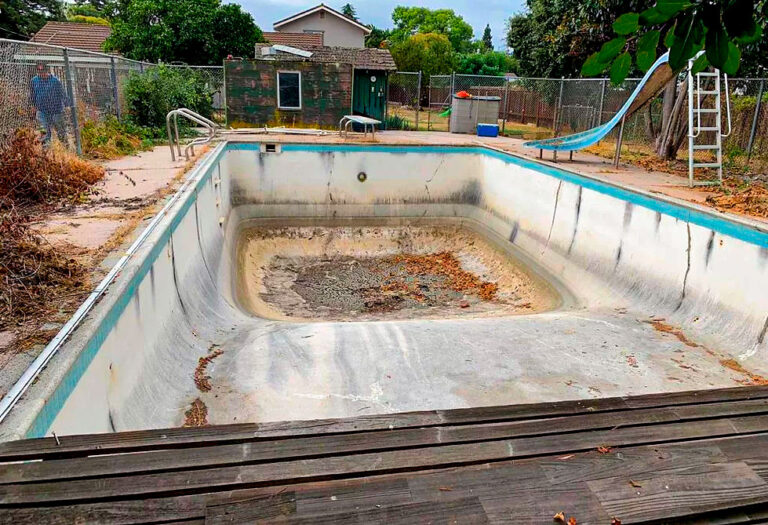
Concrete pool demolition San Jose refers to the professional removal of gunite, shotcrete, or poured concrete swimming pools from residential and commercial properties throughout San Jose and the surrounding South Bay area. Unlike fiberglass or vinyl liner pools, concrete pools require specialized equipment, techniques, and expertise due to their structural complexity and material density.
Types of Concrete Pools in San Jose
San Jose properties feature several concrete pool construction types:
Gunite Pools:
- Most common in San Jose (built 1960s-1990s)
- Pneumatically applied concrete over steel rebar framework
- Typical thickness: 6-10 inches
- Highly durable but expensive to demolish
- Requires heavy-duty breaking equipment
Shotcrete Pools:
- Similar to gunite but applied differently
- Common in newer San Jose construction
- Thickness: 6-8 inches
- Strong structural integrity
- Requires specialized demolition approach
Poured Concrete Pools:
- Less common in San Jose residential properties
- Extremely dense and thick walls
- Most challenging demolition type
- Requires most powerful equipment
- Highest demolition cost
Why San Jose Concrete Pools Require Specialized Demolition
Structural Complexity:
- Steel reinforcement throughout structure
- Multiple layers of concrete and plaster
- Integrated plumbing systems
- Electrical conduit and lighting
- Attached deck and coping structures
Material Volume:
- Average San Jose pool: 15-25 tons of concrete
- Steel reinforcement: 1,500-3,000 pounds
- Plumbing materials: 200-500 pounds
- Deck concrete: 10-20 additional tons
- Total debris: 25-45 tons typical
San Jose Specific Challenges:
- Expansive clay soils common in valley areas
- Seismic considerations for backfill
- HOA requirements in many neighborhoods
- Santa Clara County permit requirements
- Limited access in established neighborhoods
Bye Bye Pool brings specialized expertise in concrete pool demolition throughout the Bay Area, understanding the unique challenges that San Jose properties present.
Why Choose Professional Concrete Pool Demolition San Jose Services?
Before exploring the seven critical steps, understanding why professional execution matters for concrete pool demolition San Jose projects helps homeowners make informed contractor selection decisions.
Safety and Equipment Requirements
Specialized Equipment Needed:
- Hydraulic excavators (10-20 ton capacity)
- Concrete breakers and jackhammers
- Rebar cutting equipment
- Heavy-duty hauling trucks
- Soil compaction machinery
- Safety barriers and equipment
Safety Hazards:
- Structural collapse during demolition
- Underground utility strikes
- Dust and debris management
- Equipment operation near structures
- Soil instability during excavation
Regulatory Compliance
San Jose Permit Requirements:
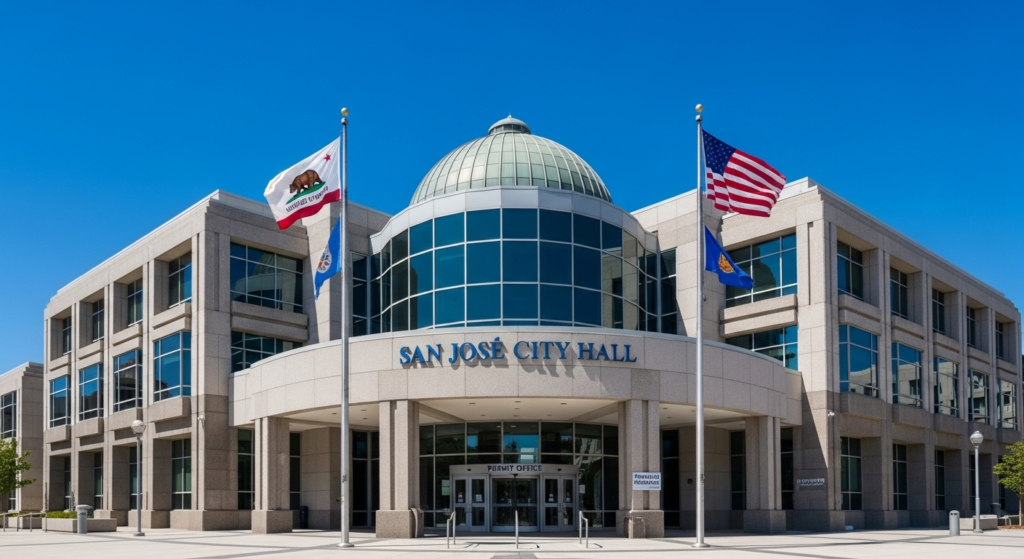
- City of San Jose Building Division permits
- Santa Clara County environmental compliance
- Regional Water Quality Control Board standards
- Valley Water conservation requirements
- HOA approval in many communities
Consequences of Non-Compliance:
- Stop-work orders from City of San Jose
- Fines ranging $1,000-$10,000+
- Required project reversal
- Future sale complications
- Title insurance issues
Quality and Long-Term Results
Professional Standards:
- Engineered backfill specifications
- Compaction testing requirements
- Drainage system installation
- Grading and leveling standards
- Warranty and documentation
DIY Risks:
- Inadequate compaction causes settling
- Improper drainage creates flooding
- Permit violations create legal issues
- Structural problems develop over time
- Property value impacts
Critical Step 1: Initial Site Assessment and Project Planning
The foundation of successful concrete pool demolition San Jose projects begins with comprehensive site assessment and detailed project planning. This critical first step determines everything from equipment selection to timeline and cost.
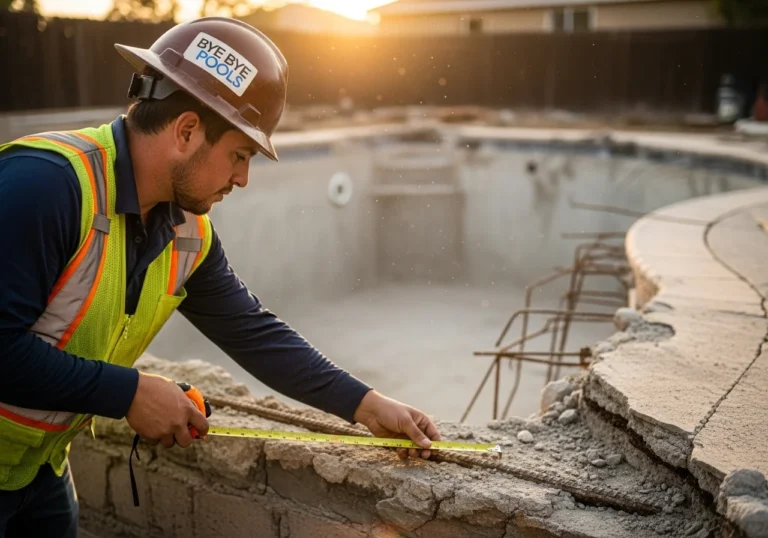
Comprehensive Site Evaluation
Pool Assessment:
- Precise measurements and volume calculation
- Construction type identification (gunite, shotcrete, poured)
- Wall thickness and reinforcement evaluation
- Plumbing and electrical system mapping
- Condition assessment and structural integrity
Property Assessment:
- Access route measurement and evaluation
- Gate dimensions and clearance heights
- Distance from pool to street access
- Overhead utility line locations
- Underground utility identification
Soil and Drainage Analysis:
- Soil type identification (clay common in San Jose)
- Drainage pattern mapping
- Water table depth assessment
- Slope and grading evaluation
- Erosion risk identification
San Jose Specific Planning Considerations
Neighborhood Factors:
- HOA requirements and approval processes
- Neighbor proximity and notification needs
- Parking and staging area availability
- Noise ordinance compliance
- Dust control requirements
Seismic Considerations:
- San Jose’s seismic zone requirements
- Engineered fill specifications
- Compaction standards for earthquake zones
- Structural stability requirements
- Long-term settlement prevention
Project Planning Deliverables
Professional Assessment Provides:
- Detailed project scope document
- Itemized cost estimate
- Timeline with specific milestones
- Equipment and crew requirements
- Permit requirement identification
- Restoration options and recommendations
Companies like Bye Bye Pool provide comprehensive site assessments for San Jose properties, delivering detailed project plans that address all local requirements and property-specific challenges.
Critical Step 2: Permit Acquisition and Regulatory Compliance
Concrete pool demolition San Jose projects require navigating Santa Clara County and City of San Jose regulatory requirements. This critical step often determines project timeline and must be managed carefully.
Required Permits for San Jose Pool Demolition
City of San Jose Building Division:
- Demolition permit (required for all pool removals)
- Grading permit (if significant earth movement)
- Encroachment permit (if work affects public right-of-way)
- Tree removal permit (if trees affected)
Santa Clara County Requirements:
- Environmental health clearances
- Stormwater management compliance
- Hazardous materials handling (if applicable)
- Regional Water Quality Control Board notification
Utility Requirements:
- PG&E electrical disconnection approval
- San Jose Water Company notification
- Valley Water compliance
- Underground utility marking (811 call)
Permit Application Process
Step-by-Step Application:
- Gather property information and pool details
- Prepare site plan and project description
- Submit application to San Jose Building Division
- Pay permit fees ($600-$1,500 typical)
- Respond to plan check comments
- Receive permit approval
- Post permit on-site before work begins
Processing Timeline:
- Standard review: 3-4 weeks
- Expedited review: 1-2 weeks (additional fee)
- Over-the-counter (simple projects): Same day possible
- Complex projects: 4-6 weeks
HOA Approval Process
Many San Jose neighborhoods require HOA approval before concrete pool demolition San Jose projects begin:
Common HOA Requirements:
- Architectural review committee approval
- Neighbor notification requirements
- Specific restoration standards
- Timeline restrictions
- Contractor qualification requirements
HOA Application Process:
- Submit architectural review application
- Provide project plans and contractor information
- Attend review committee meeting (if required)
- Receive written approval
- Comply with all conditions
Timeline:
- HOA review: 2-4 weeks typical
- Appeal process: Additional 2-4 weeks
- Total HOA timeline: 2-8 weeks
Documentation Management
Essential Permit Records:
- All permit applications and approvals
- Plan check correspondence
- Inspection scheduling records
- Final inspection approvals
- HOA approval documentation
Professional contractors handle all permit applications, plan submissions, and approval coordination, saving San Jose homeowners 3-6 weeks of administrative work.
Critical Step 3: Utility Disconnection and Site Preparation
Before any demolition begins, concrete pool demolition San Jose projects require comprehensive utility disconnection and thorough site preparation to ensure safety and efficiency.
Utility Disconnection Requirements
Electrical System:
- PG&E notification and coordination
- Pool electrical panel shutdown
- Conduit and wiring removal
- GFCI circuit disconnection
- Underwater lighting removal
- Pump and equipment electrical disconnection
Plumbing System:
- Main water supply shutoff
- Pool plumbing line capping
- Backwash line disconnection
- Drain system isolation
- Irrigation system separation
- Gas line disconnection (if applicable)
Communication Systems:
- Pool automation system removal
- Smart pool technology disconnection
- Alarm system deactivation
- Remote monitoring removal
Site Preparation Activities
Safety Setup:
- Orange safety fencing installation
- Warning sign placement
- Equipment staging area establishment
- Neighbor notification completion
- Dust control measures implementation
Access Preparation:
- Gate removal or widening (if needed)
- Pathway clearing for equipment
- Overhead clearance verification
- Ground protection installation
- Utility marking verification
Pre-Demolition Drainage:
- Pool water draining (proper disposal required)
- Chemical neutralization before draining
- Compliance with San Jose stormwater regulations
- Valley Water discharge requirements
- Documentation of disposal method
San Jose Environmental Compliance
Water Disposal Requirements:
- Pool water cannot be discharged to storm drains
- Proper neutralization required before disposal
- Sanitary sewer discharge may require approval
- Valley Water regulations must be followed
- Documentation of disposal method required
Dust Control:
- San Jose requires dust control measures
- Water suppression during demolition
- Dust barriers around work area
- Air quality monitoring in sensitive areas
- Neighbor protection measures
Critical Step 4: Concrete Demolition Execution
The actual demolition phase of concrete pool demolition San Jose projects requires skilled operators, appropriate equipment, and systematic execution to ensure safety and efficiency.
Demolition Method Selection
Complete Demolition (Recommended):
- Removes entire concrete structure
- Extracts all steel reinforcement
- Removes underground plumbing
- Allows future construction
- No disclosure requirements
- Maximum property value
Partial Demolition:
- Removes top 3-4 feet of structure
- Punches drainage holes in bottom
- Lower cost (40-50% savings)
- Requires disclosure when selling
- Limits future construction
- Faster completion
Recommendation for San Jose: Complete demolition strongly recommended due to:
- Silicon Valley real estate values
- Future ADU development potential
- Buyer preference in competitive market
- HOA requirements in many areas
- Long-term property value maximization
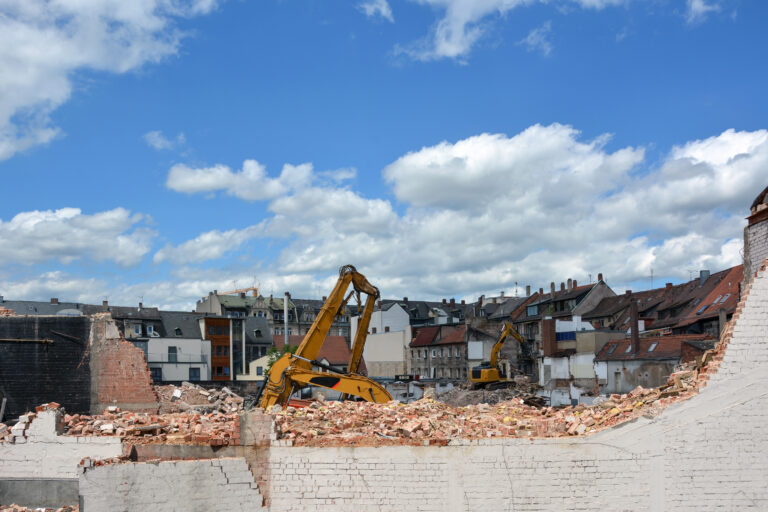
Equipment Used in San Jose Concrete Demolition
Primary Equipment:
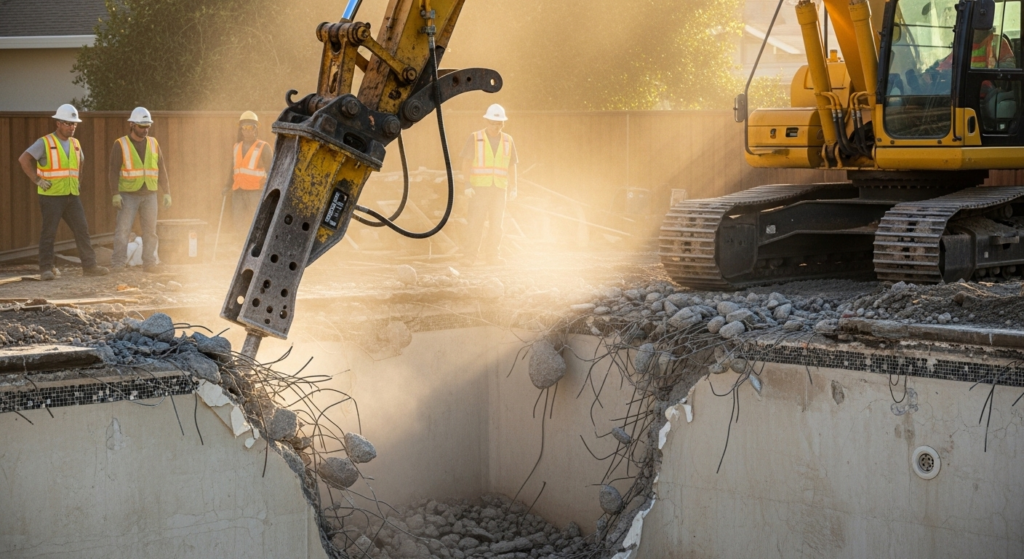
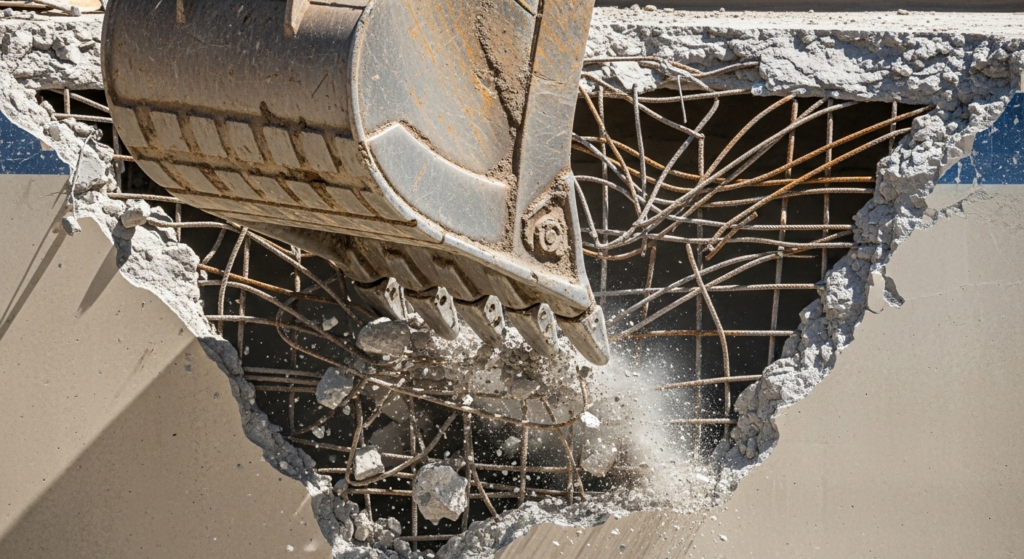
- Hydraulic excavator (10-20 ton): Primary breaking tool
- Concrete breaker attachment: Fractures thick walls
- Grapple attachment: Removes broken material
- Rebar cutter: Processes steel reinforcement
- Skid steer loader: Moves material in tight spaces
Support Equipment:
- Dump trucks (10-14 cubic yard): Debris hauling
- Water truck: Dust suppression
- Compactor: Soil compaction
- Grading equipment: Final leveling
Systematic Demolition Process
Phase 1: Deck and Coping Removal
- Remove pool coping stones
- Break and remove surrounding deck
- Extract deck reinforcement
- Haul deck debris
- Expose pool shell perimeter
Phase 2: Pool Shell Demolition
- Begin breaking at pool walls
- Work systematically around perimeter
- Break walls into manageable sections
- Extract rebar as concrete breaks
- Remove all broken material continuously
Phase 3: Pool Floor Demolition
- Break pool floor systematically
- Extract floor reinforcement
- Remove all concrete material
- Expose subgrade for inspection
- Verify complete removal
Phase 4: Underground Plumbing Removal
- Excavate along plumbing lines
- Remove all underground pipes
- Cap or remove main supply lines
- Document removal for permits
- Inspect for complete extraction
Debris Management and Recycling
Material Volumes:
- Concrete: 15-25 tons (90%+ recycled)
- Steel rebar: 1,500-3,000 pounds (100% recycled)
- Plumbing materials: 200-500 pounds
- Deck concrete: 10-20 tons (90%+ recycled)
Recycling Process:
- Concrete crushed for road base aggregate
- Steel reinforcement sent to metal recyclers
- Copper plumbing recovered and recycled
- Minimal landfill waste
- Environmental compliance documentation
Disposal Facilities:
- South Bay Recycling (San Jose)
- Zanker Road Resource Management
- Republic Services facilities
- Certified concrete recycling centers
Critical Step 5: Backfilling and Soil Compaction
Proper backfilling and compaction represent the most technically critical phase of concrete pool demolition San Jose projects. San Jose’s expansive clay soils and seismic considerations make this step particularly important.
San Jose Soil Challenges
Expansive Clay Soils:
- Common throughout San Jose valley areas
- Expand when wet, contract when dry
- Create settling and movement issues
- Require engineered fill solutions
- Need proper drainage systems
Seismic Considerations:
- San Jose in high seismic zone
- Liquefaction potential in some areas
- Engineered compaction standards required
- Geotechnical recommendations may be needed
- Long-term stability critical
Backfill Material Selection
Recommended Materials:
Layer 1: Gravel Base (12-18 inches)
- 3/4-inch crushed gravel
- Provides drainage layer
- Prevents water accumulation
- Supports upper fill layers
- Reduces hydrostatic pressure
Layer 2: Engineered Fill (Majority of depth)
- Clean imported fill (not expansive clay)
- Compacted in 12-inch lifts
- Moisture content controlled
- Density testing required
- Meets San Jose building standards
Layer 3: Native Soil (Top 12-18 inches)
- Blended with imported fill
- Supports landscaping
- Matches surrounding grade
- Proper drainage slope
- Topsoil finish layer
Compaction Standards and Testing
San Jose Requirements:
- Minimum 90% relative compaction
- Testing at each 12-inch lift
- Nuclear density gauge testing
- Certified testing laboratory
- Results submitted to building department
Compaction Process:
- Place 12-inch lift of fill material
- Spread evenly with equipment
- Adjust moisture content if needed
- Compact with vibratory compactor
- Test density with nuclear gauge
- Document results
- Repeat for each layer
Testing Documentation:
- Compaction test reports
- Laboratory certification
- Lift-by-lift documentation
- Final summary report
- Submission to San Jose Building Division
Drainage System Installation
Critical for San Jose Properties:
- Perimeter drainage around fill area
- French drain installation if needed
- Proper slope away from structures
- Connection to existing drainage
- Overflow provisions
Drainage Design:
- Minimum 2% slope away from structures
- Perforated pipe in gravel layer
- Filter fabric to prevent clogging
- Outlet to appropriate drainage
- Documentation for permit compliance
Critical Step 6: Site Restoration and Grading
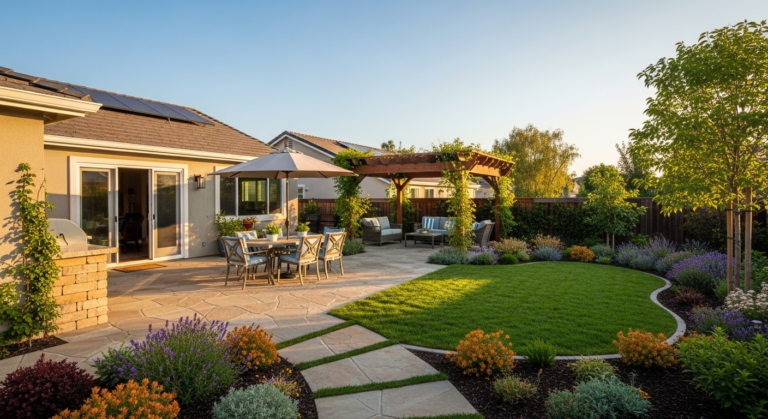
Professional site restoration transforms the concrete pool demolition San Jose project from a construction site into a functional, attractive outdoor space that enhances property value.
Grading and Leveling
Professional Grading Standards:
- Smooth, even surface throughout
- Proper drainage slopes (2% minimum)
- Integration with existing landscape
- Matching surrounding grade levels
- Preparation for landscaping
Grading Process:
- Final grade establishment
- High and low spot correction
- Drainage pattern optimization
- Edge transitions smoothing
- Surface preparation for landscaping
Landscaping Options for San Jose Properties
Immediate Impact Options:
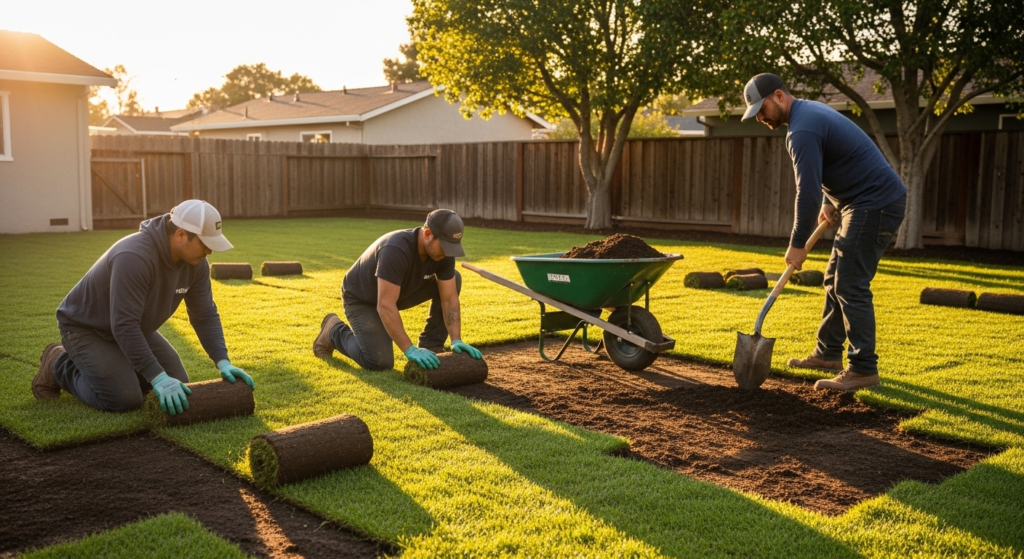
Sod Installation:
- Immediate green appearance
- Ready for use within 2-3 weeks
- Higher cost ($0.50-$1.50 per sq ft)
- Requires establishment irrigation
- Best for quick sale preparation
Hydroseeding:
- Cost-effective coverage
- 3-6 weeks to establishment
- Lower cost ($0.10-$0.30 per sq ft)
- Good for larger areas
- Requires consistent watering
Drought-Tolerant Landscaping:
- Native California plants
- Reduced water requirements
- Aligns with San Jose water conservation
- Long-term cost savings
- Environmental benefits
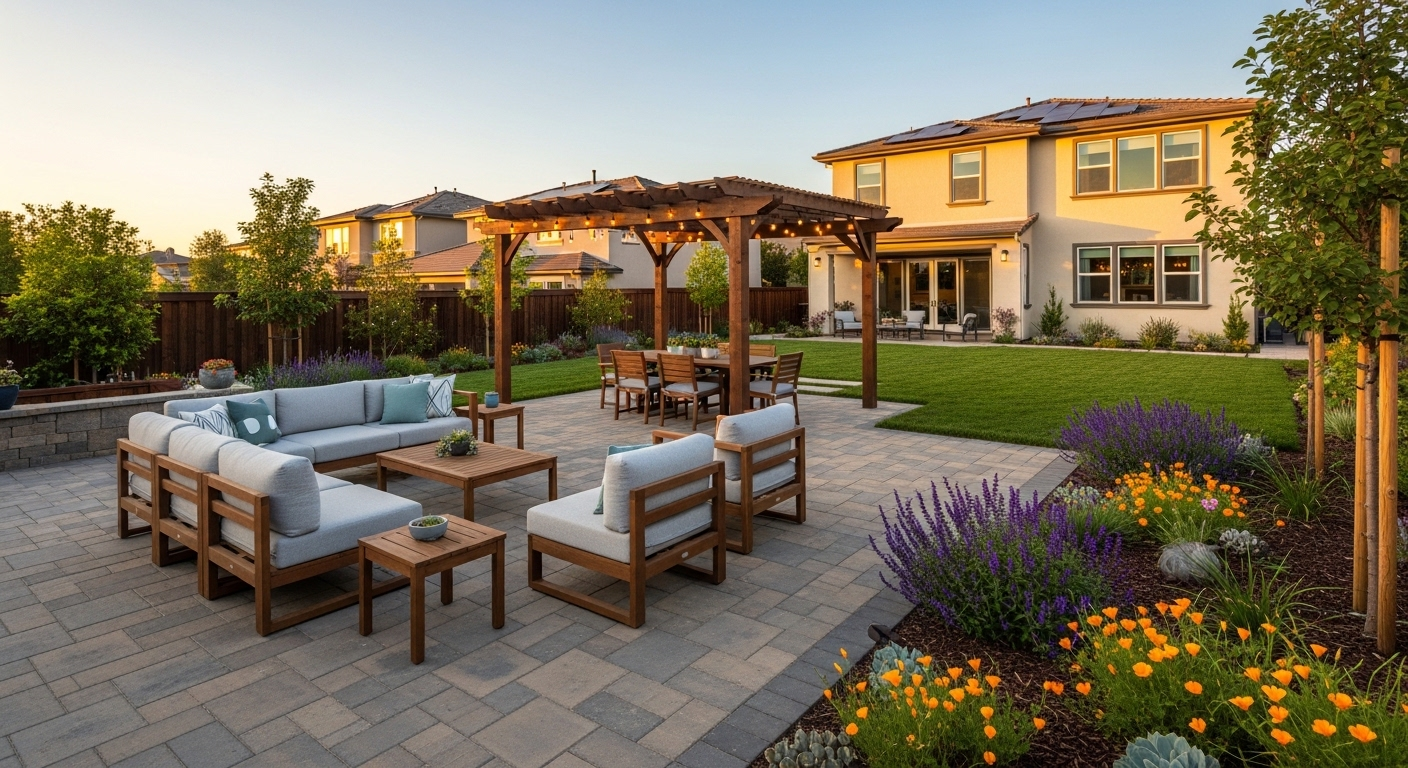
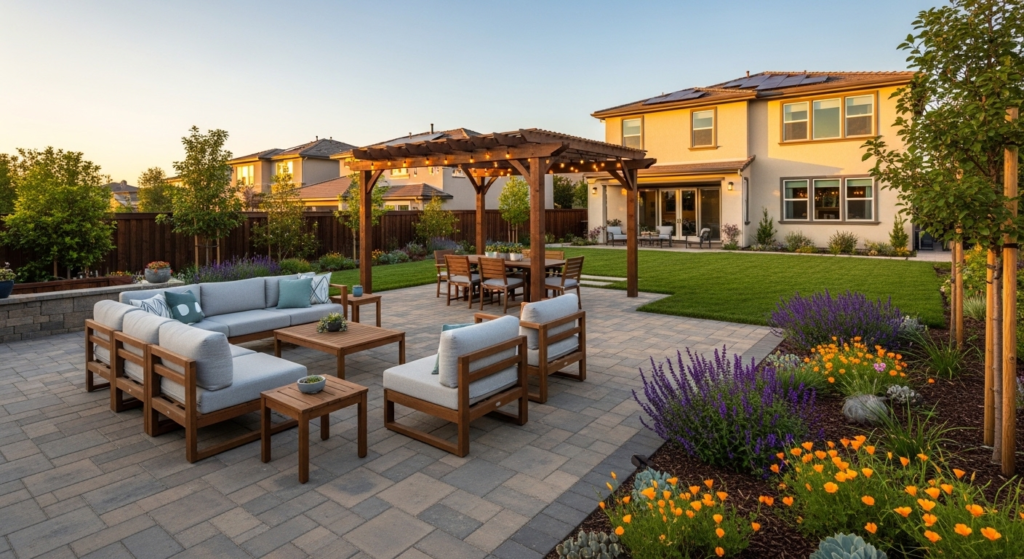
Hardscape Options:
- Concrete or paver patio
- Decomposed granite pathways
- Outdoor kitchen areas
- Fire pit installations
- Pergola and shade structures
San Jose Water Conservation Alignment
Valley Water Requirements:
- Drought-tolerant landscaping encouraged
- Water-efficient irrigation required
- Native plant incentive programs
- Rebates for water-wise landscaping
- Compliance with water use restrictions
Rebate Programs:
- Valley Water landscape rebates
- San Jose Water Company incentives
- City of San Jose sustainability programs
- Bay-Friendly Landscaping certification
- EBMUD programs (if applicable)
Restoration Timeline
Typical San Jose Restoration Schedule:
- Grading and leveling: 1-2 days
- Drainage installation: 1 day
- Topsoil placement: 1 day
- Landscaping installation: 1-3 days
- Establishment period: 2-4 weeks
- Total visible completion: 4-7 days
Critical Step 7: Final Inspection and Project Completion
The final critical step in concrete pool demolition San Jose projects involves coordinating inspections, obtaining approvals, and completing all documentation for project closure.
San Jose Building Inspection Process
Required Inspections:
- Compaction inspection (during backfill)
- Final grading inspection
- Drainage system inspection
- Overall project completion inspection
Inspection Scheduling:
- Request through San Jose Building Division
- Typical wait: 2-5 business days
- Inspector arrives during scheduled window
- All work must be accessible for inspection
- Corrections required before approval
Common Inspection Issues:
- Insufficient compaction density
- Improper drainage slopes
- Incomplete debris removal
- Documentation deficiencies
- Grading non-compliance
Final Documentation Package
Essential Completion Documents:
- Final inspection approval
- Compaction test reports
- Permit sign-off
- Contractor completion certificate
- Warranty information
- Before/after photographs
- Recycling documentation
Value for Homeowners:
- Supports property tax reduction applications
- Required for home sale disclosure
- Provides warranty protection
- Documents quality of work
- Supports future permit applications
Property Tax Reduction Application
After concrete pool demolition San Jose project completion:
- Contact Santa Clara County Assessor
- Submit assessment reduction application
- Provide completion documentation
- Request formal reassessment
- Annual savings: $220-$375 typical
Visit Bye Bye Pool’s FAQ page for answers to common questions about the San Jose pool demolition process and documentation requirements.
Concrete Pool Demolition San Jose: Cost Breakdown 2026
Understanding the complete cost structure helps San Jose homeowners budget accurately and evaluate contractor proposals.
Complete Cost Analysis
Partial Demolition Costs:
- Small pool (<400 sq ft): $8,000-$12,000
- Medium pool (400-700 sq ft): $12,000-$17,000
- Large pool (700+ sq ft): $17,000-$24,000
Complete Demolition Costs:
- Small pool (<400 sq ft): $14,000-$20,000
- Medium pool (400-700 sq ft): $20,000-$28,000
- Large pool (700+ sq ft): $28,000-$40,000
Itemized Cost Components
| Cost Category | Partial Removal | Complete Removal |
|---|---|---|
| Labor | $3,500-$6,000 | $5,000-$9,000 |
| Equipment | $2,000-$4,000 | $3,500-$6,000 |
| Permits | $800-$1,500 | $800-$1,500 |
| Disposal/Hauling | $2,500-$5,000 | $4,000-$8,000 |
| Backfill Materials | $1,500-$3,000 | $2,500-$5,000 |
| Compaction Testing | $500-$1,000 | $800-$1,500 |
| Restoration | $1,000-$2,500 | $2,000-$5,000 |
San Jose Premium Factors
Why San Jose Costs More:
- Higher Bay Area labor rates
- Santa Clara County permit costs
- Expansive soil engineering requirements
- HOA compliance costs
- Disposal facility distances
- Seismic compaction standards
Cost Comparison by Bay Area Region:
- San Jose: Baseline (100%)
- San Francisco: +20-30%
- Oakland/Berkeley: +10-15%
- Concord/East Bay: +5-10%
- North Bay: +15-20%
Case Studies: Successful Concrete Pool Demolition San Jose Projects
Case Study 1: Willow Glen Complete Demolition
Project Overview: A Willow Glen family needed concrete pool demolition San Jose services for their 1978 gunite pool that had become a safety concern with aging grandchildren visiting.
Project Details:
- Location: Willow Glen neighborhood
- Pool size: 18×36 feet (648 sq ft)
- Type: Gunite with attached spa
- Method: Complete demolition
- Timeline: 8 days
Challenges:
- Limited side yard access (5-foot gate)
- HOA approval required
- Expansive clay soil conditions
- Neighbor proximity concerns
Solution: Bye Bye Pool utilized compact equipment, coordinated HOA approvals, and implemented engineered fill solutions for clay soil conditions.
Results:
- Project completed on schedule
- Total cost: $22,500
- HOA approval obtained in 3 weeks
- Zero property damage
- Created safe, usable backyard
Customer Testimonial: “We searched for concrete pool demolition San Jose specialists and found Bye Bye Pool through Google. Their expertise with local permits and HOA requirements made everything seamless. The new patio and lawn are beautiful and our grandchildren love the safe play space.” – Richard and Carol M., Willow Glen
Case Study 2: Almaden Valley Large Pool Removal
Project Overview: An Almaden Valley homeowner needed complete removal of a large 1985 concrete pool before listing their property.
Project Details:
- Location: Almaden Valley
- Pool size: 20×40 feet (800 sq ft)
- Type: Shotcrete with waterfall feature
- Method: Complete demolition
- Timeline: 10 days
Challenges:
- Large pool volume (25+ tons concrete)
- Complex waterfall structure
- Tight timeline before listing
- Seismic compaction requirements
Solution: Specialized equipment, engineered backfill with seismic compaction standards, and coordinated permit processing enabled fast completion.
Results:
- Project completed in 10 days
- Total cost: $31,500
- Property listed on schedule
- Sold for $68,000 above comparable pool properties
- Multiple offers received
Customer Testimonial: “The team handled our large concrete pool professionally and efficiently. The documentation they provided was exactly what our realtor and tax advisor needed. Sold our home for significantly more than expected.” – Jennifer and Mark T., Almaden Valley
Case Study 3: Evergreen Partial Demolition
Project Overview: An Evergreen homeowner chose partial concrete pool demolition San Jose to create a garden area while minimizing costs.
Project Details:
- Location: Evergreen neighborhood
- Pool size: 15×30 feet (450 sq ft)
- Type: Gunite
- Method: Partial demolition
- Timeline: 5 days
Challenges:
- Budget constraints
- No future construction plans
- Desired quick completion
- Drainage concerns
Solution: Partial demolition with enhanced drainage system and drought-tolerant landscaping created a beautiful, functional garden space.
Results:
- Project completed in 5 days
- Total cost: $13,800
- Beautiful drought-tolerant garden created
- Annual maintenance savings: $6,500
- Property value increased: $18,000
Customer Testimonial: “Partial demolition was perfect for our situation. The team explained all options clearly, handled all permits, and created a beautiful garden space. The annual savings on maintenance alone justified the investment.” – Sandra L., Evergreen
Common Mistakes to Avoid in Concrete Pool Demolition San Jose
Mistake 1: Hiring Unlicensed Contractors
Risks:
- No legal recourse for problems
- Lack of insurance protection
- Permit acquisition difficulties
- City of San Jose fines
- Substandard work quality
Solution:
- Verify California C-21 or C-12 license
- Confirm comprehensive insurance
- Check CSLB license status
- Request certificates of insurance
- Verify local San Jose experience
Mistake 2: Skipping HOA Approval
Consequences:
- Stop-work orders
- Required project reversal
- HOA fines
- Neighbor disputes
- Legal complications
Solution:
- Identify HOA requirements early
- Submit approval application promptly
- Allow 2-8 weeks for approval
- Comply with all conditions
- Document approval before starting
Mistake 3: Inadequate Compaction for San Jose Soils
Problems:
- Settling and sinkholes
- Drainage failures
- Future construction complications
- Property value impacts
- Structural concerns
Solution:
- Use engineered fill (not expansive clay)
- Require compaction testing
- Verify 90%+ relative compaction
- Obtain compaction test reports
- Ensure proper drainage installation
Mistake 4: Improper Water Disposal
Consequences:
- Valley Water violations
- San Jose stormwater fines
- Environmental penalties
- Project delays
- Regulatory complications
Solution:
- Neutralize pool chemicals before draining
- Use approved disposal methods
- Document disposal process
- Comply with Valley Water requirements
- Work with experienced contractors
Mistake 5: Rushing the Permit Process
Problems:
- Unpermitted work creates future issues
- City stop-work orders
- Sale complications
- Title insurance problems
- Fines and penalties
Solution:
- Start permit process 4-6 weeks early
- Work with contractors who handle permits
- Obtain all required approvals
- Maintain complete documentation
- Never start work without permits
Frequently Asked Questions
How much does concrete pool demolition San Jose cost?
Concrete pool demolition San Jose costs range from $8,000-$24,000 for partial removal and $14,000-$40,000 for complete demolition, depending on pool size, construction type, access, and restoration requirements. San Jose pricing runs 5-15% higher than regional averages due to higher labor rates, permit costs, and seismic compaction requirements.
How long does concrete pool demolition San Jose take?
Most concrete pool demolition San Jose projects take 6-10 weeks total, including 3-5 weeks for permits and HOA approvals, 5-10 days for demolition and restoration, and 2-4 weeks for landscaping establishment. Actual demolition work typically takes 5-10 days depending on pool size and complexity.
Do I need permits for concrete pool demolition in San Jose?
Yes, the City of San Jose requires demolition permits for all pool removal projects. Required permits include a demolition permit, grading permit (if applicable), and utility disconnection approvals. Permit processing takes 3-4 weeks standard or 1-2 weeks expedited. Professional contractors handle all applications.
What’s the difference between partial and complete concrete pool demolition?
Partial concrete pool demolition San Jose removes the top 3-4 feet of structure and costs 40-50% less but requires disclosure when selling and limits future construction. Complete demolition removes the entire structure, allows future building permits, and provides maximum property value. Complete removal is strongly recommended for San Jose properties.
How do San Jose’s expansive clay soils affect pool demolition?
San Jose’s expansive clay soils require engineered fill materials (not native clay) for backfilling, enhanced compaction standards (90%+ relative compaction), proper drainage systems, and seismic compaction specifications. These requirements add cost but are essential for long-term stability and compliance with San Jose building standards.
Can concrete pool demolition increase my San Jose property value?
Yes, concrete pool demolition San Jose typically increases property values by $20,000-$45,000 by creating functional outdoor space, eliminating maintenance concerns, and appealing to Silicon Valley buyers who prefer low-maintenance properties. Properties sell 50-70% faster and receive significantly more offers after pool removal.
Conclusion
Successfully executing concrete pool demolition San Jose projects requires careful attention to all seven critical steps: comprehensive site assessment, permit acquisition, utility disconnection, professional demolition, proper backfilling and compaction, quality site restoration, and final inspection. Each step builds on the previous, and shortcuts at any stage create problems that are expensive and time-consuming to correct.
San Jose’s unique characteristics—expansive clay soils, seismic requirements, HOA prevalence, and competitive real estate market—make professional execution particularly important. The combination of proper permits, engineered backfill, seismic compaction standards, and quality restoration ensures long-term results that maximize property value and buyer appeal.
Companies like Bye Bye Pool bring specialized Bay Area expertise to concrete pool demolition San Jose projects, understanding local regulations, soil conditions, and community-specific requirements that ensure excellent outcomes. From Willow Glen to Almaden Valley, Evergreen to Berryessa, our experienced team delivers quality results that transform San Jose properties.
Ready to start your concrete pool demolition San Jose project? Contact Bye Bye Pool today for your free, detailed estimate. Our licensed, insured team handles everything from permits to final restoration. Call (925) 940-9978 or visit our service areas page to learn more about our San Jose and Bay Area services.
Don’t let your aging concrete pool continue consuming your time, money, and outdoor space. Start your San Jose backyard transformation today with trusted experts who deliver exceptional results.
Bye Bye Pool 4918 Clayton Rd, Concord, CA 94521 Phone: (925) 940-9978 Email: byebyepool.
Follow us on Facebook and Instagram for San Jose project updates and customer testimonials. Read our customer reviews on Yelp and Google Maps to see why San Jose homeowners trust us for their concrete pool demolition needs.