
Do You Need a Permit to Remove a Pool in Your State?
Did you know that skipping the required permit to remove a pool can result in fines exceeding $10,000, forced project reversal, and serious complications when you try to sell your home years later? Across the United States, the vast majority of jurisdictions require at least one permit before any pool demolition work begins, yet thousands of homeowners proceed without proper approvals every year — often because their contractor never mentioned it or because they assumed permits were unnecessary for removal work.
This comprehensive guide answers the critical question of whether you need a permit to remove a pool in your state, covering federal baseline requirements, state-specific regulations, California’s detailed permit process, the consequences of unpermitted removal, and exactly how to navigate the application process efficiently. Whether you’re in California, Texas, Florida, or anywhere across the country, understanding permit requirements protects your investment and ensures your project delivers lasting value.
Ready to discover everything you need to know about obtaining a permit to remove a pool before your project begins? Continue reading to protect yourself from costly mistakes that affect thousands of homeowners every year.
Why a Permit to Remove a Pool Is Almost Always Required
Many homeowners assume that removing something from their property requires less regulatory oversight than building something new. This assumption is incorrect and potentially very costly. Understanding why permits are required helps homeowners appreciate their importance rather than viewing them as bureaucratic obstacles.
The Legal Foundation for Pool Removal Permits
Why Governments Require Permits: Permits for pool removal exist to protect multiple parties simultaneously:
- Homeowners from substandard work that causes future problems
- Future buyers from undisclosed structural issues
- Neighbors from drainage and runoff impacts
- The community from environmental contamination
- Local governments from liability exposure
What Permits Actually Accomplish: When you obtain a permit to remove a pool, the process ensures:
- Licensed contractors perform the work
- Proper backfill and compaction standards are met
- Drainage systems protect neighboring properties
- Environmental regulations for water disposal are followed
- Structural integrity of the site is verified
- Documentation exists for future property transactions
The Nationwide Permit Requirement Reality
Permit Requirements by Jurisdiction Type:
- Cities with populations over 50,000: 94% require permits
- Cities with populations 10,000-50,000: 87% require permits
- Suburban municipalities: 82% require permits
- Rural counties: 68% require permits
- Unincorporated areas: 45-60% require permits
Types of Permits Commonly Required:
- Demolition permit: Required in virtually all jurisdictions
- Grading permit: Required when significant earth movement occurs
- Encroachment permit: Required if work affects public right-of-way
- Environmental permit: Required in sensitive areas
- Utility disconnection permits: Required for electrical and plumbing
Bye Bye Pool handles all permit applications for Bay Area homeowners, navigating the specific requirements of each municipality to ensure full compliance and project success.
Do You Need a Permit to Remove a Pool? State-by-State Overview
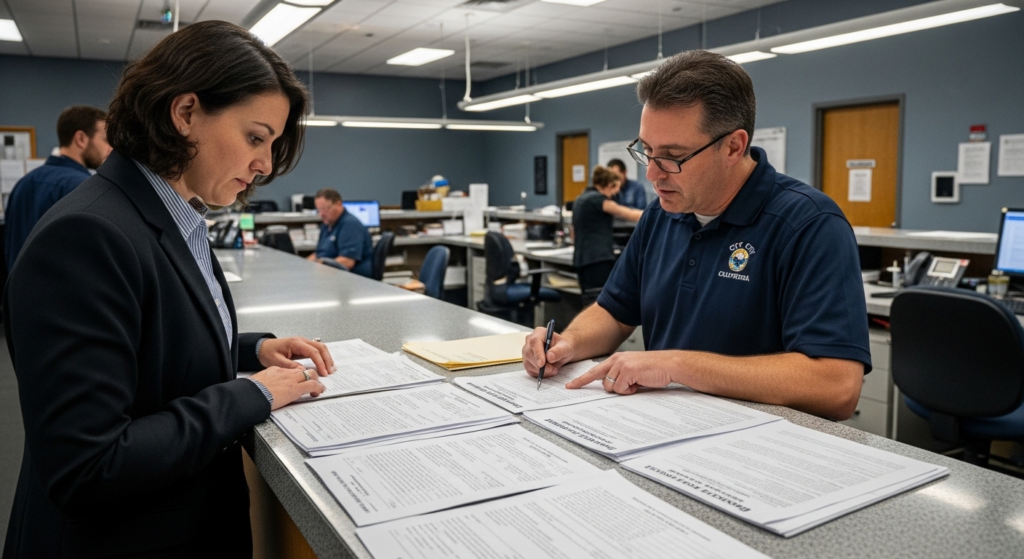
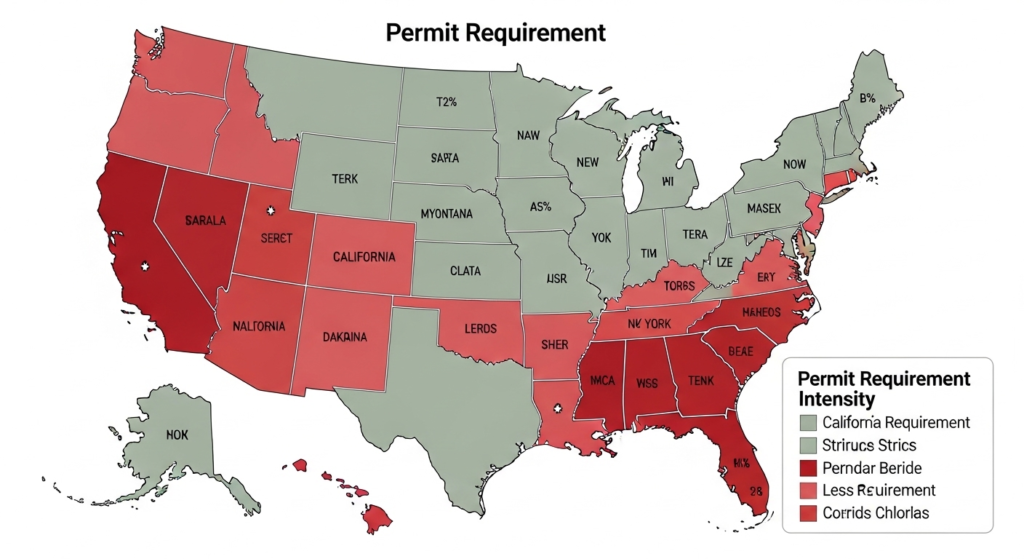
The answer to whether you need a permit to remove a pool varies by state and local jurisdiction. However, the overwhelming answer across the United States is yes. Here is a comprehensive state-by-state overview of permit requirements.
California Pool Removal Permit Requirements
California has among the most comprehensive permit to remove a pool requirements in the nation, reflecting the state’s commitment to environmental protection, seismic safety, and consumer protection.
Statewide Requirements:
- Demolition permit: Required statewide
- Grading permit: Required for significant earth movement
- Environmental clearances: Required in sensitive areas
- Utility disconnection: Required before demolition begins
Bay Area Specific Requirements:
City of Concord:
- Demolition permit required
- Grading permit for significant work
- Final inspection required
- Permit fee: $500-$1,200
- Processing time: 2-4 weeks
City of San Jose:
- Demolition permit required
- Grading permit required
- Environmental compliance required
- Permit fee: $600-$1,500
- Processing time: 3-5 weeks
City of Oakland:
- Demolition permit required
- Grading permit required
- Stormwater compliance required
- Permit fee: $550-$1,300
- Processing time: 3-4 weeks
San Francisco:
- Demolition permit required
- Multiple department approvals
- Environmental review possible
- Permit fee: $800-$2,000
- Processing time: 4-6 weeks
Contra Costa County (Unincorporated):
- Demolition permit required
- Grading permit required
- Permit fee: $450-$1,100
- Processing time: 2-3 weeks
Texas Pool Removal Permit Requirements
Texas permit requirements vary significantly by municipality:
Major Cities:
- Houston: Demolition permit required, $200-$600
- Dallas: Demolition permit required, $250-$700
- Austin: Demolition permit required, $300-$800
- San Antonio: Demolition permit required, $200-$550
Rural Texas:
- Many rural counties: No permit required
- Unincorporated areas: Varies by county
- HOA requirements may apply regardless
Florida Pool Removal Permit Requirements
Florida’s warm climate and high pool density create specific requirements:
Statewide:
- Building permit required for pool removal
- Environmental permits in coastal areas
- Water disposal regulations strictly enforced
Major Cities:
- Miami-Dade: Permit required, $400-$900
- Orlando: Permit required, $300-$700
- Tampa: Permit required, $350-$800
- Jacksonville: Permit required, $250-$600
Other Key States
New York:
- Building permit required in most jurisdictions
- NYC: Multiple permits and approvals required
- Suburban NY: Permit required, $300-$800
Arizona:
- Permit required in Phoenix, Scottsdale, Tucson
- Rural areas: Varies by county
- HOA requirements common
Nevada:
- Las Vegas: Permit required, $300-$700
- Reno: Permit required, $250-$600
- Rural Nevada: Often no permit required
Washington:
- Seattle: Permit required, $400-$900
- Suburban areas: Permit required
- Rural areas: Varies by county
States Where Permits Are Less Commonly Required
Lower Regulation States:
- Some rural areas of Montana, Wyoming, Idaho
- Certain unincorporated areas of rural states
- Very small municipalities with limited building departments
Important Caveat: Even in states or areas without formal permit requirements, HOA rules, deed restrictions, and environmental regulations may still apply. Always verify with your local building department before assuming no permit is needed.
How to Obtain a Permit to Remove a Pool: Step-by-Step Process
Understanding the complete process for obtaining a permit to remove a pool helps homeowners plan their projects accurately and avoid delays.
Step 1: Contact Your Local Building Department
First Actions:
- Identify your jurisdiction (city vs. county)
- Locate the building department contact information
- Call or visit to ask specific questions about your project
- Request a pre-application meeting if available
- Ask for a permit checklist for pool demolition
Questions to Ask:
- What permits are required for pool removal?
- What documents must be submitted?
- What are the current processing times?
- Are expedited review options available?
- What inspections will be required?
- What are the current permit fees?
Step 2: Gather Required Documentation
Typical Documentation Requirements:
- Property address and parcel number
- Site plan showing pool location
- Pool dimensions and construction type
- Contractor license and insurance information
- Proposed backfill and restoration plan
- Utility disconnection plan
- Water disposal method documentation
California-Specific Documentation:
- Contractor’s C-21 or C-12 license number
- Workers’ compensation insurance certificate
- General liability insurance certificate
- Compaction testing plan
- Drainage plan for restored area
- Environmental compliance documentation
Step 3: Submit Permit Application
Submission Methods:
- In-person at building department
- Online portal (increasingly common)
- Mail submission (some jurisdictions)
- Contractor submission on your behalf
Application Contents:
- Completed application form
- All required documentation
- Permit fee payment
- Contractor information
- Project description and scope
Processing Timeline:
- Standard review: 2-5 weeks typical
- Expedited review: 1-2 weeks (additional fee)
- Over-the-counter (simple projects): Same day possible
- Complex projects: 4-8 weeks
Step 4: Respond to Plan Check Comments
Common Plan Check Issues:
- Incomplete documentation
- Missing contractor information
- Inadequate drainage plan
- Compaction specification questions
- Environmental compliance gaps
Response Process:
- Review comments carefully
- Gather additional documentation
- Resubmit with corrections
- Follow up on resubmittal status
- Confirm approval before scheduling work
Step 5: Post Permit and Begin Work
Before Work Begins:
- Post permit in visible location on property
- Confirm all utility disconnections scheduled
- Verify contractor has permit copy
- Notify neighbors as required
- Confirm inspection scheduling process
During Construction:
- Keep permit posted throughout project
- Schedule required inspections
- Maintain documentation on-site
- Address any inspector concerns promptly
Step 6: Pass Required Inspections
Typical Inspection Points:
- Pre-demolition inspection (some jurisdictions)
- Compaction inspection (during backfill)
- Drainage inspection
- Final grading inspection
- Project completion inspection
Inspection Preparation:
- Ensure work is accessible for inspection
- Have documentation available
- Address any deficiencies promptly
- Request re-inspection after corrections
- Obtain written approval
Step 7: Obtain Final Permit Sign-Off
Final Documentation:
- Signed inspection card
- Final permit approval
- Compaction test reports
- All inspection records
- Permit closure confirmation
Importance of Final Sign-Off:
- Required for property tax reduction applications
- Essential for home sale disclosure
- Protects against future liability
- Documents quality of work
- Enables future permit applications
Companies like Bye Bye Pool manage the entire permit process for Bay Area homeowners, from initial application through final sign-off, ensuring complete compliance and comprehensive documentation.
California Pool Removal Permit Requirements: Deep Dive
Given California’s complexity and the specific service area of Bye Bye Pool, a detailed examination of California’s permit to remove a pool requirements provides essential guidance for Bay Area homeowners.
California Building Code Framework
State-Level Requirements: California’s pool removal permits are governed by:
- California Building Code (CBC)
- California Environmental Quality Act (CEQA)
- Regional Water Quality Control Board regulations
- Local municipal codes and ordinances
- HOA CC&Rs (private requirements)
Key California Requirements:
- Licensed contractor required (C-21 or C-12)
- Compaction testing to 90%+ relative density
- Engineered drainage systems
- Environmental water disposal compliance
- Seismic backfill standards

Contra Costa County Specific Requirements
For homeowners in Concord, Walnut Creek, Pleasant Hill, and surrounding Contra Costa County communities:
Contra Costa County Building Inspection Division:
- Demolition permit required for all pool removals
- Grading permit required for significant earth movement
- Final inspection required before permit closure
- Compaction testing documentation required
City of Concord Specific:
- Submit to Concord Building Division
- Online portal available for applications
- Expedited review available for additional fee
- Inspector scheduling through online system
Contact Information:
- Concord Building Division: 1950 Parkside Drive, Concord, CA 94519
- Contra Costa County Building Inspection: 30 Muir Road, Martinez, CA 94553
Santa Clara County Requirements
For San Jose, Santa Clara, Sunnyvale, and surrounding communities:
City of San Jose Development Services:
- Demolition permit required
- Grading permit required
- Environmental compliance documentation
- Valley Water notification may be required
Santa Clara County:
- Unincorporated areas follow county requirements
- Similar to city requirements
- Contact: County of Santa Clara, Department of Planning and Development
Alameda County Requirements
For Oakland, Berkeley, Fremont, and surrounding communities:
City of Oakland Building Services Division:
- Demolition permit required
- Stormwater management compliance
- Environmental review for sensitive areas
- Multiple department coordination
City of Berkeley:
- Permit required
- Environmental health review
- Stormwater compliance
- Stricter requirements than many Bay Area cities
What Happens If You Remove a Pool Without a Permit?
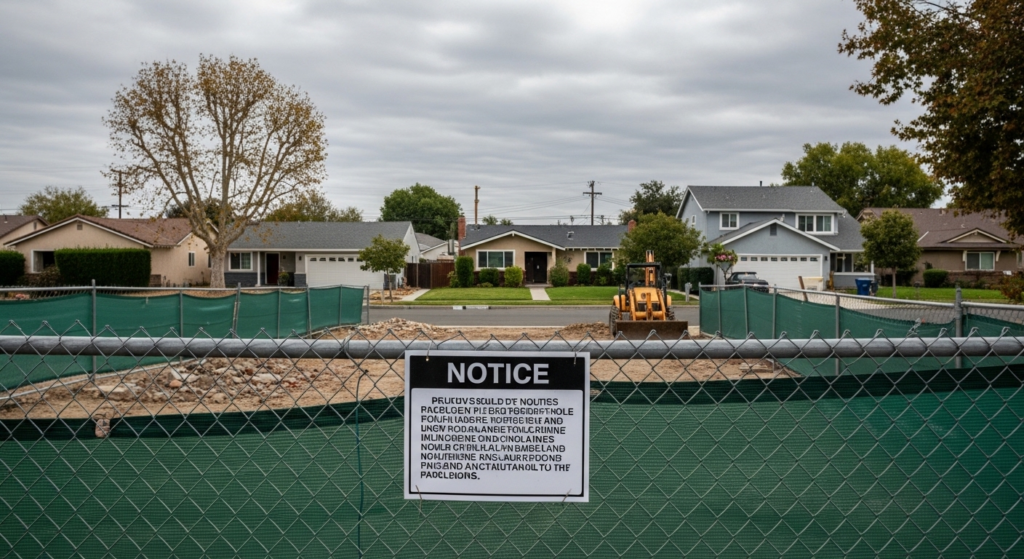
Understanding the consequences of proceeding without a permit to remove a pool is essential for every homeowner considering this shortcut.
Immediate Consequences
Stop-Work Orders:
- Building inspector can issue immediate stop-work order
- All work must cease until permit obtained
- Project timeline extended significantly
- Additional costs for delays
- Potential damage to partially completed work
Financial Penalties:
- Fines: $500-$10,000+ depending on jurisdiction
- Double or triple permit fees for after-the-fact permits
- Correction costs if work doesn’t meet standards
- Legal fees if disputes arise
- Insurance complications
Long-Term Consequences
Home Sale Complications: When you sell a property with unpermitted pool removal:
- Title search reveals unpermitted work
- Buyers demand permits be obtained retroactively
- Retroactive permits require exposing completed work
- Potential requirement to redo non-compliant work
- Sale delays of weeks to months
- Price reductions to compensate buyers
Financing Issues:
- Lenders may refuse to finance properties with unpermitted work
- Appraisers note unpermitted improvements
- Refinancing complications
- Home equity loan denials
- FHA and VA loan complications
Insurance Problems:
- Homeowner’s insurance may deny claims related to unpermitted work
- Liability exposure for injuries related to unpermitted work
- Coverage gaps for structural issues
- Policy cancellation risk
Title Insurance Issues:
- Title companies note unpermitted work
- Future buyers face title complications
- Clouds on title reduce property value
- Legal disputes with future buyers
Real Consequences: Case Examples
Case 1: Concord Homeowner A Concord homeowner hired an unlicensed contractor who removed their pool without permits. When they listed their home two years later:
- Title search revealed unpermitted removal
- Buyers required retroactive permit
- Retroactive permit required excavating to verify compaction
- Compaction failed standards
- Required $8,500 in remediation work
- Sale delayed 6 weeks
- Net cost of shortcut: $12,000+
Case 2: San Jose Property A San Jose landlord removed a pool from a rental property without permits:
- Building inspector noticed during unrelated inspection
- Stop-work order issued on unrelated project
- Fines: $4,500
- Retroactive permit: $2,800
- Remediation work: $6,200
- Total cost of shortcut: $13,500+
How to Handle Existing Unpermitted Pool Removal
If you discover your property has an unpermitted pool removal:
Step 1: Assess the Situation
- Determine when removal occurred
- Identify what documentation exists
- Consult with a contractor about current condition
- Speak with a real estate attorney
Step 2: Contact Building Department
- Disclose the unpermitted work proactively
- Ask about retroactive permit process
- Understand what inspections are required
- Get fee information for after-the-fact permits
Step 3: Obtain Retroactive Permit
- Submit application with available documentation
- Schedule required inspections
- Address any deficiencies found
- Obtain final approval
Step 4: Document Everything
- Keep all retroactive permit records
- Document all remediation work
- Maintain photographs
- Disclose properly in future sale
HOA Requirements: The Additional Layer of Approval
Beyond government permits, many homeowners need HOA approval before obtaining a permit to remove a pool. This additional layer of requirements affects millions of homeowners in planned communities.
When HOA Approval Is Required
Common HOA Requirements:
- Architectural review committee approval
- Written application submission
- Neighbor notification requirements
- Specific restoration standards
- Contractor qualification requirements
- Timeline restrictions
Bay Area HOA Prevalence:
- Concord: Approximately 35% of homes in HOA communities
- San Jose: Approximately 42% of homes in HOA communities
- Oakland: Approximately 28% of homes in HOA communities
- Walnut Creek: Approximately 55% of homes in HOA communities
HOA Application Process
Typical HOA Application Requirements:
- Completed architectural review application
- Project description and scope
- Contractor information and credentials
- Site plan showing pool location
- Proposed restoration plan
- Timeline for completion
HOA Review Timeline:
- Standard review: 2-4 weeks
- Appeal process: Additional 2-4 weeks
- Emergency review (if available): 1-2 weeks
- Total HOA timeline: 2-8 weeks
Coordinating HOA and Government Permits
Recommended Sequence:
- Submit HOA application first (longer timeline)
- Begin government permit application simultaneously
- Obtain HOA approval
- Receive government permit
- Begin work with both approvals in hand
Why Sequence Matters:
- HOA approval may be required before government permit
- Some municipalities require HOA approval documentation
- Parallel processing saves 2-4 weeks
- Avoids starting work with only one approval
Permit Costs: What to Budget for Pool Removal Permits
Understanding the complete cost of obtaining a permit to remove a pool helps homeowners budget accurately for their projects.
Permit Fee Ranges by Region
California Bay Area:
- Demolition permit: $500-$2,000
- Grading permit: $200-$600
- Inspection fees: $150-$400
- Total permit costs: $850-$3,000
California (Other Regions):
- Demolition permit: $300-$1,200
- Grading permit: $150-$400
- Total permit costs: $450-$1,600
National Average:
- Demolition permit: $200-$800
- Grading permit: $100-$300
- Total permit costs: $300-$1,100
Additional Permit-Related Costs
Expedited Review:
- Typical premium: 50-100% of standard fee
- Bay Area expedited: $500-$2,000 additional
- Worth it when timeline is critical
Plan Check Resubmittal:
- First resubmittal: Often free
- Subsequent resubmittals: $100-$300 each
- Avoid by submitting complete applications
After-the-Fact Permits:
- Penalty multiplier: 2-4x standard fee
- Bay Area after-the-fact: $1,700-$8,000
- Plus remediation costs if work fails inspection
Who Pays for Permits?
Contractor vs. Homeowner Responsibility:
- Most professional contractors include permits in their quote
- Verify permit inclusion before signing contract
- Confirm contractor pulls permits in their name
- Ensure homeowner receives all permit documentation
Red Flag: If a contractor asks you to pull permits yourself or suggests permits are unnecessary, this is a serious warning sign. Reputable contractors handle all permit requirements as part of their service.
Visit Bye Bye Pool’s FAQ page for detailed answers about permit requirements and what to expect from the permit process in the Bay Area.
How Professional Contractors Handle Pool Removal Permits
Understanding how experienced contractors manage the permit to remove a pool process helps homeowners evaluate contractor quality and set appropriate expectations.
What Professional Contractors Do
Pre-Project:
- Identify all required permits for your jurisdiction
- Prepare complete application documentation
- Submit applications promptly
- Follow up on processing status
- Coordinate with multiple departments if needed
During Permit Process:
- Respond to plan check comments
- Provide additional documentation as requested
- Schedule required inspections
- Coordinate utility disconnections
- Maintain communication with homeowner
During Construction:
- Post permit on-site as required
- Schedule inspections at appropriate milestones
- Address inspector concerns immediately
- Document all inspection results
- Maintain compliance throughout project
Project Completion:
- Obtain final inspection approval
- Secure permit sign-off
- Provide complete documentation package
- Submit compaction test reports
- Ensure permit is properly closed
Questions to Ask Contractors About Permits
Essential Questions:
- Do you handle all permit applications?
- Are permit fees included in your quote?
- What is your experience with local permit requirements?
- How do you handle plan check comments?
- What documentation will you provide at completion?
- Have you worked with this specific building department before?

Red Flags in Contractor Permit Handling
Warning Signs:
- Suggests permits are unnecessary
- Asks homeowner to pull permits
- Cannot provide permit documentation
- Has no experience with local requirements
- Offers unusually fast timeline (may skip permits)
- Requests cash payment only
Green Flags:
- Includes permits in written quote
- Explains permit process clearly
- Has established relationships with local building departments
- Provides permit documentation at project completion
- Handles all inspections professionally
Bye Bye Pool has extensive experience with Contra Costa County, Santa Clara County, and Alameda County permit requirements, ensuring every project meets all local regulatory standards.
Real Bay Area Case Studies: Permit Process in Action
Case Study 1: Concord Complete Removal with Full Permit Compliance
Project Background: A Concord homeowner near Clayton Road wanted to remove their 1985 gunite pool before listing their home for sale.
Permit Process:
- Contractor submitted Concord demolition permit application
- Grading permit submitted simultaneously
- Plan check completed in 18 days
- One minor comment addressed within 3 days
- Permits approved and issued
- Total permit timeline: 24 days
Inspections:
- Compaction inspection: Passed first attempt
- Final grading inspection: Passed first attempt
- Permit closed with complete documentation
Outcome:
- Project completed fully permitted
- Complete documentation provided for realtor and tax advisor
- Property sold with clean permit history
- No complications during sale process
Customer Review: “The permit process seemed intimidating but Bye Bye Pool handled everything. I never had to visit the building department or fill out a single form. They kept me updated throughout and provided a complete documentation package at the end. The whole process was seamless.” – Patricia H., Concord
Case Study 2: San Jose HOA and City Permit Coordination
Project Background: A San Jose homeowner in a planned community needed both HOA approval and City of San Jose permits.
Permit Process:
- HOA application submitted first
- City of San Jose permit application submitted simultaneously
- HOA approval received in 3 weeks
- City permit approved in 4 weeks
- Both approvals obtained before work began
Challenges:
- HOA required specific restoration standards
- City required enhanced drainage documentation
- Both requirements coordinated in single project plan
Outcome:
- Project completed meeting all HOA and city requirements
- No compliance issues
- HOA inspection passed
- City final inspection passed
- Complete documentation provided
Customer Review: “We were worried about the HOA and city permit requirements. The team navigated both processes simultaneously and kept everything on track. We never had to deal with either bureaucracy directly.” – Michael and Sarah T., San Jose
Common Mistakes Homeowners Make with Pool Removal Permits
Mistake 1: Assuming No Permit Is Required
Problem: Many homeowners assume removal work doesn’t require permits, leading to unpermitted projects with serious consequences.
Solution: Always contact your local building department before any pool removal work begins. Assume a permit is required until confirmed otherwise in writing.
Mistake 2: Letting Contractors Start Without Permits
Problem: Some contractors begin work before permits are issued to save time, creating unpermitted work situations.
Solution: Never allow work to begin before permits are posted on-site. Verify permit approval before authorizing any demolition.
Mistake 3: Not Verifying Contractor License
Problem: Unlicensed contractors often skip permits, creating liability for homeowners.
Solution: Verify contractor licensing through your state’s contractor licensing board (CSLB in California) before signing any contract.
Mistake 4: Failing to Obtain Final Inspection
Problem: Some projects complete demolition but never obtain final inspection approval, leaving permits open.
Solution: Confirm final inspection is scheduled and completed before making final payment to contractor.
Mistake 5: Not Keeping Permit Documentation
Problem: Homeowners lose permit documentation, creating complications during future sales.
Solution: Maintain digital and physical copies of all permits, inspection records, and approvals. Store in a dedicated home improvement file.
Frequently Asked Questions About Pool Removal Permits
Do you always need a permit to remove a pool?
In the vast majority of cases, yes. A permit to remove a pool is required in virtually all cities and most counties across the United States. Approximately 87-94% of municipalities with populations over 10,000 require demolition permits for pool removal. Even in areas without formal requirements, HOA rules and environmental regulations may apply. Always verify with your local building department.
How long does it take to get a permit to remove a pool?
The timeline for a permit to remove a pool varies by jurisdiction. Most Bay Area cities take 2-5 weeks for standard review. California cities typically require 2-6 weeks. National average is 1-4 weeks. Expedited review options are available in most jurisdictions for an additional fee, reducing timeline to 1-2 weeks.
How much does a permit to remove a pool cost?
A permit to remove a pool typically costs $300-$1,100 nationally, with California Bay Area permits ranging from $850-$3,000 including demolition permit, grading permit, and inspection fees. After-the-fact permits for unpermitted work cost 2-4 times the standard fee plus potential remediation costs.
Can I remove a pool without a permit in California?
No. California requires a permit to remove a pool in virtually all jurisdictions. The City of San Jose, Concord, Oakland, San Francisco, and all Bay Area municipalities require demolition permits. Proceeding without permits results in fines of $500-$10,000+, stop-work orders, and serious complications when selling your property.
What happens if I sell a house with unpermitted pool removal?
Selling a house with unpermitted pool removal creates serious complications. Title searches reveal unpermitted work, buyers demand retroactive permits, retroactive permits require exposing completed work for inspection, and non-compliant work must be redone. Total costs typically range from $8,000-$20,000+ in remediation, delays, and price reductions.
Does my HOA need to approve pool removal before I get a permit?
Many HOA communities require architectural review committee approval before you can obtain a permit to remove a pool. Approximately 35-55% of Bay Area homes are in HOA communities with these requirements. Submit HOA applications simultaneously with government permit applications to minimize total timeline.
Conclusion
The answer to whether you need a permit to remove a pool is almost universally yes, regardless of your state or local jurisdiction. From California’s comprehensive requirements to Texas’s city-by-city regulations, permits protect homeowners, future buyers, neighbors, and the environment from the consequences of substandard pool removal work.
The seven-step permit process — from initial building department contact through final inspection sign-off — is manageable when handled by experienced professionals who understand local requirements. The consequences of skipping permits, including fines of $500-$10,000+, stop-work orders, sale complications, and remediation costs of $8,000-$20,000+, far outweigh any perceived time or cost savings.
Bay Area homeowners in Concord, San Jose, Oakland, Walnut Creek, and throughout the region benefit from working with contractors who have established relationships with local building departments and handle all permit requirements as part of their service. Companies like Bye Bye Pool manage every aspect of the permit process, from initial application through final sign-off, ensuring complete compliance and comprehensive documentation.
Ready to start your fully permitted pool removal project? Contact Bye Bye Pool today for your free estimate. Our experienced team handles all permit requirements for Concord, San Jose, Oakland, and throughout the Bay Area. Call (925) 940-9978 or visit our service areas page to learn more about our permitted pool removal services.
Don’t risk the serious consequences of unpermitted pool removal. Start your project the right way with licensed, insured professionals who handle every permit requirement from start to finish.
Bye Bye Pool 4918 Clayton Rd, Concord, CA 94521 Phone: (925) 940-9978 Email: byebyepool.
Follow us on Facebook and Instagram for permit process updates and project completions. Read our customer reviews on Yelp and Google Maps to see why Bay Area homeowners trust us for fully compliant pool removal.