Spring Pool Removal Permits: What to Expect in 2026
Are you planning to remove your pool this spring and feeling overwhelmed by the paperwork? You are not alone.
Thousands of homeowners across California start researching spring pool removal permits every year between February and April, only to discover that the process is more involved than they expected.
Getting your spring pool removal permits right from the start can save you thousands of dollars, prevent project delays, and protect your property value.
In this guide, you will learn exactly what permits are required, how to apply, what inspectors look for, and how to avoid the most common mistakes homeowners make during the process.
Continue reading to discover how to move through the permit process with confidence and get your pool removed on schedule this spring.
If you are ready to skip the research and talk to a professional, the team at Bye Bye Pool is available Monday through Friday from 9 AM to 5 PM and Saturday from 9 AM to 2 PM to answer your questions and guide you through every step.
What Are Spring Pool Removal Permits and Why Do You Need One?
Spring pool removal permits are official authorizations issued by your local city or county building department that legally allow a contractor or homeowner to demolish and fill an in-ground swimming pool. Without these permits, any work performed on your property is considered unpermitted construction, which can trigger fines, forced re-excavation, and serious complications when you try to sell your home.
In California, most jurisdictions require at least one permit for pool removal, and many require two or more depending on the scope of work. The spring season — particularly April — is one of the busiest periods for permit applications because homeowners want their backyards ready before summer. Understanding spring pool removal permits before you begin is not optional. It is essential.
Why Spring Is the Most Competitive Time for Pool Removal Permits
April is peak season for pool demolition projects across the Bay Area and Central Valley. Building departments in cities like Concord, Walnut Creek, and Pleasant Hill often experience a surge in permit applications between March and May. This means processing times can be longer than usual, and scheduling inspections may require more lead time.
If you are planning a spring project, submitting your spring pool removal permit application in February or early March gives you the best chance of starting demolition by April. Waiting until April to apply could push your project into June or July.
What Happens If You Skip the Permit?
Skipping spring pool removal permits is a risk that rarely pays off. Here is what can happen:
- Your city inspector can issue a stop-work order and require you to uncover the filled pool for inspection
- You may face fines ranging from $500 to $5,000 or more depending on your jurisdiction
- Your homeowner’s insurance may deny claims related to unpermitted work
- Future buyers and their lenders may require you to pull retroactive permits before closing a sale
- Title companies may flag the unpermitted work during escrow
The cost of doing it right the first time is always lower than the cost of fixing unpermitted work later.
How to Apply for Spring Pool Removal Permits: A Step-by-Step Guide
Applying for spring pool removal permits follows a predictable process in most California cities. Here is a step-by-step breakdown of what to expect.
Step 1: Contact Your Local Building Department
Start by calling or visiting your city or county building department. In Concord, California, that is the City of Concord Development Services Division. Ask specifically about the requirements for pool demolition permits, including whether you need a grading permit in addition to a demolition permit.
Step 2: Gather Your Property Documents
Most building departments will ask for:
- A copy of your property’s plot plan or site plan showing the pool location
- Proof of ownership (your deed or recent tax statement)
- A description of the demolition method (partial removal vs. full removal)
- Contractor license information if you are hiring a professional
Step 3: Choose Between Full and Partial Pool Removal
This decision affects which spring pool removal permits you need and how much the permit will cost.
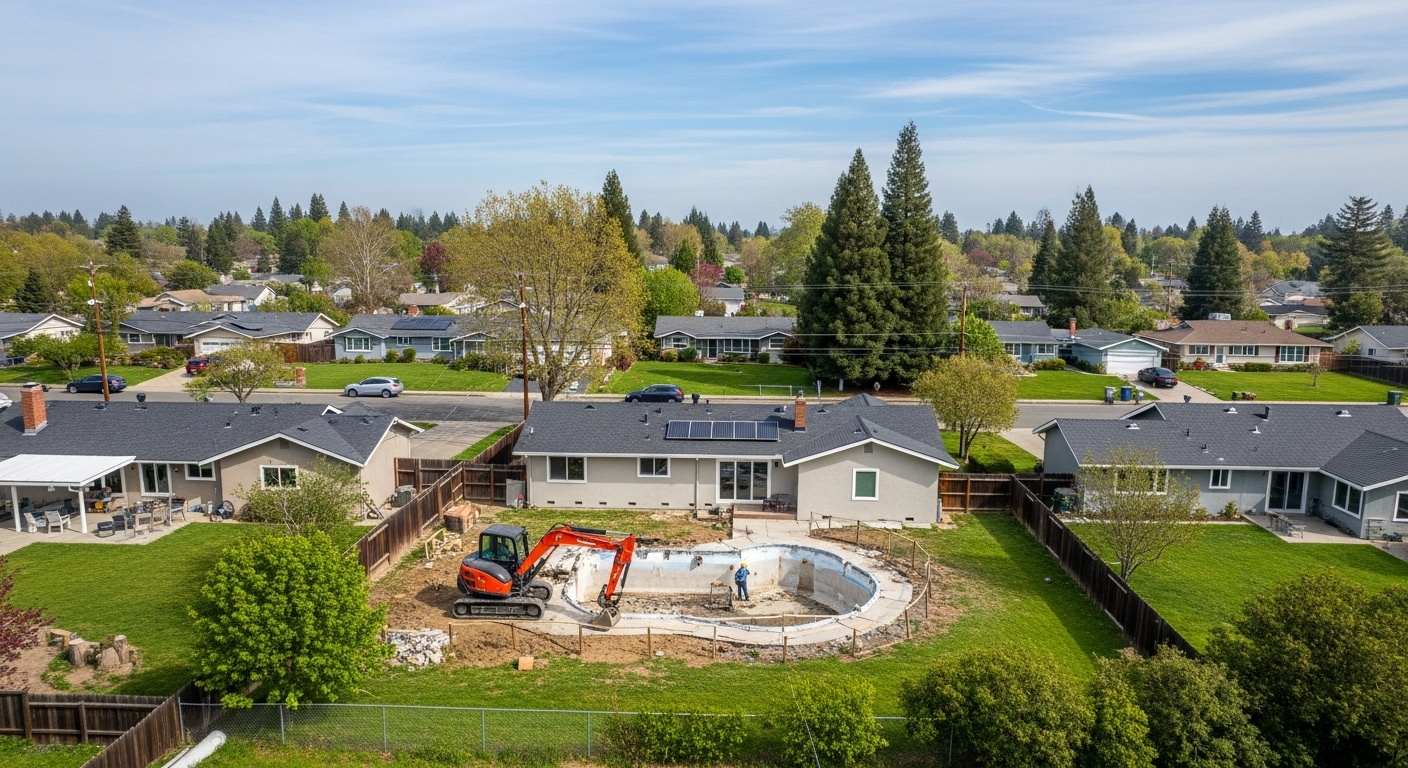
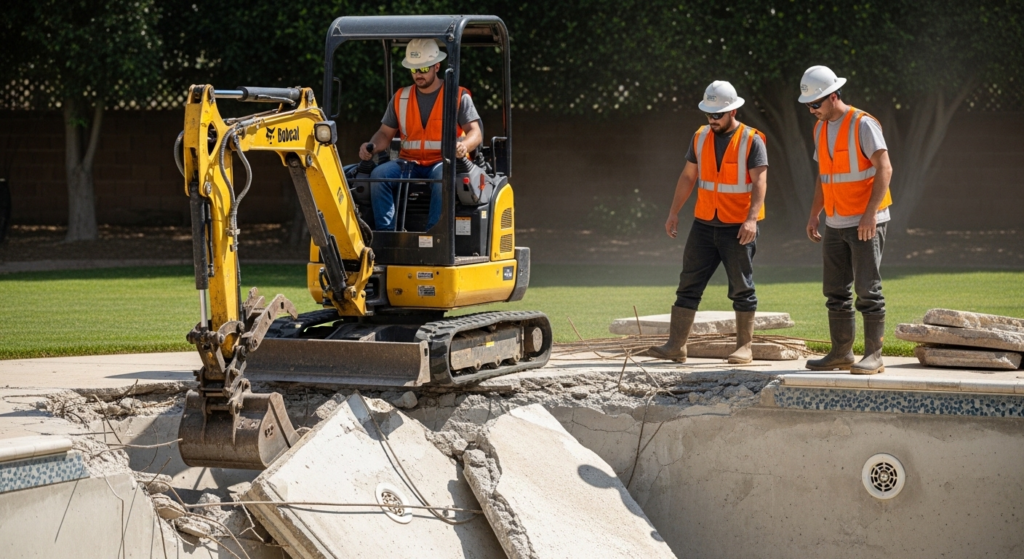
Full Pool Removal: The entire pool shell, including walls and floor, is demolished and hauled away. The hole is then filled with compacted soil and gravel. This method typically requires a demolition permit and sometimes a grading permit.
Partial Pool Removal (Pool Fill-In): The top portion of the pool walls is broken up and pushed into the pool cavity, which is then filled with soil. This method is less expensive but may limit future use of the land. Some lenders and buyers prefer full removal.
The team at Bye Bye Pool explains both options clearly and can help you determine which method is right for your property and budget.
Step 4: Submit Your Application and Pay Fees
Permit fees for spring pool removal permits vary by city. In the Concord and greater Contra Costa County area, demolition permit fees typically range from $200 to $800 depending on the size of the pool and the scope of work. Some cities charge a flat fee while others calculate fees based on the estimated project value.
| City / Jurisdiction | Typical Permit Fee | Average Processing Time |
|---|---|---|
| Concord, CA | $250 – $600 | 5 – 15 business days |
| Walnut Creek, CA | $300 – $700 | 7 – 14 business days |
| Pleasant Hill, CA | $200 – $500 | 5 – 10 business days |
| Martinez, CA | $250 – $550 | 7 – 15 business days |
| Antioch, CA | $200 – $450 | 5 – 12 business days |
Step 5: Schedule Your Pre-Demolition Inspection
Some jurisdictions require a pre-demolition inspection before any work begins. The inspector will verify the pool’s location, confirm utility disconnections, and review your demolition plan. This inspection is typically brief but must be completed before your contractor can break ground.
Step 6: Complete the Work and Schedule Final Inspection
After demolition and fill work is complete, you will need to schedule a final inspection. The inspector will verify that the fill material meets compaction standards, that utilities have been properly capped, and that the site has been graded correctly. Once the final inspection is approved, your spring pool removal permit is officially closed.

What Do Inspectors Look for During a Pool Removal Inspection?
Understanding what inspectors evaluate during the spring pool removal permit process helps you prepare and avoid failed inspections that delay your project.
Utility Disconnection Verification
Before any demolition begins, all utilities connected to the pool must be properly disconnected and capped. This includes:
- Electrical lines powering the pump, lights, and heater
- Gas lines if the pool has a gas heater
- Water supply lines
- Drainage connections to the municipal sewer or storm drain system
Inspectors will confirm that a licensed electrician and plumber have signed off on these disconnections. Attempting to disconnect utilities without licensed professionals is one of the most common reasons permit applications are rejected or inspections fail.
Soil Compaction Standards
When the pool cavity is filled, the soil must be compacted in layers to prevent future settling. Inspectors will often require a compaction report from a licensed soils engineer, particularly for full pool removals. Poor compaction can cause the ground to sink years later, damaging landscaping, patios, and even the home’s foundation.
Drainage and Grading
The finished grade of the filled area must direct water away from the home’s foundation. Inspectors will check that the site has been properly graded and that no drainage issues have been created by the fill work.
How Much Do Spring Pool Removal Permits Cost in California?
The total cost of spring pool removal permits in California depends on your city, the size of your pool, and whether you need additional permits beyond the basic demolition permit.
Here is a realistic breakdown of permit-related costs:
- Demolition permit: $200 – $800
- Grading permit (if required): $150 – $500
- Soils engineer compaction report: $300 – $800
- Utility disconnection permits (electrical and plumbing): $100 – $400 combined
- Re-inspection fees (if first inspection fails): $75 – $200 per visit
Total permit costs for a standard pool removal project in the Concord area typically fall between $500 and $1,500. These costs are separate from the actual demolition and fill work, which averages between $5,000 and $15,000 depending on pool size and removal method.
For a complete cost breakdown, visit the Bye Bye Pool service page or contact the team directly for a free estimate.
Common Mistakes Homeowners Make With Spring Pool Removal Permits
Even well-prepared homeowners make mistakes during the spring pool removal permit process. Here are the most frequent errors and how to avoid them.
Mistake 1: Assuming the Contractor Will Handle Everything
While a reputable contractor like Bye Bye Pool will manage the permit application process on your behalf, you should still understand what is being submitted and why. Always ask your contractor for a copy of the permit before work begins.
Mistake 2: Starting Work Before the Permit Is Approved
This is the single most common and costly mistake. Some homeowners allow contractors to begin demolition before the permit is officially issued, assuming approval is a formality. It is not. Work performed before permit approval is unpermitted and can result in fines and mandatory re-inspection.
Mistake 3: Choosing the Wrong Removal Method for the Property
Partial pool removal is less expensive, but it may not be appropriate for all properties. If you plan to build a structure over the filled area, add an ADU, or sell the home in the near future, full removal is almost always the better choice. Discuss this with your contractor before submitting your spring pool removal permit application.
Mistake 4: Not Accounting for Permit Processing Time in the Project Timeline
In spring, permit processing times can stretch to three weeks or more in busy jurisdictions. Homeowners who plan to have their pool removed by a specific date — such as before a summer party or a home sale closing — often underestimate how much time the permit process adds to the overall timeline.
Mistake 5: Failing to Notify the HOA
If your property is in a homeowners association, you may need HOA approval in addition to city permits. Some HOAs have specific requirements about construction hours, debris removal, and landscaping restoration. Failing to notify your HOA can result in fines and disputes even after the city has approved your project.
Real Customer Experiences: What Homeowners Say About Bye Bye Pool
Hearing from real customers helps illustrate what the spring pool removal permit process looks like in practice.
Maria T. from Concord shared her experience on Google: “We had no idea how many permits were involved in removing our pool. Bye Bye Pool walked us through every step, handled all the paperwork, and kept us updated throughout the entire process. The project was completed on time and the backyard looks amazing.”
James R. from Walnut Creek left a review on Yelp: “I was nervous about the permit process after reading horror stories online. The team at Bye Bye Pool made it completely stress-free. They knew exactly what the city required and had everything submitted within days of our first call.”
Sandra L. from Pleasant Hill noted on Google: “What I appreciated most was the transparency. They explained the difference between full and partial removal, told me exactly what the permit would cost, and there were no surprises. I would recommend them to anyone in the area.”
These experiences reflect what the Bye Bye Pool team consistently delivers: professional permit management, clear communication, and quality work from start to finish.
Spring Pool Removal Permits: Local Considerations for the Concord Area
If you are located in Concord or the surrounding Contra Costa County communities, there are specific local factors that affect your spring pool removal permit experience.
Concord Development Services
The City of Concord processes pool demolition permits through its Development Services Division, located near the Todos Santos Plaza area in downtown Concord. The department accepts applications online and in person. Processing times in spring typically run seven to fifteen business days for standard residential demolition permits.
Bye Bye Pool is based at 4918 Clayton Rd, Concord, CA 94521, and has extensive experience working with the Concord building department. The team understands local requirements and can often anticipate issues before they arise, keeping your project on schedule.
Contra Costa County Unincorporated Areas
If your property is in an unincorporated area of Contra Costa County rather than within a city limit, your permits will be processed through the Contra Costa County Building Inspection Division rather than a city department. Requirements are similar but not identical, so it is important to confirm jurisdiction before submitting your application.
Bay Area Regional Water Quality Control Board
In some cases, pool removal projects near sensitive drainage areas or creeks may require review by the San Francisco Bay Regional Water Quality Control Board. This is more common for properties near Walnut Creek, Marsh Creek, or other waterways in the region. Your contractor should identify whether this applies to your property during the initial site assessment.
Tools and Resources for Managing Your Spring Pool Removal Permit
These resources can help you research requirements, track your application, and stay organized throughout the spring pool removal permit process.
Online Permit Portals
Many California cities now offer online permit portals where you can submit applications, pay fees, and track the status of your spring pool removal permit in real time. Check your city’s official website for access.
Contractor License Verification
Before hiring any contractor for pool removal, verify their license through the California Contractors State License Board (CSLB) at cslb.
Homeowner Research Platforms
Platforms like Angi and HomeAdvisor provide cost guides, contractor reviews, and project planning tools that can help you understand what to expect before you begin the spring pool removal permit process. These are useful for benchmarking costs and reading verified reviews.
You can also explore Bye Bye Pool’s FAQ page for answers to the most common questions homeowners ask before starting a pool removal project.
Soils Engineering Firms
If your jurisdiction requires a compaction report, you will need to hire a licensed geotechnical or soils engineering firm. Ask your contractor for a referral or search the California Board for Professional Engineers, Land Surveyors, and Geologists directory.
Frequently Asked Questions About Spring Pool Removal Permits
Do I need a permit to remove my pool in California?
Yes. In virtually every California city and county, a demolition permit is required to remove an in-ground swimming pool. Some jurisdictions also require grading permits, soils reports, and utility disconnection permits. Skipping the permit process can result in fines and complications when selling your home.
How long does it take to get a spring pool removal permit?
Processing times vary by city and season. In spring, when demand is highest, expect five to twenty business days for standard residential demolition permits in the Concord and Contra Costa County area. Submitting your application in February or early March gives you the best chance of starting work in April.
How much does a pool removal permit cost in California?
Permit fees for pool removal in California typically range from $200 to $800 for the demolition permit alone. Additional permits for grading, utility disconnections, and soils reports can bring the total permit cost to between $500 and $1,500. Fees vary by city and pool size.
Can my contractor pull the permit for me?
Yes. Licensed contractors can and typically do pull permits on behalf of homeowners. This is one of the key advantages of hiring a professional like Bye Bye Pool. Always confirm that your contractor will handle the permit process and ask for a copy of the approved permit before work begins.
What is the difference between full and partial pool removal for permit purposes?
Both full and partial pool removal require a demolition permit in most California jurisdictions. However, full removal may also require a grading permit and a soils engineer’s compaction report, which adds to the cost and timeline. Partial removal typically has fewer additional requirements but may limit future use of the land.
Conclusion: Start Your Spring Pool Removal Permit Process the Right Way
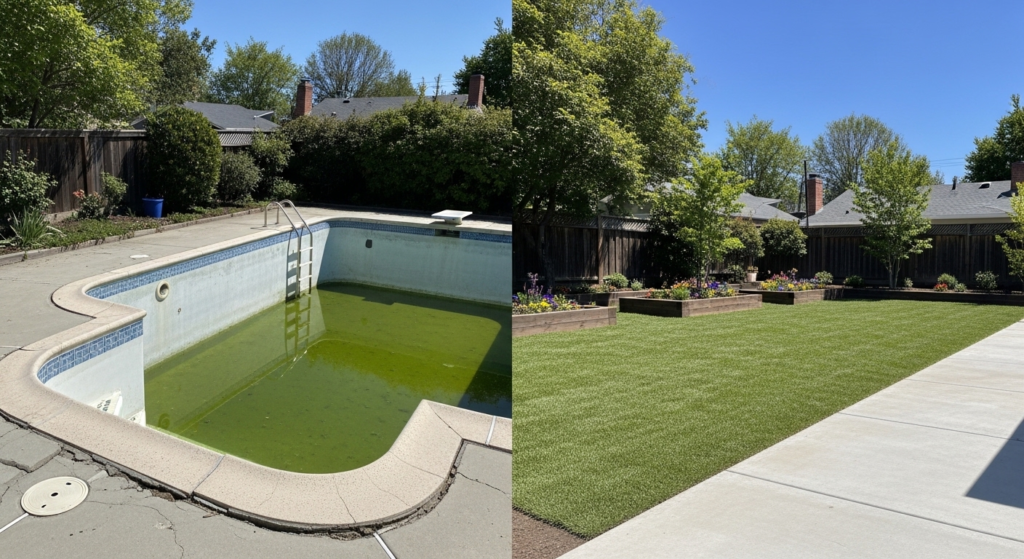
Spring pool removal permits are not a bureaucratic obstacle. They are a protection for your property, your investment, and your peace of mind. Understanding the process — from application to final inspection — puts you in control of your project timeline and budget.
Here is a quick recap of what you learned in this guide:
- Spring pool removal permits are legally required in virtually every California city
- April is peak season for permit applications, so applying in February or March gives you a significant advantage
- The permit process involves multiple steps including application, pre-demolition inspection, demolition, and final inspection
- Permit costs in the Concord area typically range from $500 to $1,500 in total
- Choosing the right removal method (full vs. partial) affects which permits you need
- Common mistakes include starting work before permit approval and failing to notify your HOA
- A licensed, experienced contractor handles the permit process on your behalf and keeps your project on track
Ready to remove your pool this spring in Concord or the surrounding Bay Area? Get your free estimate with Bye Bye Pool today. The team is ready to handle your spring pool removal permits, manage the entire demolition process, and transform your backyard into the space you have always wanted.
Request your free estimate here or call us at +1 (925) 940-9978. Office hours are Monday through Friday, 9 AM to 5 PM, and Saturday, 9 AM to 2 PM.
You can also follow Bye Bye Pool on Facebook and Instagram for project photos, tips, and updates.
Bye Bye Pool — 4918 Clayton Rd, Concord, CA 94521 | +1 (925) 940-9978 | byebyepool.
Explore our service areas | Learn about our team | Read our FAQ | Privacy Policy | Terms and Conditions