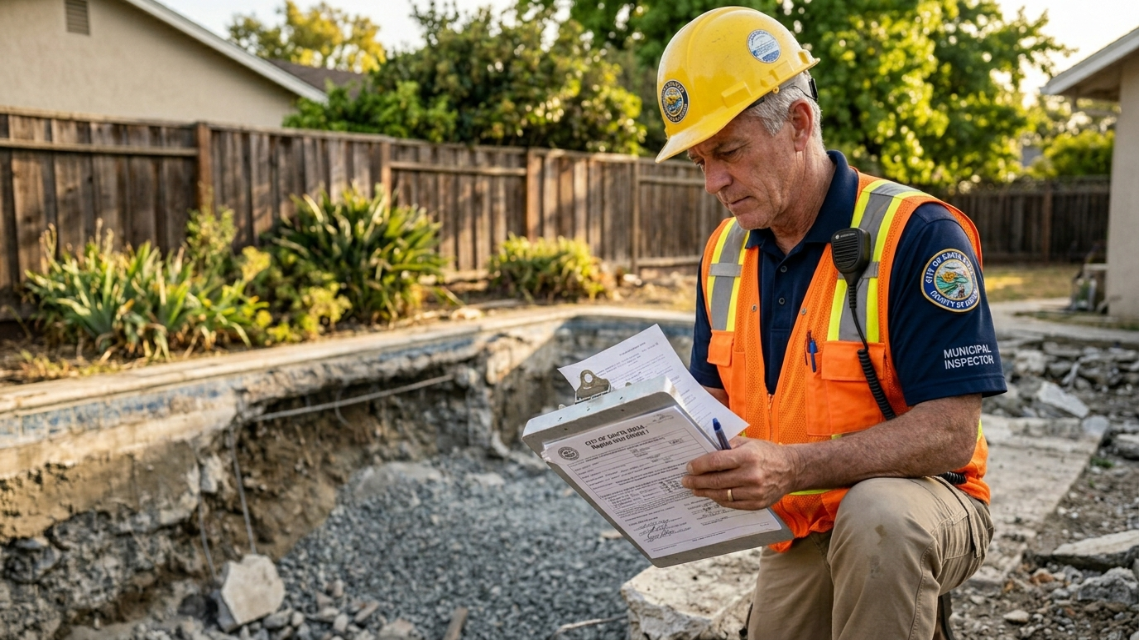
California Pool Removal Permits: The Complete Guide for Homeowners
Are you thinking about removing your backyard pool but feeling overwhelmed by the paperwork, regulations, and red tape involved? You are not alone. Thousands of California homeowners go through this process every year, and the number one question they ask is: where do I even start? This California pool removal permits complete guide walks you through every step of the permit process, from the first phone call to the final inspection, so you can move forward with confidence. Whether you are reclaiming your yard, cutting maintenance costs, or preparing your property for sale, understanding the permitting process is the foundation of a successful pool removal project. Keep reading to discover exactly what you need to know.
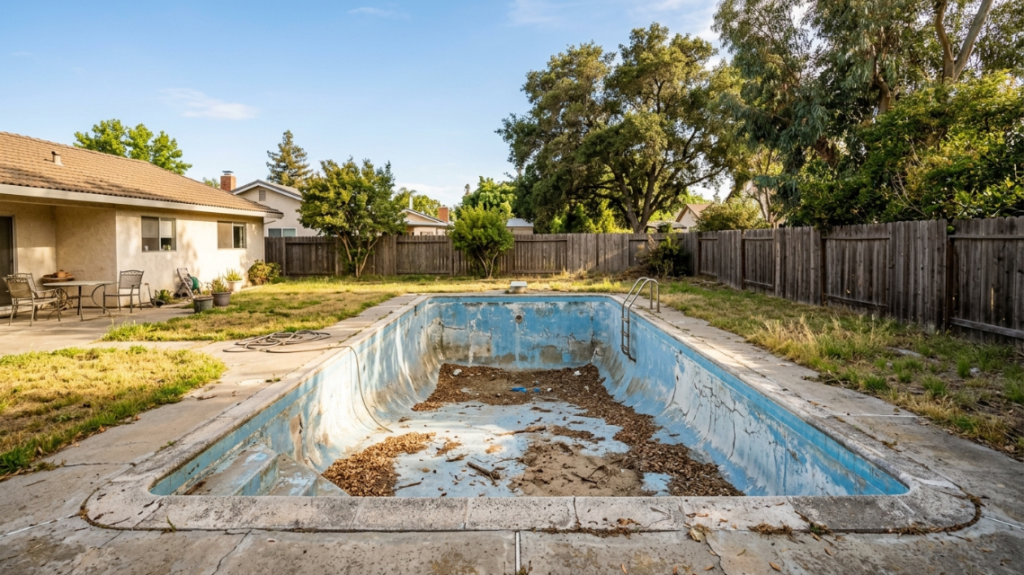
Thinking about removing your pool in the Concord area? Get a free estimate from Bye Bye Pool and let our experts handle the entire permit process for you.
What Is a Pool Removal Permit and Why Does It Matter?
Before diving into this California pool removal permits complete guide, it is important to understand what a permit actually is and why skipping it is never worth the risk.
A pool removal permit is an official authorization issued by your local city or county building department that allows a licensed contractor — or in some cases a homeowner — to legally demolish and fill a swimming pool on a residential property. In California, this permit is required for virtually all in-ground pool removals and many above-ground pool removals that involve structural backfilling.
Why Permits Protect You as a Homeowner
Pulling the proper permits protects you legally, financially, and structurally. Without a permit:
- Your homeowner’s insurance may deny future claims related to the work
- You could face fines ranging from $500 to $10,000 depending on the jurisdiction
- The work may need to be undone and redone at your own expense
- Your property value could be negatively affected during a title search
- You may be liable for soil subsidence or structural failures that occur years later
Every experienced contractor who follows this California pool removal permits complete guide will tell you the same thing: permits exist to protect you, not to slow you down.
Understanding the Two Types of Pool Removal in California
This California pool removal permits complete guide covers both main methods, because the type of removal you choose directly affects the permitting requirements and cost.
1. Partial Pool Removal (Pool Fill-In or Abandonment)
Also called a pool abandonment, this method involves breaking up only the top portion of the pool shell, drilling drainage holes in the bottom, and filling the cavity with gravel and soil. It is the more affordable option, typically costing between $3,000 and $7,000 in California.
Permit requirements for partial removal:
- Demolition permit (required in nearly all California jurisdictions)
- Soils report may be required depending on county
- Must include drainage hole documentation
Important disclosure requirement: California law requires that partial pool removals be disclosed to future buyers in the property transfer disclosure statement. This can affect resale value.
2. Full Pool Removal (Complete Excavation)
This method involves completely excavating and removing the entire pool structure, including all concrete, plumbing, and equipment. It typically costs between $9,000 and $20,000+ in California depending on pool size and location.
Permit requirements for full removal:
- Demolition permit
- Grading permit (in most cases)
- Soil compaction certification
- Final inspection by a licensed building inspector
Full removal is the preferred choice for homeowners who want to build on the land or maximize future property value.
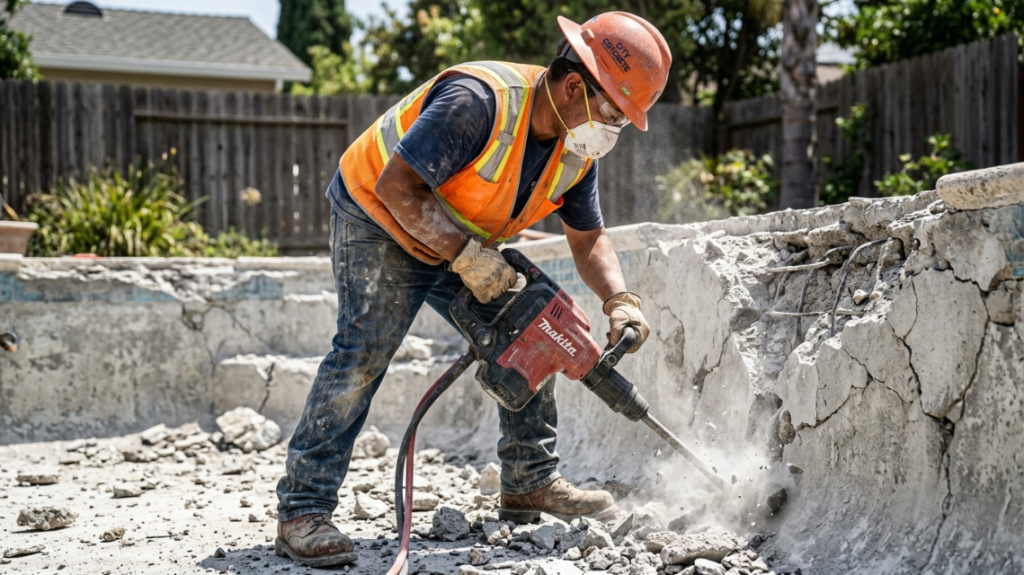
Step-by-Step: How to Get a Pool Removal Permit in California
This is the core of this California pool removal permits complete guide. Follow these steps in order to avoid costly delays.
Step 1: Contact Your Local Building Department
Pool removal permits are issued at the city or county level, not the state level. Your first step is to contact the building and safety department for the city or county where your property is located.
In cities like Concord, Walnut Creek, or Antioch, you can often begin the process online. For properties in unincorporated Contra Costa County, you will work directly with the county building department.
Ask the following questions when you call:
- Do I need a demolition permit for pool removal?
- Is a grading permit also required?
- Will I need a soils report or compaction test?
- What are the current processing times?
- Can I submit permit applications online?
Step 2: Hire a Licensed Contractor
In California, pool demolition work must be performed by a contractor who holds a valid C-21 (Building Moving and Demolition) or C-53 (Swimming Pool) license issued by the California Contractors State License Board (CSLB).
When choosing a contractor, verify:
- Active CSLB license (check at cslb.ca.gov)
- General liability insurance
- Workers’ compensation coverage
- Experience with local permit processes
At Bye Bye Pool, our team is fully licensed, insured, and experienced navigating permit requirements across Contra Costa County and the broader Bay Area. We handle the permit application process for our clients so they never have to deal with the paperwork alone.
Step 3: Prepare and Submit Permit Application Documents
Most California jurisdictions require the following documents for a pool removal permit application:
| Document | Required For | Notes |
|---|---|---|
| Site plan / plot plan | All removals | Shows pool location on property |
| Demolition plan | All removals | Details method of removal |
| Soils report | Full removal (most counties) | By licensed geotechnical engineer |
| Drainage plan | Partial and full removal | Shows how water will drain post-fill |
| Contractor license info | All removals | CSLB number required |
| Owner authorization | All removals | If contractor is filing on your behalf |
Step 4: Pay the Permit Fees
Permit fees in California vary significantly by jurisdiction. Based on current averages:
- Small jurisdictions / rural counties: $150–$400
- Mid-size cities (Concord, Walnut Creek): $400–$900
- Large cities (Los Angeles, San Jose, San Diego): $800–$2,500+
Some cities charge fees based on the valuation of the demolition project, which can push costs higher for full removals.
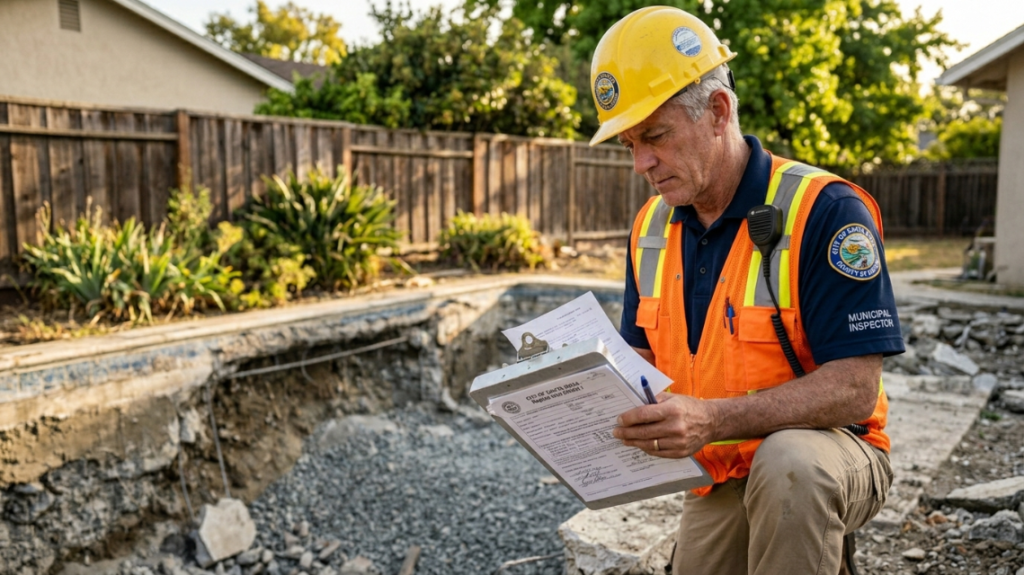
Step 5: Schedule and Pass Inspections
This is the step most homeowners underestimate. After the permit is approved and demolition begins, you will need to schedule one or more inspections with your local building department.
Typical inspection stages include:
- Pre-demolition site inspection (some jurisdictions)
- During-demolition inspection (to verify drainage holes and fill material)
- Compaction inspection (for full removals)
- Final inspection and permit sign-off
Failing an inspection means additional work and re-inspection fees. A professional contractor who knows local inspection standards, like the team at Bye Bye Pool, will schedule and manage inspections on your behalf to keep the project on track.
How Long Does the Permit Process Take in California?
Timing is one of the most common concerns in any California pool removal permits complete guide. The honest answer is: it depends on your jurisdiction.
Typical permit processing timelines in California:
- Over-the-counter approval (small cities, simple projects): 1–3 business days
- Standard review (most mid-size cities): 2–4 weeks
- Plan check review with soils report required: 4–8 weeks
- Large cities with high permit volume (LA, SF): 6–12 weeks
To speed up the process, submit a complete application with all required documents the first time. Incomplete applications are one of the most common causes of delays. Contractors who regularly work with local building departments — and understand exactly what each jurisdiction requires — can significantly reduce your wait time.
How Much Does Pool Removal Cost in California, Including Permits?
Understanding costs is a key part of this California pool removal permits complete guide, especially for homeowners comparing bids or planning a budget.
What Happens If You Skip the Permit?
This section of the California pool removal permits complete guide may be the most important one for homeowners who are tempted to cut corners.
Unpermitted pool removals are discovered regularly during:
- Real estate transactions (title and permit history searches)
- Neighbor complaints reported to code enforcement
- Aerial or satellite assessments by county assessors
- Future construction or renovation projects on the same property
When an unpermitted pool removal is discovered, the consequences can include:
- Retroactive permit fees plus penalty multipliers (often 2x–4x the original fee)
- Mandatory re-excavation to verify fill quality at your expense
- Stop-work orders on future projects until the issue is resolved
- Delays or collapse of a property sale if discovered during escrow
No amount of short-term savings justifies these risks. Following this California pool removal permits complete guide protects your investment long-term.

Local Permit Requirements: Key California Cities and Counties
One of the most useful features of this California pool removal permits complete guide is a breakdown of requirements by location, since rules vary considerably across the state.
Contra Costa County (Concord, Walnut Creek, Antioch, Pittsburg)
Contra Costa County requires a demolition permit for all in-ground pool removals. Full removals typically require a grading permit and compaction report. The county building department processes most standard applications within 10–15 business days.
Bye Bye Pool is based in Concord, CA and serves the full Contra Costa County area. Our team is deeply familiar with local permit requirements and maintains strong working relationships with county inspectors.
Los Angeles County
LA County has some of the most detailed pool removal requirements in California. In addition to demolition and grading permits, many cities within LA County (including Pasadena, Burbank, and Long Beach) require a soils engineering report by a licensed geotechnical engineer, a minimum soil compaction of 90%, and a final grading certificate.
San Diego County
San Diego requires demolition permits through individual city building departments. The city of San Diego additionally requires a notice of grading intent for full excavations and has specific fill material specifications.
Bay Area (Santa Clara, Alameda, and San Mateo Counties)
Bay Area jurisdictions generally have robust permitting processes due to seismic concerns. Many cities require geotechnical review and compaction testing that goes beyond the minimum state standard.
Common Mistakes to Avoid During the Pool Removal Permit Process
Every California pool removal permits complete guide should include a section on what not to do. These are the most frequent errors homeowners and contractors make.
1. Hiring an unlicensed contractor Unlicensed work can void your permit, result in fines, and leave you legally exposed. Always verify CSLB license status before signing any contract.
2. Failing to check for utilities before demolition California law (811 / Call Before You Dig) requires notification to the Underground Service Alert (USA) before any excavation. This is legally required and safety-critical.
3. Skipping the soils report when required Some homeowners attempt to bypass this step to save $500–$1,500. Building departments that discover missing soils reports will halt the project entirely.
4. Not disclosing partial removal to future buyers As noted earlier in this California pool removal permits complete guide, California requires disclosure of pool abandonment in the Transfer Disclosure Statement. Failing to disclose can expose you to lawsuits after a sale.
5. Filing the permit application yourself without contractor input While homeowners can technically file in some jurisdictions, errors in the application are common without professional experience. Most reputable contractors include permit management as part of their service.
Real Customer Experiences: What Homeowners Say About Bye Bye Pool
Hearing from real clients gives you confidence that the process works when done right. Here is what homeowners in the Concord and East Bay area have shared about working with Bye Bye Pool:
“The permit process sounded so intimidating before I called Bye Bye Pool. They handled everything — the application, the inspection scheduling, all of it. My backyard looks amazing now.” — Maria T., Concord, CA ⭐⭐⭐⭐⭐
“I was worried about timelines because we were planning to sell the house. Bye Bye Pool got our permits processed quickly and the project was done in days. No issues during our sale.” — Robert S., Walnut Creek, CA ⭐⭐⭐⭐⭐
“Professional, clean, and honest. They explained every step of the permit process before we started. I felt informed the whole time.” — Jennifer L., Pleasant Hill, CA ⭐⭐⭐⭐⭐
You can read more reviews on Yelp or check out our Google Maps listing to see what Bay Area

Ready to move forward? Our team at Bye Bye Pool serves Concord and communities across the Bay Area. View all our service areas and find out if we cover your neighborhood.
Frequently Asked Questions About California Pool Removal Permits
Do I need a permit to remove a pool in California?
Yes. In virtually every California city and county, a demolition permit is required to remove an in-ground swimming pool. Full removals typically also require a grading permit. This California pool removal permits complete guide recommends always confirming requirements with your local building department before starting work.
How much does a pool removal permit cost in California?
Permit fees range from approximately $150 in smaller jurisdictions to $2,500 or more in large cities. The exact cost depends on your city, the type of removal, and whether a soils report or grading plan is required.
Can I remove my own pool without a contractor in California?
In some jurisdictions, homeowners can pull their own permits and self-perform pool removal work. However, this is rarely advisable due to the technical complexity, liability exposure, and inspection requirements involved. Most homeowners benefit significantly from working with a licensed contractor.
How long does it take to get a pool removal permit in California?
Timelines vary from 1–3 business days for simple over-the-counter approvals to 6–12 weeks in high-volume city building departments. Hiring an experienced contractor who knows the local process can reduce wait times considerably.
What is the difference between partial and full pool removal?
Partial removal (abandonment) involves breaking the pool shell and filling it in. Full removal means completely excavating all pool materials. Full removal eliminates future disclosure requirements and maximizes the usable value of the land.
Does Bye Bye Pool handle the permit process?
Yes. Bye Bye Pool manages the entire permit application and inspection process for clients throughout Contra Costa County and surrounding Bay Area communities. Contact us to learn more.
Conclusion: Start Your Pool Removal the Right Way
This California pool removal permits complete guide has covered everything you need to understand about the permitting process — from the types of removal and required documents to costs, timelines, local requirements, and the most common mistakes to avoid.
The key takeaways are clear: permits protect you legally and financially, the process is manageable with the right contractor, and skipping permits is never worth the long-term risk. Whether you are in Concord, Walnut Creek, Antioch, or anywhere across the East Bay, the right team makes all the difference.
Reviewing this California pool removal permits complete guide is the first step. The next step is getting a professional assessment of your specific property and project.
Ready to start your pool removal in California? Contact Bye Bye Pool today for a free, no-obligation estimate. Our licensed team handles permits, inspections, demolition, and cleanup — so you can enjoy your new backyard without the stress.
Request your free estimate here or call us at +1 (925) 940-9978.
4918 Clayton Rd, Concord, CA 94521 Hours: Monday–Friday 9 AM–5 PM | Saturday 9 AM–2 PM Email: byebyepool.com@gmail.com
Follow us on Facebook and Instagram for project updates and tips.