Pool Removal and California Drought: How Homeowners Are Responding
Did you know a single average backyard swimming pool can lose more than 20,000 gallons of water a year to evaporation alone? In a state that has cycled through repeated emergency droughts, that number stops homeowners cold. This is exactly why pool removal California drought water conservation has become one of the fastest-growing home improvement conversations across the state. If you are staring at a pool you rarely use while your water bill climbs, you are not alone.
In this guide, you will learn what pool removal involves, why it matters during a drought, how the process works step by step, what it costs, the mistakes to avoid, and real results from local homeowners. Continue reading to discover how removing your pool could save water, money, and stress.
What Is Pool Removal and Why Does It Matter During a Drought?
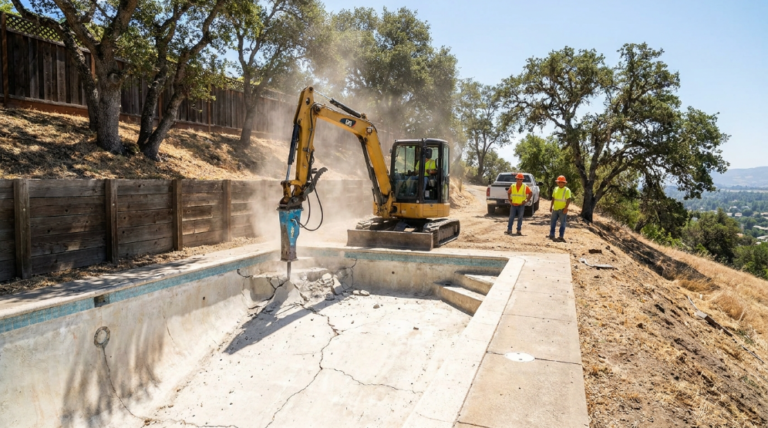
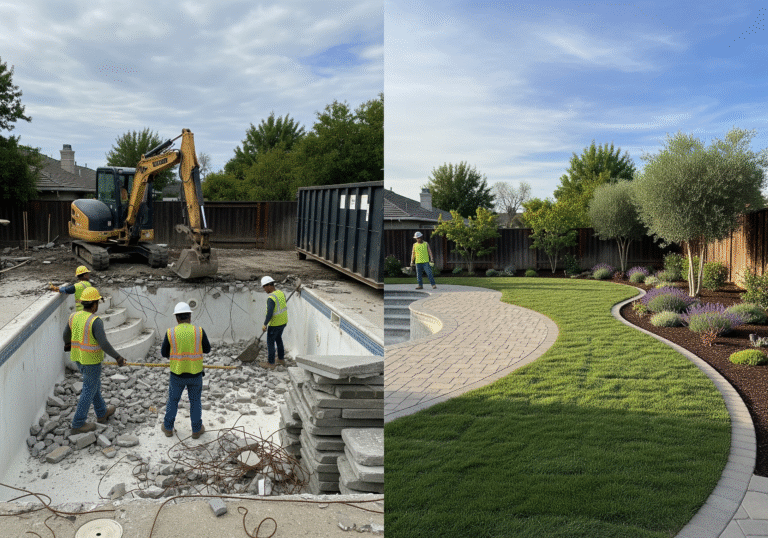
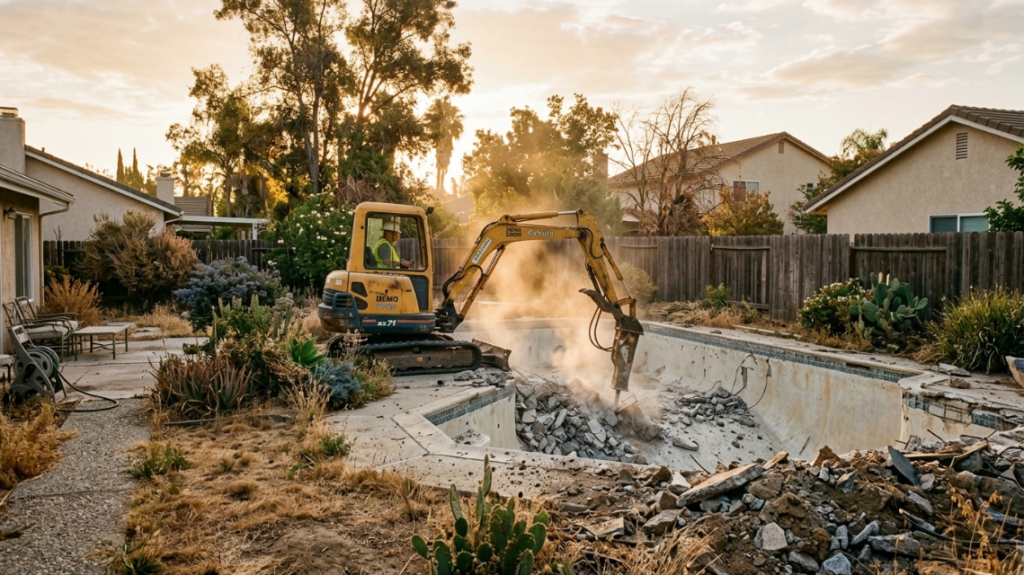
Pool removal, also called pool demolition, is the process of draining, breaking down, and filling in an in-ground or above-ground swimming pool so the space becomes usable yard again. There are two main approaches: partial removal (the top is broken, debris is placed inside, and the area is filled) and full removal (the entire shell is excavated and hauled away).
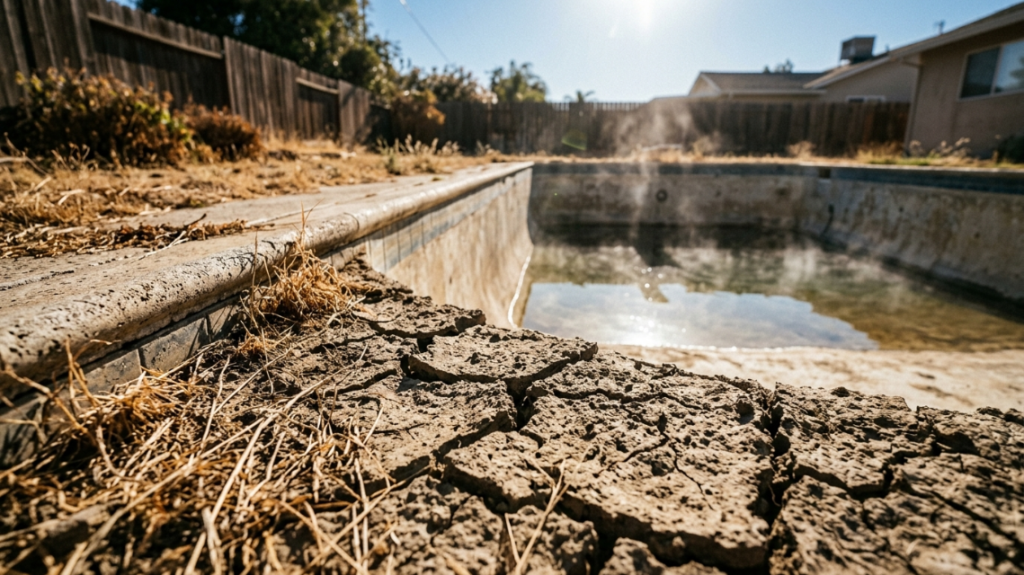
The reason pool removal California drought water conservation keeps trending is simple math. A pool is a constant, year-round water consumer. Between evaporation, splash-out, backwashing filters, and refilling, an unused pool quietly drains a precious resource. During mandatory water restrictions, that consumption becomes both costly and difficult to justify.
Pool removal supports water conservation during a California drought by eliminating ongoing evaporation losses of up to 20,000 gallons per year, removing the need for refills, and ending chemical and backwash water waste.
At Bye Bye Pool, we have watched demand surge as Concord and Bay Area residents rethink whether a backyard pool still fits their lifestyle and the climate reality.
Why Pool Removal Supports Water Conservation
Here is where the environmental case becomes concrete:
- Evaporation savings: An open pool surface loses thousands of gallons annually, even when covered part-time.
- No more refills: Topping off and seasonal refilling are eliminated entirely.
- Fewer chemicals: Conservation is not only about water volume — it means no chlorine, algaecides, or treated water entering the system.
- Reduced runoff: Filling in the pool with proper grading can improve how your yard absorbs rainwater.
These benefits explain why municipalities increasingly view pool removal California drought water conservation as a legitimate part of regional water strategy.
How Does the Pool Removal Process Work? A Step-by-Step Guide
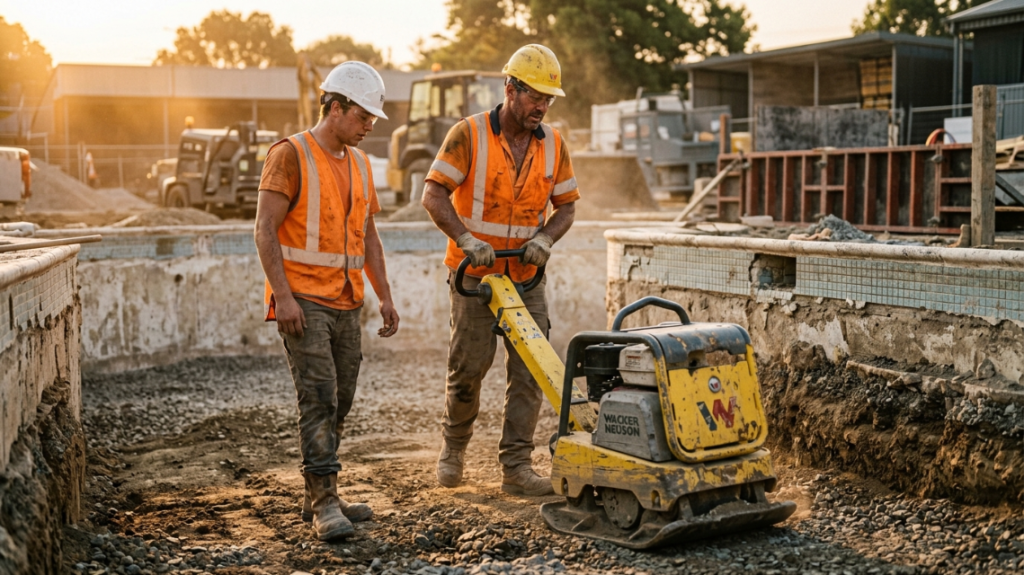
Understanding the workflow removes anxiety. Here is the typical sequence we follow at our pool demolition service in Concord:
- Free consultation and quote — We assess access, pool type, and your goals.
- Permits — We handle the city permitting so the job is fully compliant.
- Draining — Water is removed according to local regulations.
- Demolition — The shell is broken (partial) or fully excavated.
- Drainage installation — Gravel and proper drainage prevent future water pooling.
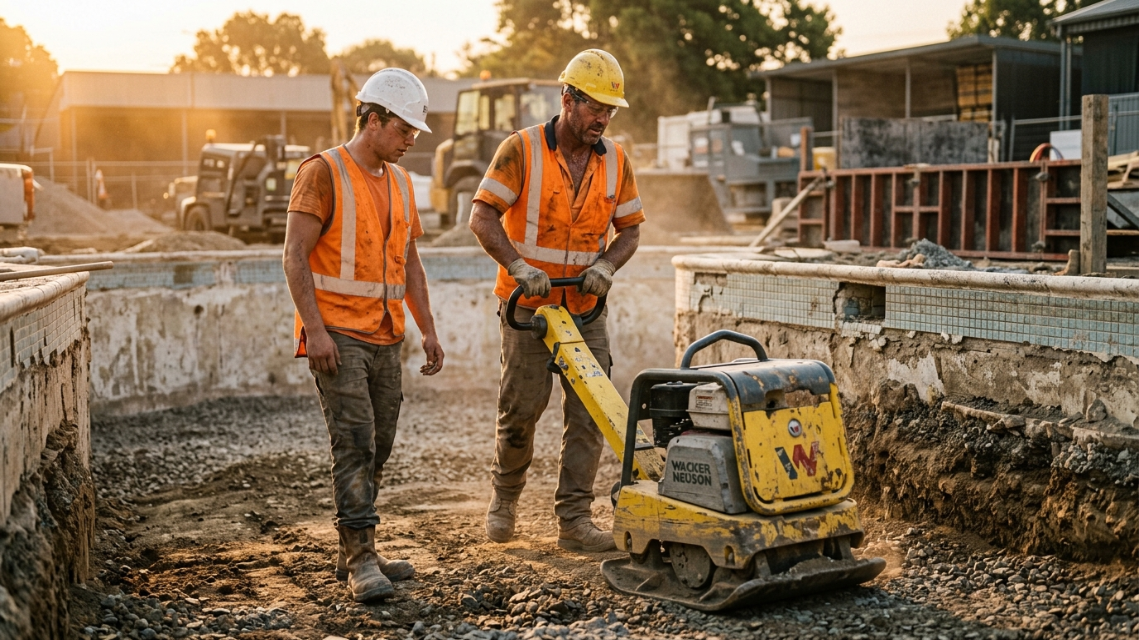
- Backfill and compaction — Soil is added in layers and compacted to avoid settling.
- Final grading — The surface is leveled and ready for landscaping.
Pool removal steps: (1) consultation, (2) permits, (3) draining, (4) demolition, (5) drainage, (6) backfill and compaction, (7) grading.
Practical Tips for a Smooth Pool Removal
- Choose licensed, insured contractors — verify before signing.
- Ask about debris hauling — confirm whether removal is included.
- Plan your new yard — drought-tolerant landscaping pairs perfectly with removal.
- Disclose the removal at resale — keep your permit and engineering records.
- Time it right — see seasonality below.
Common Pool Removal Mistakes and How to Avoid Them
Even motivated homeowners stumble. Avoid these:
- Skipping permits — unpermitted fill can create resale and liability headaches.
- Choosing partial removal without proper drainage — leads to settling and standing water.
- Hiring the cheapest bid — poor compaction costs far more to fix later.
- Ignoring utility lines — gas, electrical, and water lines must be located first.
- DIY demolition — heavy equipment and disposal regulations make this risky.
Working with an established team like Bye Bye Pool sidesteps nearly all of these. Smart pool removal California drought water conservation projects start with the right crew.
Local Case Studies: Concord and Bay Area Homeowners
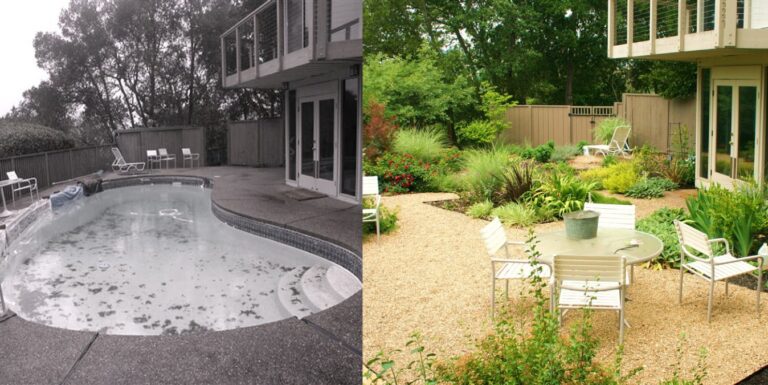
Case Study 1 — Concord family, partial removal. A Clayton Road-area family rarely used their aging pool. After a full removal and drought-tolerant landscaping, they reported a noticeable drop in their monthly water bill and reclaimed roughly 400 square feet of yard for their kids.
Case Study 2 — Walnut Creek retiree. Tired of chemical upkeep, she converted her pool footprint into a native garden. Her story reflects exactly why pool removal California drought water conservation resonates with residents near landmarks like Mount Diablo and Todos Santos Plaza.
Our reviews echo these outcomes. On Google and Yelp, customers consistently praise our clean job sites, clear communication, and on-time completion. One reviewer called the crew punctual and tidy; another highlighted how stress-free the permitting felt.
Is Pool Removal a Seasonal Decision?
Yes — demand peaks in spring and early summer, just before barbecue season, when homeowners want their yards usable. However, the smartest time to schedule is late fall through winter, when contractor availability is higher and you are ready before peak season. The topic is perennial and trending upward, climbing each time drought restrictions tighten. This makes pool removal California drought water conservation an evergreen content and service opportunity rather than a passing trend.
What Comes After Removal? Reclaiming Your Yard
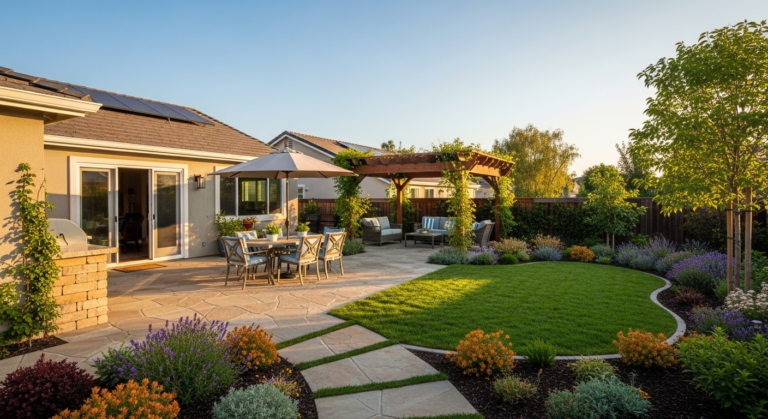
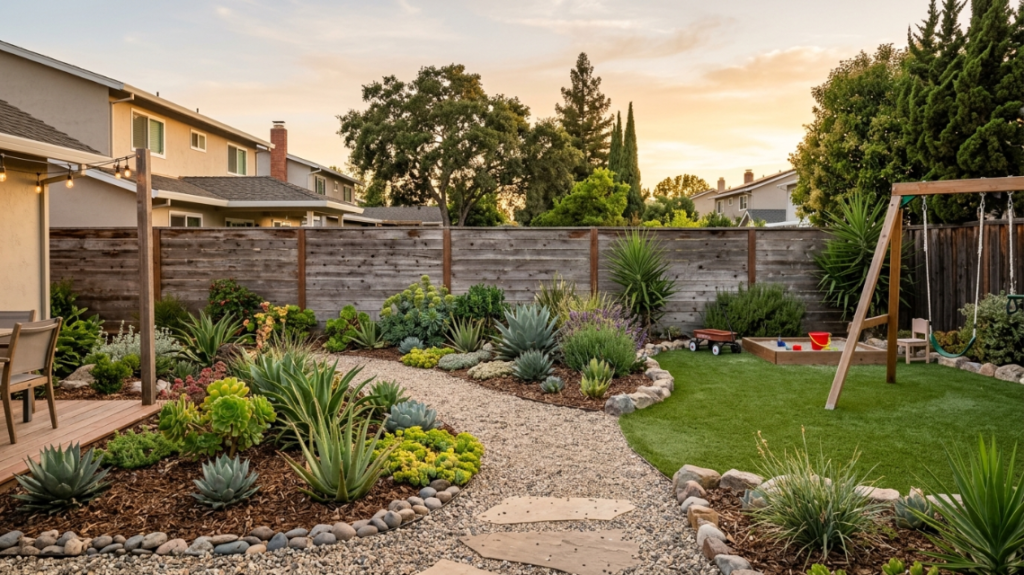
Once the space is graded, popular drought-friendly uses include native xeriscaping, gravel patios, raised vegetable beds, artificial turf play areas, and ADU foundations. Each option deepens the pool removal California drought water conservation benefit by using less water than the pool ever did. Explore the regions we serve on our service areas page, and see our story on our home page.
Frequently Asked Questions
Does removing a pool really help with water conservation during a drought? Yes. Eliminating a pool removes ongoing evaporation, refilling, and backwashing losses, often saving tens of thousands of gallons over a few years — the core of pool removal California drought water conservation thinking.
How long does pool removal take? Most projects finish in two to ten days depending on type and access, with full removals taking longer than partial ones.
Do I need a permit to remove my pool in California? Almost always, yes. Reputable contractors handle permitting for you; Bye Bye Pool manages this as part of the service. See our FAQ page for more.
Will removing my pool affect my home’s value? It can go either way. In drought-affected markets, many buyers prefer low-maintenance, water-wise yards, which supports value.
How much water can I save? A typical pool loses up to 20,000+ gallons yearly to evaporation alone, before refills and maintenance — a major driver of pool removal California drought water conservation interest.
Conclusion
California’s recurring droughts have changed how homeowners view their backyards. Removing an unused pool cuts water waste, lowers bills, ends chemical upkeep, and gives you a flexible, drought-ready yard. Throughout this guide we covered what pool removal is, why it matters, how it works, what it costs, the mistakes to avoid, and real local results — all centered on pool removal California drought water conservation.
The case for pool removal California drought water conservation is clearer than ever, and the right contractor makes it painless. Smart pool removal California drought water conservation decisions protect both your wallet and the state’s water supply, and every successful pool removal California drought water conservation project starts with one simple conversation.
Ready to start your pool removal in Concord, CA? Request your free quote today with Bye Bye Pool. Contact us now through our contact page or call +1 925-940-9978. Follow our work on Facebook and Instagram.
Bye Bye Pool Address: 4918 Clayton Rd, Concord, CA 94521, United States Phone: +1 925-940-9978 Email: byebyepool.com@gmail.com Office Hours: 9 AM – 5 PM Monday–Friday, 9 AM – 2 PM Saturday Privacy Policy | Terms & Conditions