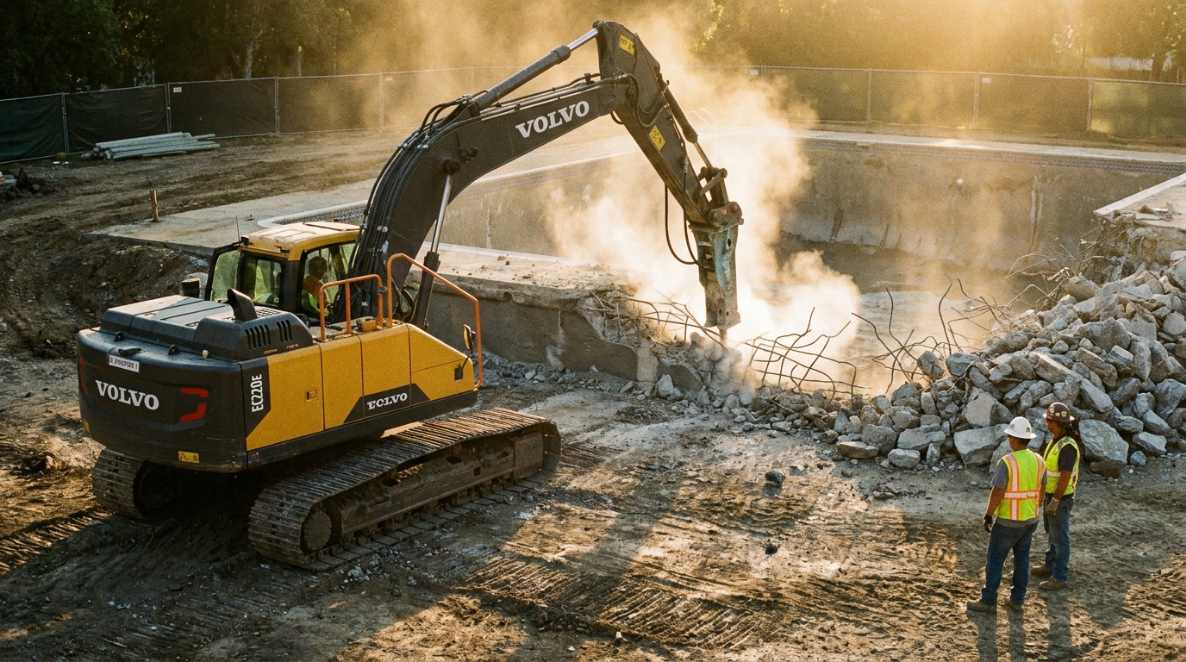
Pool Removal for ADU California: The October 2026 Planning Guide
What This Guide Covers
- Can You Build an ADU Where Your Pool Sits Today?
- Why Pool Removal for ADU California Projects Means Full Demolition
- The Problem Nobody Mentions Until the Plans Are Drawn
- Matching the Removal Method to Your Lot
- Where Pool Removal for ADU California Planning Pays Off
- Why October Is a Smart Month to Start
- What a Typical East Bay Sequence Looks Like
- Is a pool fill-in the same thing as full pool removal?
- Can I keep the pool and put the ADU somewhere else?
- Does the filled area need attention after the crew leaves?
- Why does a partially filled pool settle years later?
- What makes one removal more involved than another?
- What should I ask a contractor before signing?
- Your Next Step
Direct Answer: Pool removal for ADU California projects almost always requires full demolition with engineered fill, compacted and certified by a licensed engineer, because a partial fill-in leaves a footprint your building department will not approve for a new foundation.
You have a pool you stopped swimming in three summers ago, and a rough idea of a rental unit in that same corner of the yard. Between those two thoughts, the vocabulary gets slippery. Contractors will offer a “pool fill-in,” an “abandonment in place,” a “partial removal,” or a “pool teardown,” and the quotes will look nothing alike.
Those names matter less than one question: is the material going back into that hole engineered fill or uncertified fill? Contra Costa County treats those as two different permits, not two flavors of the same job. One leaves you able to build. The other, on paper, does not.
This pool removal for ADU California guide covers three things: whether your old pool footprint can legally hold an ADU foundation, which documents control your permit timeline, and how to match the removal method to your lot. One note on geography. Bye Bye Pool works across eight Bay Area counties rather than the whole state, so the permitting detail below is East Bay specific, even though state ADU rules apply everywhere in California.
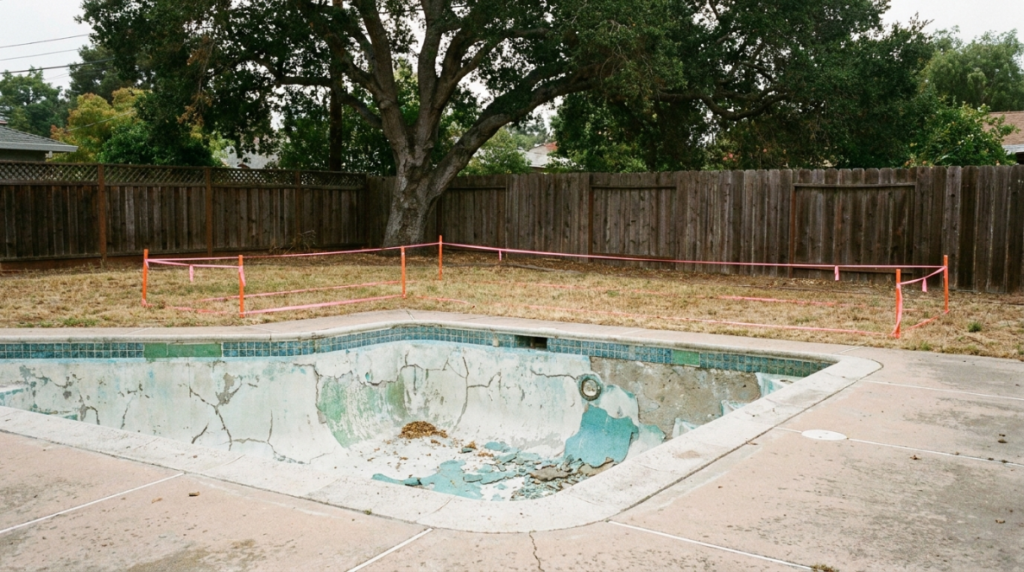
Can You Build an ADU Where Your Pool Sits Today?
Yes, in most cases, provided the pool is fully removed and the void is rebuilt with engineered fill that a licensed engineer signs off on. Ground under a new foundation has to behave like soil, not like a buried concrete bowl with dirt on top. Every pool removal for ADU California requirement below follows from that.
State law is on your side for the ADU itself. Local agencies cannot block at least an 800 square foot accessory dwelling unit with four foot side and rear setbacks, even where lot coverage or floor area ratio rules would otherwise interfere (Government Code section 66321). Detached units are generally allowed to 16 feet in height, or 18 feet within half a mile of a major transit stop. No design hearing, no neighbor vote, because ADU permits are ministerial.
What state law does not do is guarantee your ground. Zoning says where an ADU may sit. Geotechnical conditions say whether it can sit there safely. A Concord or Walnut Creek backyard on expansive clay already asks a lot of a slab, and running that slab across a poorly rebuilt pool void asks more. The ADU is usually permitted. The pool footprint has to earn it.
Why Pool Removal for ADU California Projects Means Full Demolition
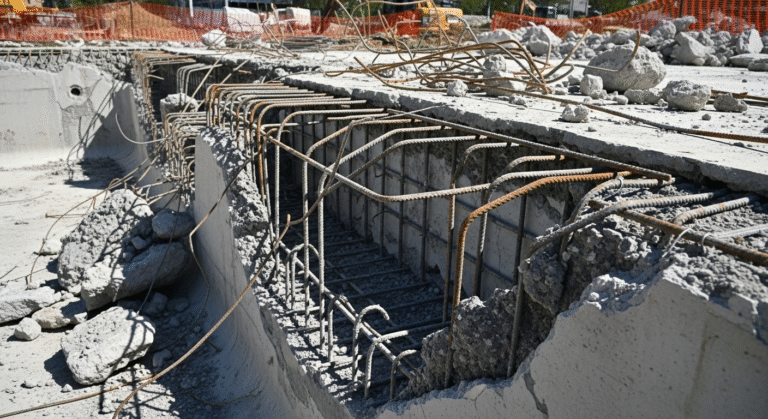
Full demolition is required for pool removal for ADU California projects because only a fully excavated void can be backfilled with structural fill and certified for foundation loads. Partial removal, where the top of the walls comes off and the floor is punched for drainage, is a landscaping solution. A good one. Just not a building pad.
Engineered Fill and Uncertified Fill Are Not the Same Permit
Contra Costa County splits pool backfill into two permit tracks, and the split is worth understanding before anyone quotes you. One is designated G, for supervised engineered fill capable of supporting the footings of a new structure. The other is GN, for uncertified fill not intended to support anything.
| Engineered fill (G track) | Uncertified fill (GN track) | |
|---|---|---|
| Pool shell | Removed from the site, per the soils engineer | May stay buried, with the bond beam taken down |
| Compaction standard | Minimum 90% relative compaction, ASTM D1557 | No structural compaction requirement |
| Engineering oversight | Soils engineer inspects the excavation bottom before fill | County inspects drainage holes before fill |
| Closing document | Final compaction report from a licensed engineer | None |
| Future use allowed | ADU, addition, garage, any permanent structure | Landscaping only |
| Effect on the parcel | None | A note is placed restricting the area |
Read those last two rows again, because that is where the regret lives. The GN track is faster and simpler, and it permanently narrows what your backyard is allowed to become. Anyone planning pool removal for ADU California work belongs on the G track from day one.
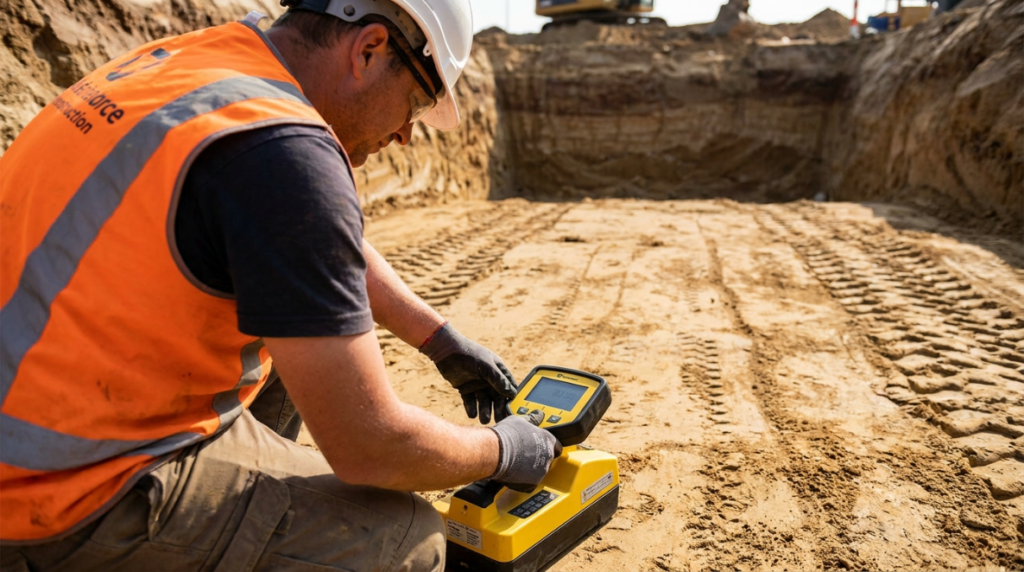
The Compaction Report Is What Unlocks Your Foundation
A final compaction report, prepared by a licensed civil or geotechnical engineer, is the single document that lets an ADU foundation go in over a former pool. Contra Costa County requires a note on the site plans stating that no foundation in the pool fill area may be poured until that report is approved and inspected. Your contractor cannot pour around it, and your plan checker will look for it.
Inspections happen in stages: rough grade for the excavation bottom, an in-progress check partway up, and a grading and drainage final. Each is a scheduling dependency, which is why removal and ADU timelines have to be planned together rather than back to back. Our guide on California pool removal permits breaks down which approvals apply to the demolition itself, separately from your ADU application.
The Problem Nobody Mentions Until the Plans Are Drawn
Here is the trap we see most, and it derails pool removal for ADU California projects years after the fact. A homeowner filled in a pool six or eight years ago, took the faster option, and moved on. Grass grew in. Then an ADU enters the picture, the designer pulls the parcel record, and there it is: a note stating the site contains a restricted area, due to an abandoned swimming pool, not suitable for building.
That note is not a clerical error and it does not quietly expire. It is the county documenting that fill went in without engineering supervision. Nobody tested the material, nobody verified the lifts, no engineer stamped the result, so there is no evidence the ground carries a load. If that describes your property, you are not stuck. You are doing the work twice:
- Order a geotechnical investigation to establish what is down there and how deep
- Re-excavate the footprint, including any shell left buried
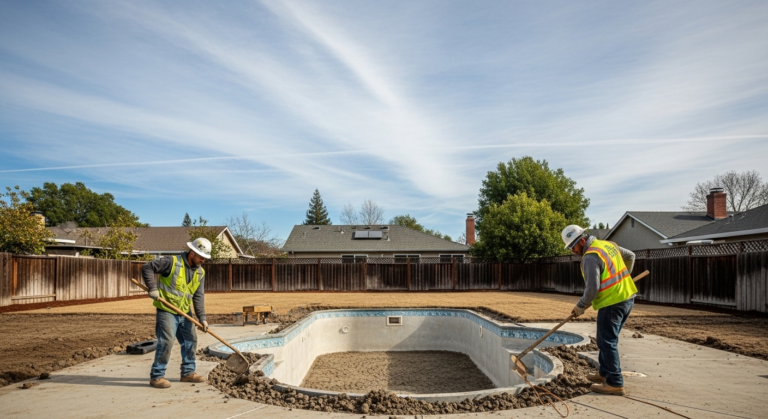
- Rebuild the void as engineered fill under a supervised permit, with lift-by-lift density testing
- Submit the final compaction report and clear the restriction on the parcel
- Only then submit ADU structural plans landing on that footprint
So ask any contractor quoting a removal, even if an ADU is only a maybe: which permit designation are you pulling, and will I receive a stamped compaction report at the end? A vague answer means you are being quoted a landscaping job.
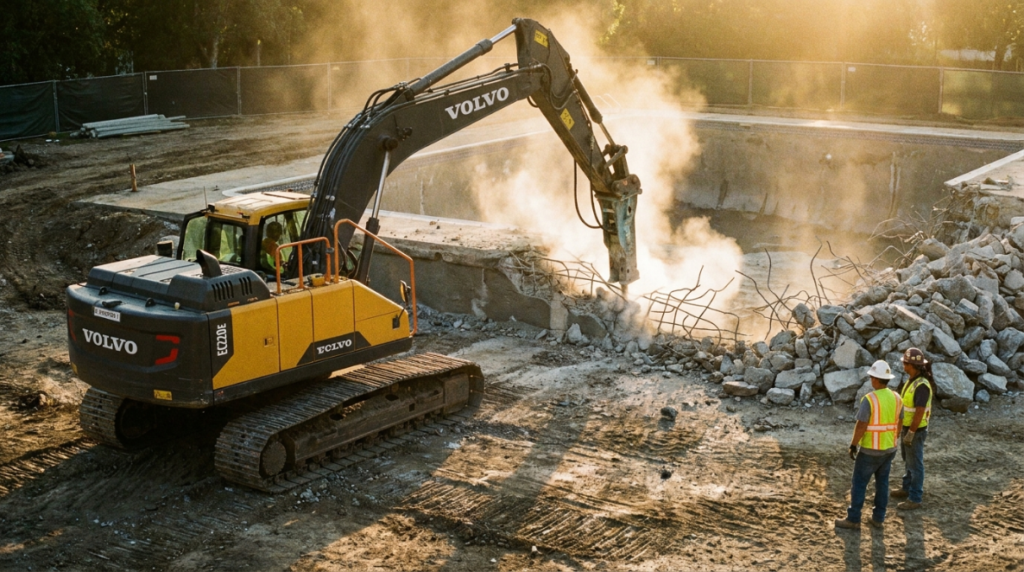
Matching the Removal Method to Your Lot
Three approaches cover almost every East Bay property, and the right one depends on where the ADU will actually sit.
- Full removal with engineered fill. The standard for pool removal for ADU California work, and the right call whenever the ADU footprint overlaps the pool at all. Shell, plumbing, and conduit come out, and the void is rebuilt in tested lifts. Common mistake: assuming a small overlap only needs partial treatment. A footing landing half on native soil and half on loose fill is how differential settlement starts.
- Full removal with no structure planned yet. Best when you want the option open but have no drawings. Same certified pad, same clean parcel record. Common mistake: skipping the compaction report, which leaves you with the work done and none of the proof.
- Partial fill-in. Best when the ADU is going somewhere else entirely, such as over a detached garage, and the pool area becomes lawn or patio. Common mistake: choosing it on a slope. Where ground slopes steeper than about 10 percent, Contra Costa County pushes you back into the engineered fill procedure anyway.
One detail specific to older Bay Area lots: pools built in the 1960s and 1970s often sit closer to the rear property line than anything you could permit today. The four foot rear setback applies to your new structure regardless of where the pool sat, so the buildable rectangle may be smaller than the hole suggests. Measure before you fall in love with a floor plan.
Where Pool Removal for ADU California Planning Pays Off
Pool removal for ADU California planning pays off most clearly on lots where the pool occupies the only viable building envelope. On a Danville or Pleasant Hill lot with the house pushed forward and a pool filling the back third, there is often nowhere else for a detached unit to go. Removing the pool converts unusable square footage into permitted square footage.
It also pays off when a yard carries two burdens at once. An aging pool in Oakland or Berkeley used a few times a year still draws power, chemicals, and attention monthly, while the unit that would occupy the same ground stays hypothetical.
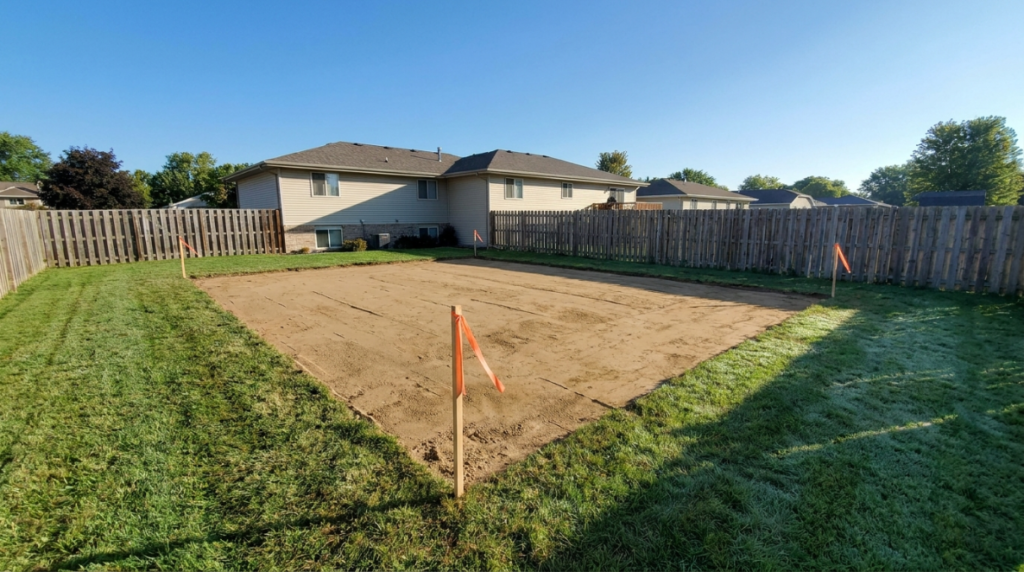
Where pool removal for ADU California planning makes less sense:
- The pool is nowhere near the ADU site. If the unit is going over a garage or into a side yard, these are two unrelated problems. Handle them on separate schedules.
- The pool is in regular use and the lot is large. Plenty of Bay Area lots hold both, and state setback rules are generous enough to make it work.
- The ADU is a someday idea with nothing behind it yet. Full removal is still safer for resale, but the urgency is different and you can sequence it on your own timeline.
Why October Is a Smart Month to Start
October matters for pool removal for ADU California scheduling because compaction depends on soil moisture, and Bay Area weather stops cooperating in November. Engineered fill has to go in near optimum moisture content to reach density, and testing happens lift by lift. Saturated clay does not compact. It moves.
The permit calendar points the same direction. State law gives your local agency 15 business days to say whether an ADU application is complete, and 60 days from a complete application to approve or deny, after which it is deemed approved. That clock only helps if site work is already underway. Scheduling pool removal for ADU California projects in October puts a certified pad and a stamped report in hand before spring, when applications stack up. Our crews plan around this every year: grading in the dry window, paperwork through winter, foundation in spring.
What a Typical East Bay Sequence Looks Like
Here is a representative example, drawn from the pattern of projects we handle rather than one named customer. A homeowner in central Contra Costa County has a 1970s gunite pool across most of the rear yard, and wants a two bedroom detached unit on that footprint.
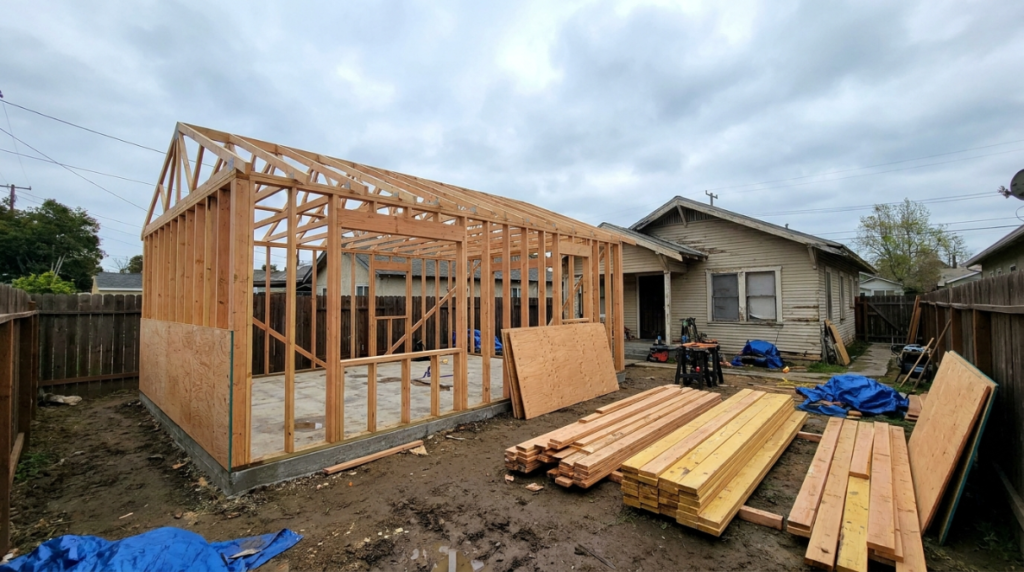
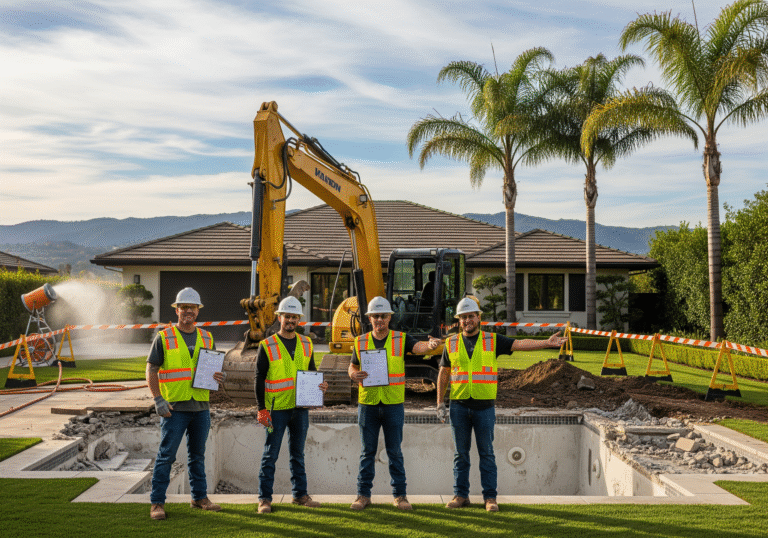
Pool removal for ADU California work starts with a geotechnical engineer specifying fill and compaction requirements. We pull the supervised grading permit, cap utilities, and demolish the shell completely, hauling concrete off for recycling. The excavation bottom is inspected before anything goes back in. Fill goes in as tested lifts. The engineer issues the final compaction report, the county signs the grading final, and the ADU designer submits structural plans referencing that report.
What homeowners underestimate is not the demolition. Breaking and hauling a pool is the fast part. Inspection holds and the engineer’s report set the calendar, and they are what make the ADU permit routine instead of contentious. Homeowners who review us on Google and Yelp raise the same two themes: crews arriving when they said they would, and a site left clean enough for the next trade. You can read those on our Yelp listing, and our Google Business Profile shows current coverage. Our Contra Costa County service page lists the East Bay cities we work in most, and our team page covers how we coordinate with geotechnical engineers.
Frequently Asked Questions
Is a pool fill-in the same thing as full pool removal?
No. A pool fill-in breaks down the top of the walls and punctures the floor for drainage, leaving most of the shell buried. Full removal excavates the entire structure and rebuilds the void with engineered fill. Only full removal with a certified compaction report supports pool removal for ADU California purposes, meaning a permanent structure on that footprint.
Can I keep the pool and put the ADU somewhere else?
Often yes. California requires agencies to allow at least an 800 square foot ADU with four foot side and rear setbacks, so a side yard may work even on a modest lot. Confirm the pool deck, equipment pad, and safety barrier still leave a clear building envelope with access.
Does the filled area need attention after the crew leaves?
Some, especially through the first wet season. Even engineered fill can show minor surface settlement during its first full cycle of Bay Area rain, and drainage is what to watch. Keep the finished grade sloping away from structures, and tell your contractor early if water pools over the old footprint.
Why does a partially filled pool settle years later?
The root cause is uncontrolled fill. Material goes in without density testing or moisture control, often in deep lifts, so voids remain between particles. Water works into those voids over successive rainy seasons and the material consolidates, showing as a shallow dish over the old pool outline. Expansive clay across Contra Costa and Alameda counties makes it worse.
What makes one removal more involved than another?
Access is usually the biggest factor, since a yard reachable only through a narrow side gate changes the equipment and the haul-off method. Pool size, depth, and construction type determine how much material comes out and goes back in. Needing a certified structural pad rather than a landscaping fill changes the engineering and inspection load.
What should I ask a contractor before signing?
Ask which permit designation they are pulling, and whether a licensed engineer will issue a final compaction report in your name. Confirm whether the shell is hauled off or left buried, and how inspections are sequenced so the grading final does not delay your plan check. A contractor who builds structural pads regularly answers without hesitating.
Your Next Step
The decision is smaller than it feels. You are not choosing between a pool and an ADU. You are choosing whether the ground under that corner of your yard ends up certified or restricted, and that gets decided the day the fill goes in, not the day the plans are drawn.
If an accessory dwelling unit is anywhere in your five year thinking, start planning pool removal for ADU California requirements now, while the option is still easy to keep open. Tell us what you are considering and we will walk the site and say honestly which permit track it needs. Get in touch for a free on-site assessment, or call (925) 940-9978.