Pool Demolition San Jose Fremont South Bay: 5 Essential Tips
An old, unused swimming pool can quietly turn into one of the biggest liabilities on a property. It can be a safety risk, a maintenance burden, and an obstacle to selling a home.
If you have been searching for pool demolition San Jose Fremont South Bay services, you are likely facing one of these exact problems. You want a clear, reliable path forward.
This guide walks through what pool removal actually involves, how the process works from permits to final grading, and what local homeowners should watch out for. Keep reading to see exactly how the process unfolds.
What Is Pool Demolition San Jose Fremont South Bay Homeowners Are Requesting?
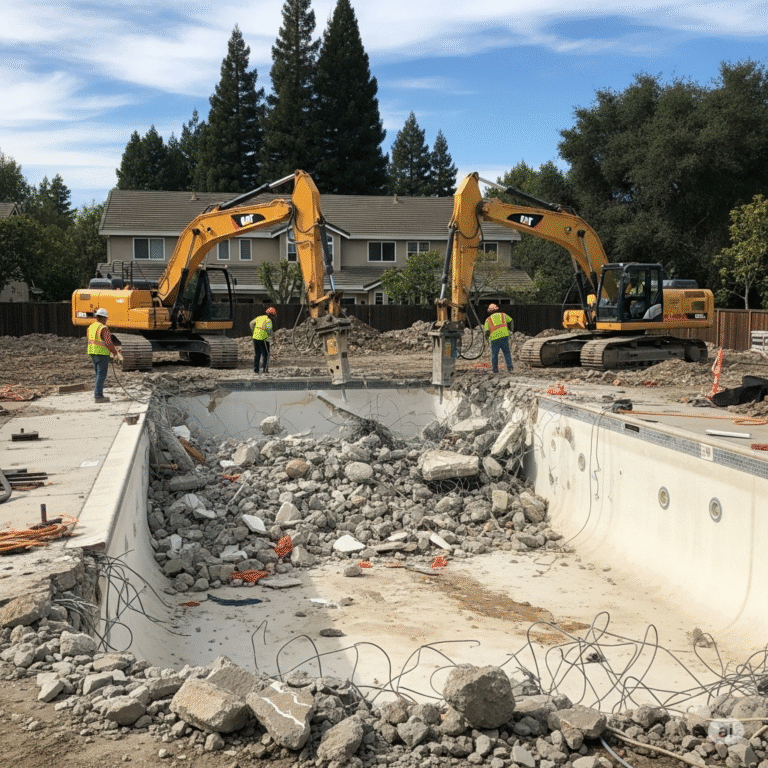
Pool demolition is the process of removing an in-ground or above-ground pool structure so the space can be reclaimed, restored, or reused. There are two common approaches.
Partial removal punctures and drains the pool, then backfills it while some structural material stays underground. Full removal excavates the entire shell, plumbing, and surrounding concrete and hauls it away.
Homeowners across the South Bay area choose between these methods depending on soil conditions, future plans for the space, and local permitting requirements. Companies handling pool demolition San Jose Fremont South Bay projects typically start with a site visit to confirm access, utility locations, and the condition of the existing structure.
This assessment stage matters because every backyard has different drainage patterns, fence lines, and equipment access points. A plan that works well in one neighborhood may not be ideal in another.
Why Pool Removal Matters for Local Homeowners
Local Climate and Soil Considerations
San Jose, Fremont, and the surrounding South Bay communities sit on a mix of clay-heavy and expansive soils. These soils respond differently to moisture than other parts of California.
An abandoned or poorly maintained pool shell can trap water underground and contribute to soil movement. Over time, this can affect nearby foundations or hardscaping.
From neighborhoods near Santana Row and the Rose Garden in San Jose to areas close to Lake Elizabeth and Central Park in Fremont, this concern shows up across the region even when yard layouts vary widely.
Addressing it early is one of the main reasons homeowners request pool demolition San Jose Fremont South Bay assessments before listing a property or starting a landscaping project.
A proper backfill and compaction process reduces the chance of future settling. This is especially important on properties with mature trees, sloped yards, or additions built close to the original pool area.
Property Value and Safety
An unused pool can affect insurance premiums, liability exposure, and how a home shows to potential buyers. Empty or poorly fenced pools are a recognized safety hazard, particularly in neighborhoods with young families.
Removing the structure entirely, or converting it into a safer, code-compliant space, tends to simplify insurance conversations and future renovation plans. This is why pool demolition San Jose Fremont South Bay inquiries often increase before a home goes on the market.
For many South Bay households, this is the practical tipping point that turns a considered project into a scheduled one.
How Pool Demolition Works: Step-by-Step
Site Assessment and Permits
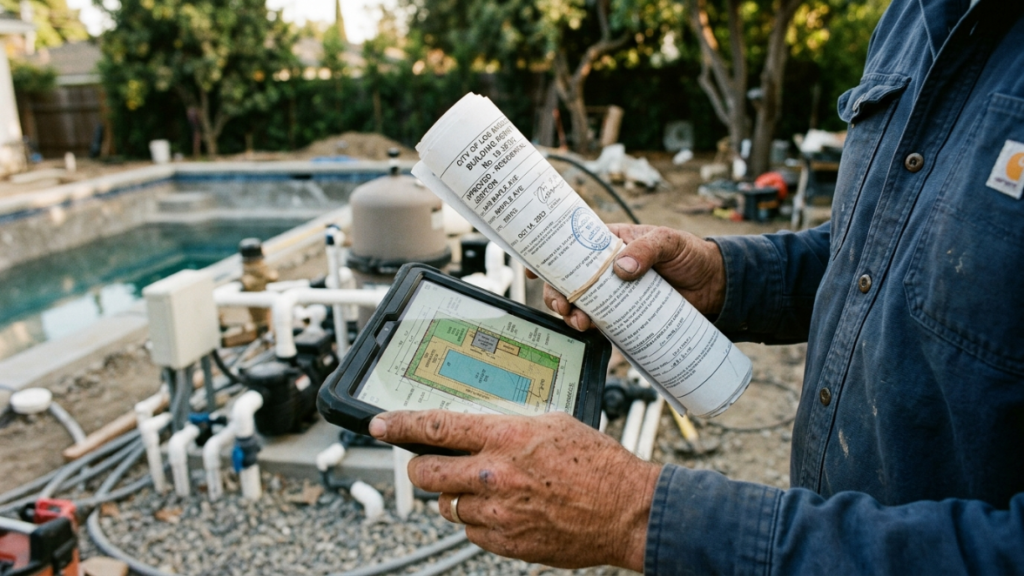
Every legitimate pool removal project begins with a permit application through the relevant city or county building department. San Jose, Fremont, and other South Bay municipalities each have their own submission requirements and inspection schedules.
Working with a team familiar with pool demolition San Jose Fremont South Bay permitting can prevent delays. During this stage, a contractor typically confirms property lines, easements, and any utility lines running near the pool equipment pad.
Homeowners should expect to provide a site plan or survey. In some cases, a soil report is required, especially for larger or older pools with unknown fill history.
Draining and Utility Disconnection
Once permits are approved, the pool is drained in compliance with local water discharge rules. Pool water cannot simply be released into the street or storm drains untreated.
Electrical, gas, and plumbing lines connected to pumps, heaters, and lighting are then safely disconnected and capped. This step protects both the work crew and the property.
Homeowners comparing pool demolition San Jose Fremont South Bay providers should ask specifically how draining and disconnection are documented, since this is one of the details that separates a properly permitted project from an informal, unpermitted removal.
Demolition Method Selection
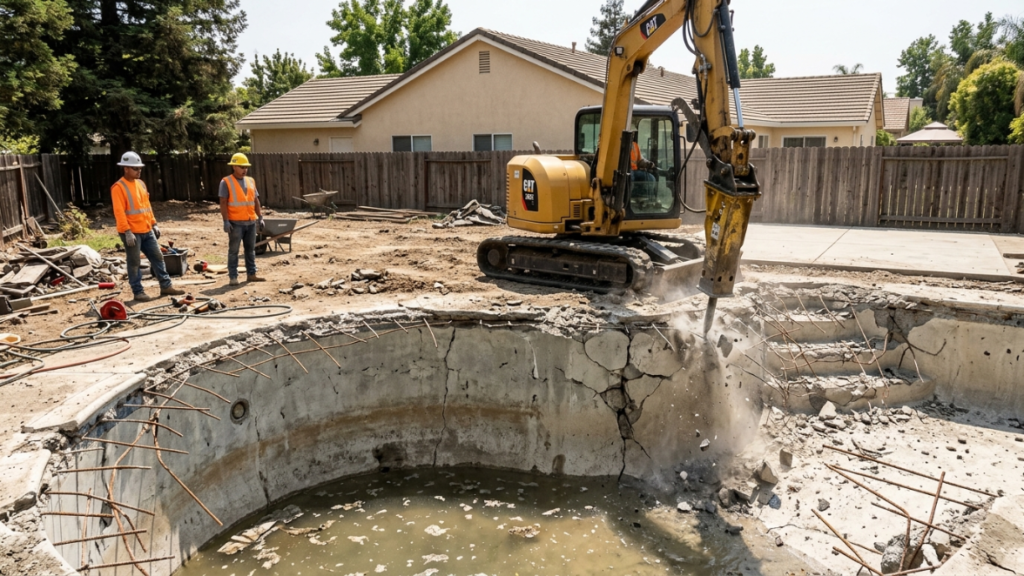
With the site prepared, the crew selects between partial and full demolition based on the assessment findings. Partial removal breaks the top portion of the pool walls and uses the broken material as part of the backfill, which can shorten timelines.
Full removal takes out the entire shell, decking, and any rebar or plumbing, leaving a clean excavation ready for new fill. Neither approach is universally better; the right choice depends on future plans for the yard and local code requirements.
This is one of the most common questions homeowners ask before starting pool demolition San Jose Fremont South Bay projects, since it directly affects what can be built on the site afterward.
Backfilling and Compaction
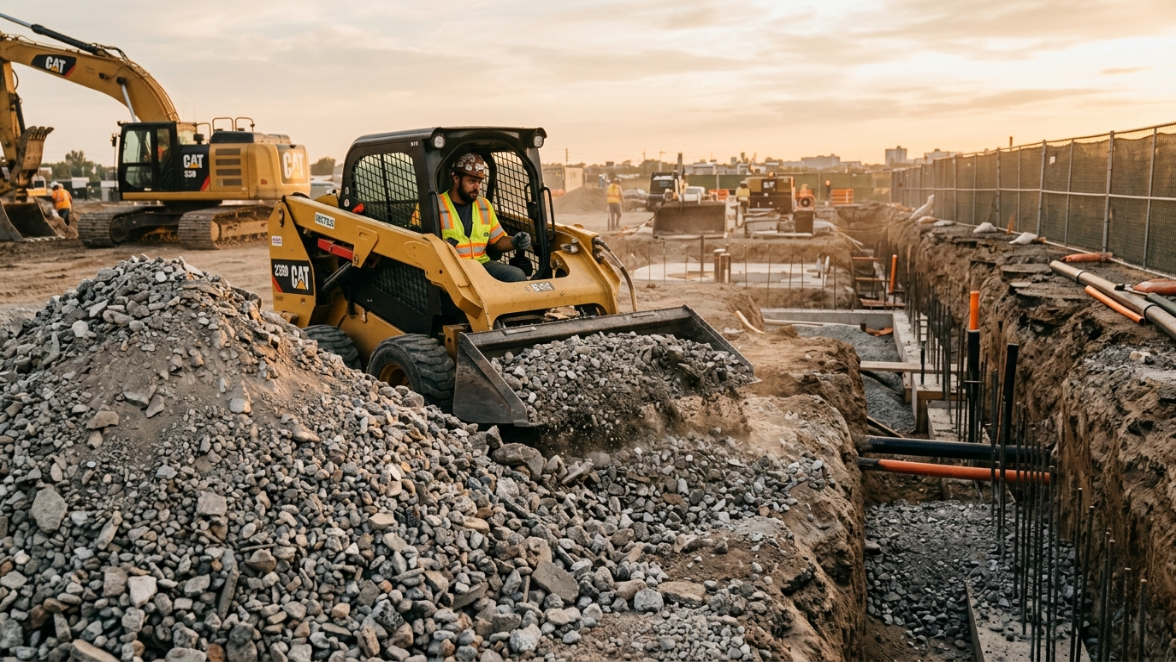
After the shell is broken down or removed, the excavation is backfilled in layers using engineered fill material. Each layer is compacted to reduce future settling.
This step is one of the most important parts of any pool demolition San Jose Fremont South Bay project, since poor compaction is the leading cause of long-term yard problems. A methodical, layer-by-layer approach is a hallmark of a well-run project.
Final Grading and Site Restoration
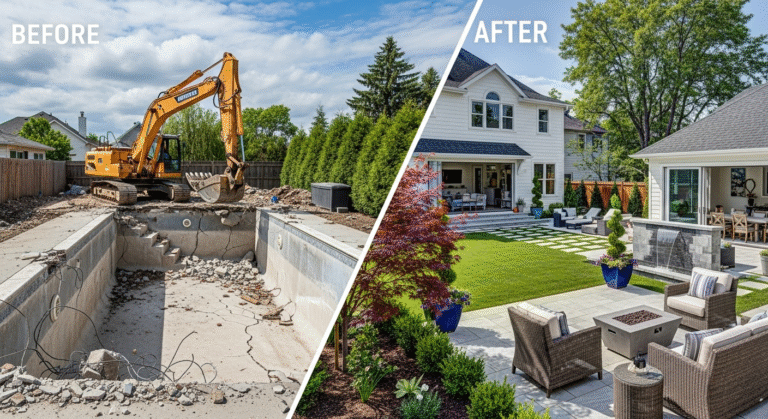
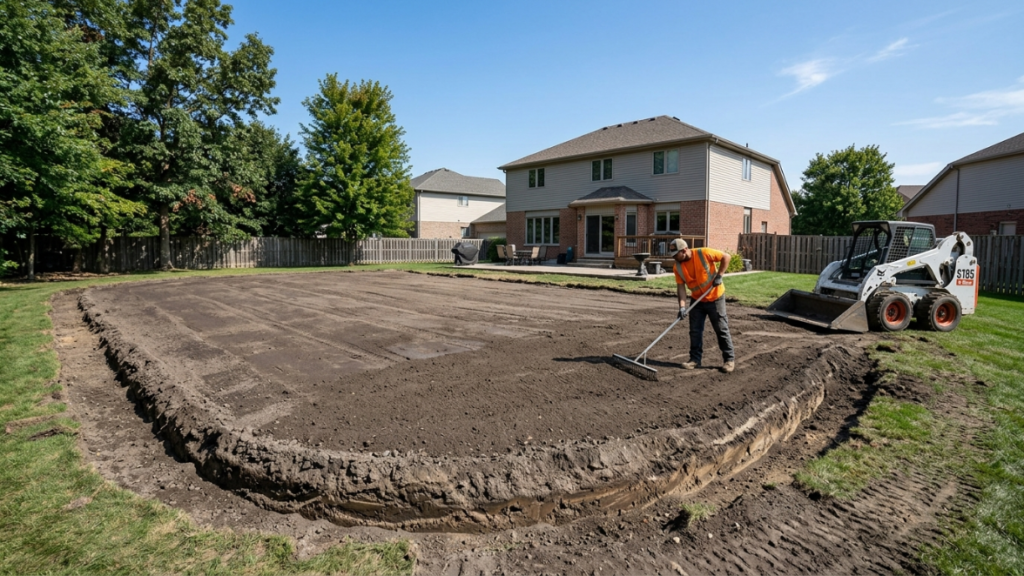
The final stage involves grading the yard for proper drainage and removing debris. The surface is restored with soil, sod, or a base ready for landscaping, pavers, or a future structure.
A clean final walkthrough should confirm that grading directs water away from the home’s foundation. Homeowners closing out pool demolition San Jose Fremont South Bay projects should request photos of this final step for their records.
Partial vs Full Pool Removal: A Quick Comparison
| Factor | Partial Removal | Full Removal |
|---|---|---|
| Structure left underground | Broken walls remain | None remains |
| Typical timeline | Shorter | Longer |
| Best suited for | Simple lawn or garden reuse | Future construction, additions, or a new pool |
| Soil settling risk | Slightly higher if not compacted properly | Lower with proper backfill |
| Permitting complexity | Standard | Standard to more detailed, depending on plans |
Choosing between these two methods is rarely just about the yard itself. Future plans, soil type, and how quickly a property needs to be ready for sale all play a role.
A contractor experienced in pool demolition San Jose Fremont South Bay work can walk through both options against your specific goals rather than defaulting to one method for every property.
Practical Tips Before You Start
- Confirm permit requirements with your city before scheduling any work, since San Jose, Fremont, and neighboring cities each handle submissions differently.
- Ask how utility disconnections will be handled and documented.
- Clarify which backfill material will be used and how compaction will be verified.
- Walk the site with your contractor and mark any irrigation lines or drainage systems near the pool area.
- Ask any pool demolition San Jose Fremont South Bay contractor for a written explanation of both partial and full removal before signing anything.
- Confirm your pool demolition San Jose Fremont South Bay provider will supply final inspection paperwork once the permit is closed.
- Ask for references from recent pool demolition San Jose Fremont South Bay projects completed in your specific city.
- Review platforms such as HomeAdvisor and Angi can be useful when comparing contractor licensing and insurance requirements, while home-improvement communities like Houzz often feature real project photos for inspiration.
Common Mistakes to Avoid
One of the most frequent mistakes homeowners make is skipping the permitting process entirely. Unpermitted work often surfaces during a home inspection or title search later on.
Another common issue is inadequate backfill compaction, which leads to a sunken or uneven yard within a year or two. Choosing a demolition method without considering future plans for the space is also a frequent misstep.
Homeowners researching pool demolition San Jose Fremont South Bay contractors should confirm that utility disconnections are documented and that debris is hauled away properly, rather than left buried on-site. Rushing the site assessment stage is another mistake that tends to surface as unexpected delays once work is already underway.

Local Case Studies: Pool Removal Across San Jose, Fremont and South Bay
Every property tells a slightly different story. A San Jose homeowner preparing to sell an older property recently needed a full removal completed before listing, since the existing pool had structural cracking and no permit history on file.
A Fremont family with young children opted for a straightforward partial removal to reclaim yard space for a play area, prioritizing a faster timeline. Elsewhere in the South Bay, a homeowner planning a backyard addition chose full removal so the excavation could later support a new foundation.
These situations reflect the range of reasons people search for pool demolition San Jose Fremont South Bay services, safety, resale readiness, lifestyle changes, or future construction. They also show why a flexible, assessment-first approach matters more than a one-size-fits-all method.
You can see feedback from homeowners across these projects on Bye Bye Pool’s Google Business Profile and Yelp.
Permits and Regulations in the South Bay Area
Because San Jose, Fremont, and the wider South Bay fall under different city and county jurisdictions, permit timelines and inspection requirements can vary from one address to the next. Most jurisdictions require a final inspection before the permit is closed out.
Some cities also require a licensed engineer’s sign-off for larger pools or properties with known soil issues. Contractors experienced with pool demolition San Jose Fremont South Bay permitting typically manage this coordination directly with the local building department.
It is worth asking any contractor upfront which permits they will pull and how they document final inspection sign-off, since this paperwork often matters later during a home sale or refinance.
Environmentally Responsible Pool Removal
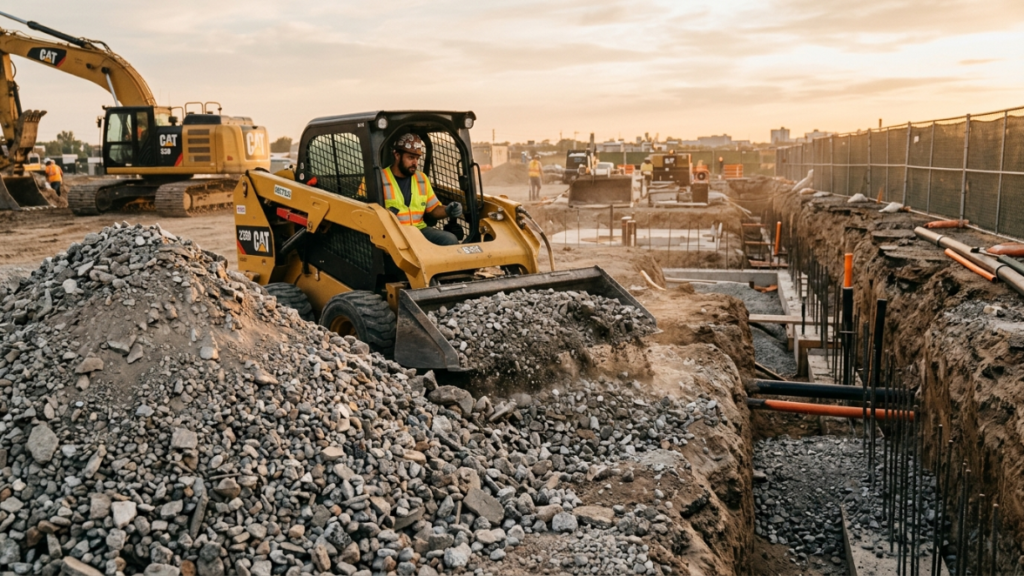
Pool removal generates a meaningful amount of concrete, rebar, and plumbing waste. How that material is handled matters both for the environment and for local disposal regulations.
Concrete debris can often be crushed and reused as backfill material rather than hauled to a landfill, reducing both waste and truck traffic. Proper water discharge during draining and responsible disposal of equipment are all part of a well-run project.
Homeowners interested in pool demolition San Jose Fremont South Bay solutions that minimize environmental impact should ask directly how debris and drained water will be handled before work begins.
People Also Ask
People searching for pool demolition San Jose Fremont South Bay often have a few recurring questions before they commit to a project:
- How long does it take to remove a pool?
- Do I need a permit to remove a pool in California?
- What happens to the concrete from a demolished pool?
- Can I build on top of a filled-in pool site?
Frequently Asked Questions
Here are the questions homeowners ask most often before booking pool demolition San Jose Fremont South Bay services.
How long does pool demolition take?
Timelines vary depending on pool size, access, and whether partial or full removal is selected. Most residential projects move from permit approval to final grading within days to a couple of weeks once work begins.
Do I need a permit for pool removal in San Jose or Fremont?
Yes. Nearly every city in the South Bay area requires a permit for pool demolition, along with a final inspection confirming proper backfill and compaction.
What is the difference between partial and full pool removal?
Partial removal leaves broken pool walls underground as part of the backfill. Full removal excavates the entire shell, plumbing, and surrounding concrete, leaving a clean site.
Is pool removal necessary before selling a home?
It isn’t always required, but an unpermitted or deteriorating pool can complicate a home inspection or appraisal. Many homeowners choose pool demolition San Jose Fremont South Bay services specifically to simplify the sale process.
How do I choose the right pool demolition San Jose Fremont South Bay contractor?
Look for a licensed, insured contractor who handles the permit process directly, explains both partial and full removal options clearly, and can document final inspection sign-off.
Can the space be reused for landscaping or a new structure right away?
Once backfill and compaction are complete, most yards need a short settling period before major landscaping or construction begins, though light landscaping can typically start sooner.
Conclusion
Removing an old, unused, or damaged pool is rarely just about the hole in the yard. It involves permits, utility work, soil considerations, and a plan for what comes next.
Understanding each stage, from the initial site assessment to final grading, makes it far easier to choose the right method and the right team for your property.
Whether you are addressing a safety concern, preparing a home for sale, or planning a full backyard renovation, working through pool demolition San Jose Fremont South Bay projects with a permitted, experienced team helps avoid the common mistakes outlined above.
Bye Bye Pool serves homeowners throughout the region and can walk you through a site assessment, permitting, and the demolition method that best fits your goals.
Visit the areas we serve page to see current service locations, or explore the FAQ page for more detail on the process. Learn more about the team on the about page and see the full scope of services on the pool removal services page.
A nearby service area is also covered in detail on the Concord pool demolition page. Follow project updates and before-and-after photos on Facebook and Instagram.
Reach out through the contact page to schedule a site visit. For details on data handling, see the privacy policy and terms and conditions.
Bye Bye Pool provides pool demolition San Jose Fremont South Bay services with licensed, insured crews. 4918 Clayton Rd, Concord, CA 94521, United States | +1 (925) 940-9978 | byebyepool.com@gmail.com | Hours: Monday-Friday 9 AM-5 PM, Saturday 9 AM-2 PM, Sunday closed.