What Happens to the Plumbing and Electrical After Pool Removal?
If you’re planning a pool demolition in Concord, one question comes up again and again: plumbing electrical after pool removal what happens once the water is gone and the equipment is disconnected?
Understanding plumbing electrical after pool removal what happens is essential before any excavation begins. A rushed job can leave dangerous live wires or open pipes buried under your new yard.
In this guide, Bye Bye Pool walks you through exactly what our Concord crew does with every line, wire, and connection. Continue reading to find out how the process works from start to finish.
Getting plumbing electrical after pool removal what happens right from day one saves homeowners time, money in repairs, and stress later on.
Plumbing Electrical After Pool Removal What Happens: An Overview
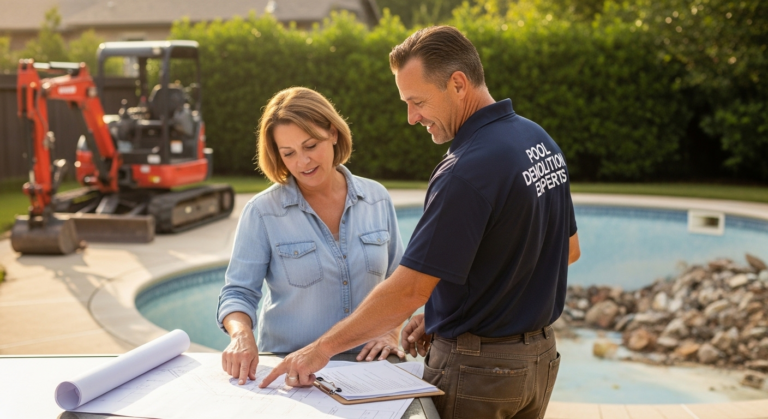
Before any bobcat touches the concrete, our team maps out every utility connected to the pool. Plumbing electrical after pool removal what happens starts with a full inspection of the plumbing lines, the electrical conduit for pumps and lights, and any gas lines feeding a heater.
Each of these systems has to be located, shut off at the source, and either capped or removed. This depends on whether the homeowner wants to reuse any part of the system later, for example to feed a future hot tub or garden irrigation line.
This upfront mapping is really the foundation of plumbing electrical after pool removal what happens on every single project we take on in Concord.
Why Plumbing Electrical After Pool Removal What Happens Matters for Safety
Skipping this step is one of the most common and costly mistakes in a demolition project. If plumbing electrical after pool removal what happens is handled poorly, homeowners can end up with corroded pipes leaching into the soil, or worse, a live wire that was never properly disconnected.
Our team follows Contra Costa County guidelines and coordinates with the utility companies serving the Concord area. This makes sure every line is confirmed dead before the pool shell is broken apart.
The Plumbing Side: Capping, Draining, and Rerouting
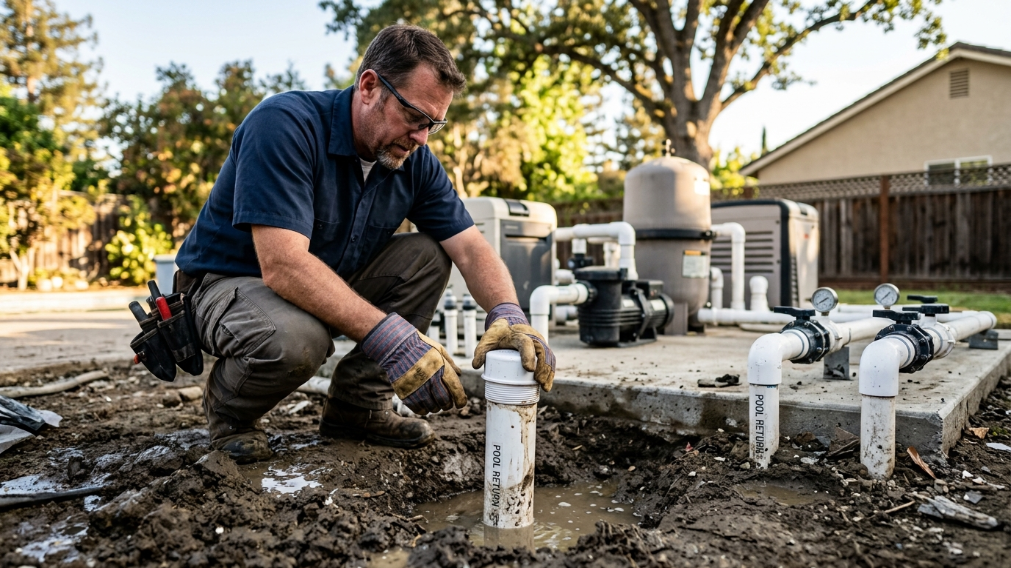
The plumbing system of an in-ground pool typically includes the skimmer lines, main drain, return lines, and sometimes a separate line for an attached spa. Our licensed team traces each pipe back to its origin, whether that’s the pool equipment pad or a connection buried near the patio.
Once located, lines are drained completely, then capped with a proper fitting rated for permanent burial. This step of plumbing electrical after pool removal what happens is what keeps groundwater from seeping into old pipe runs and causing settling issues in your new lawn or patio years down the road.
Proper draining also prevents standing water from becoming a breeding ground for pests before the yard is backfilled.
What Happens to the Pool Equipment Pad Plumbing
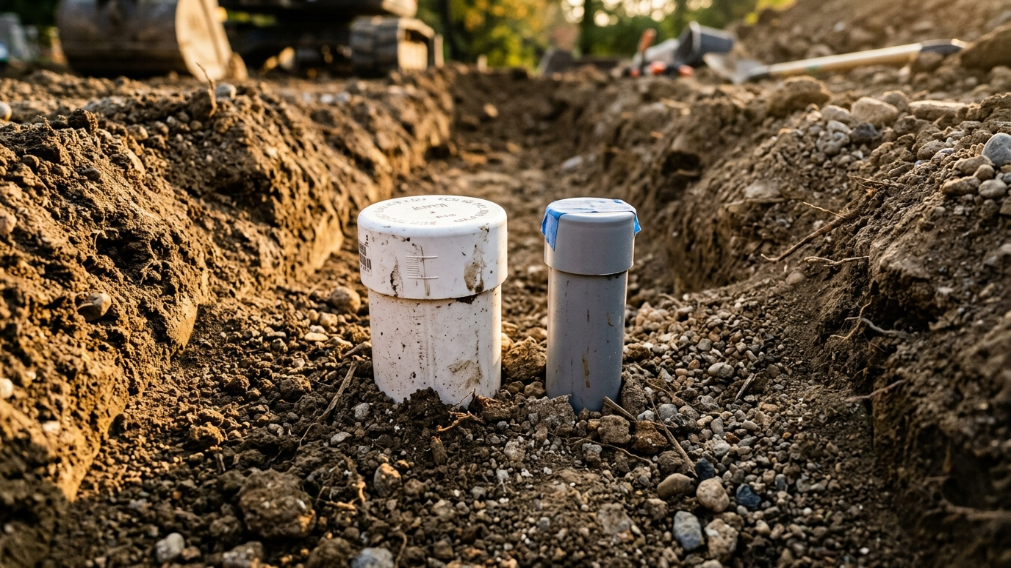
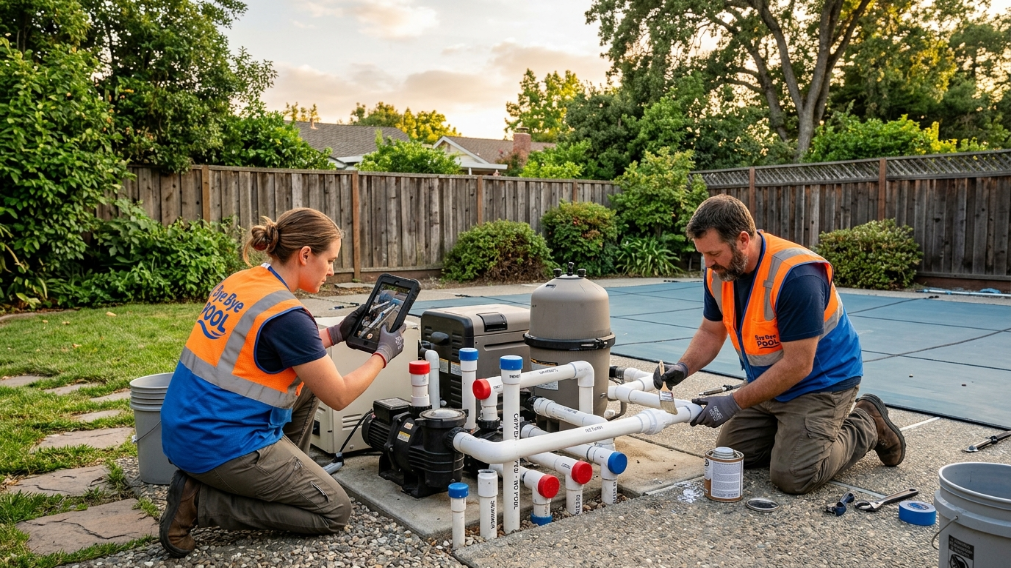
The equipment pad is where the filter, pump, and heater plumbing all converge. During removal, our crew disconnects the pump and filter, then caps the remaining stub pipes below grade so nothing is left exposed.
This equipment pad work is one of the trickiest parts of plumbing electrical after pool removal what happens, since multiple lines often converge in a very tight space.
Homeowners in areas like the Todos Santos Plaza neighborhood of Concord often ask whether these lines can be reused for a future feature. In many cases, a capped line can be reopened later by a licensed plumber if the layout allows it.
That flexibility is one more reason careful plumbing electrical after pool removal what happens work pays off for years to come.
The Electrical Side: Disconnecting Pumps, Lights, and Heaters
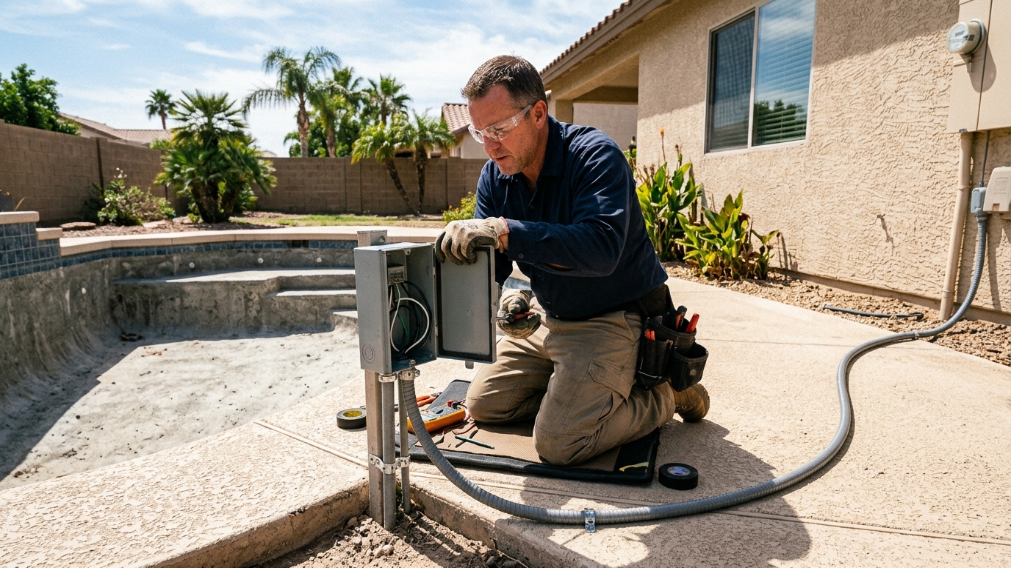
Pool electrical systems typically run on a dedicated circuit from the home’s main panel, powering the pump motor, underwater lights, and sometimes a salt chlorine generator. A key part of plumbing electrical after pool removal what happens is having a licensed electrician trace that circuit back to the panel.
The electrician confirms it’s de-energized, then either removes the wiring entirely or caps it safely in a junction box that meets code. Bonding wire, which connects metal components around the pool for safety, also needs to be properly cut and capped rather than left loose in the soil.
Getting this detail right is a core part of plumbing electrical after pool removal what happens that many homeowners never even see.
Common Mistakes That Affect Plumbing Electrical After Pool Removal What Happens
One of the most frequent errors we see from other contractors is leaving conduit in the ground without capping the open end. This allows water and debris to fill the pipe over time.
Another mistake is cutting wiring without confirming it’s fully de-energized first, which is both a safety hazard and a code violation. A third issue is failing to document where lines were capped, leaving future homeowners guessing if they ever want to landscape or build over that same area.
Avoiding these errors is central to doing plumbing electrical after pool removal what happens correctly the first time. We’ve corrected enough shortcuts from other crews to know that cutting corners here almost always costs homeowners more down the line.
| Warning Sign | What It Usually Means |
|---|---|
| Damp or soft soil near old equipment pad | Line may have been capped improperly or not drained |
| Flickering circuit elsewhere in the home | Old pool circuit may not have been fully isolated |
| No documentation from previous contractor | Line locations unknown, risky for future digging |
| Visible conduit or pipe stub above grade | Capping was left incomplete before backfill |
Step-by-Step: How Our Concord Team Handles Every Line
Our process for plumbing electrical after pool removal what happens follows a consistent sequence on every job. Anyone comparing quotes should ask each contractor to walk through plumbing electrical after pool removal what happens step by step before signing anything.
- We locate and mark every plumbing and electrical line connected to the pool and equipment pad.
- We coordinate with the utility provider to confirm power is shut off at the source.
- Our licensed plumber drains and caps all pipe runs below the frost line and code-required depth.
- Our electrician disconnects and safely caps or removes wiring and bonding connections.
- We photograph and document each capped line for the homeowner’s records.
- We backfill only after every line has been verified safe and sealed.
This six-step approach is exactly how plumbing electrical after pool removal what happens should be managed on any residential property.
How Long Does This Part of the Project Take?
Most homes in Concord and the surrounding Contra Costa County area see this portion of the work completed within a single day. Larger properties with multiple pool features like an attached spa or waterfall may take a bit longer.
Because plumbing electrical after pool removal what happens is foundational to the rest of the demolition, our crew never rushes this stage even when the schedule is tight.
Local Factors That Influence Plumbing Electrical After Pool Removal What Happens in Concord
Homes near Todos Santos Plaza and throughout Concord often have older plumbing and electrical infrastructure, especially in properties built before modern bonding and grounding codes were standard. This means our team sometimes finds unexpected wiring configurations or older galvanized pipe that needs extra care during capping.
Understanding these local quirks is part of why plumbing electrical after pool removal what happens looks a little different from one Bay Area neighborhood to the next. Crews unfamiliar with older Concord neighborhoods sometimes miss these details entirely.
Permits and Inspections
Depending on the scope of work, Contra Costa County may require a permit for the plumbing and electrical disconnection portion of a pool removal. Bye Bye Pool handles this coordination directly, scheduling any required inspections so that plumbing electrical after pool removal what happens is fully documented and approved before backfilling begins.
This protects homeowners if they sell the property or pull permits for future construction. Skipping inspections is a shortcut that can come back to haunt homeowners when it’s time to sell, which is exactly why we treat plumbing electrical after pool removal what happens as a documented, permitted process.
What Homeowners Can Do With Capped Lines Later
Many Concord homeowners ask whether capped plumbing and electrical lines can be reactivated for a future project, such as an outdoor kitchen, a smaller plunge pool, or garden irrigation. In most cases, yes.
Because our team documents exactly where and how each line was capped, a licensed plumber or electrician can locate and reopen those connections later without excavating the entire yard. This is one of the most overlooked benefits of doing plumbing electrical after pool removal what happens correctly the first time.
Frequently Asked Questions About Plumbing Electrical After Pool Removal What Happens
Do all pool removal companies handle plumbing and electrical disconnection?
No. Some companies focus only on breaking up the concrete shell and skip proper plumbing and electrical work entirely, which can leave hazards behind.
Is a permit always required for this part of the job?
It depends on the scope of the project and current Contra Costa County requirements.
Can I keep some of the plumbing for a future hot tub or water feature?
Often yes, as long as the lines are properly capped and documented.
What happens if wiring isn’t properly capped?
Exposed or improperly capped wiring left in the soil can become a serious safety hazard for anyone digging or landscaping in that area later. This is why plumbing electrical after pool removal what happens should always be handled by licensed professionals.
How do I know if my contractor is handling this correctly?
Ask directly whether plumbing electrical after pool removal what happens is included in the scope of work, and request photo documentation of every capped line before backfilling starts.
Does Bye Bye Pool handle both the plumbing and electrical work directly?
Our team coordinates licensed plumbers and electricians as part of every pool demolition project in Concord.

Why Concord Homeowners Trust Bye Bye Pool With This Process
Reviews from our customers on Google and Yelp frequently mention how thoroughly our crew addresses plumbing electrical after pool removal what happens before any backfilling starts. This gives homeowners peace of mind long after the job is finished.
Homeowners tell us this attention to detail is exactly what they hoped for when researching plumbing electrical after pool removal what happens ahead of hiring a contractor. You can read more about our approach on our about page, or browse the areas we serve to see if we cover your neighborhood.
If you’re specifically researching pool demolition in Concord, our dedicated page walks through the full process from start to finish. You can also follow the crew’s day-to-day work on Facebook and Instagram.
For homeowners comparing contractors, resources from HomeAdvisor and Angi can help you understand general licensing standards for plumbing and electrical work in your state. Houzz offers inspiration for what to do with your yard once the pool is gone.
Whichever contractor you choose, make sure plumbing electrical after pool removal what happens is spelled out clearly in your written scope of work.
Ready to Get Started?
If you’re planning a pool removal in Concord and want a team that treats plumbing electrical after pool removal what happens as a top priority, reach out to Bye Bye Pool today.
Visit our contact page to schedule a site visit, or give us a call directly to talk through your property’s specific plumbing and electrical setup. Our team is ready to walk you through exactly how plumbing electrical after pool removal what happens on your property, from the first inspection to the final backfill.
Bye Bye Pool — 4918 Clayton Rd, Concord, CA 94521, United States | +1 925-940-9978 | byebyepool.com@gmail.com | Monday–Friday 9 AM–5 PM, Saturday 9 AM–2 PM, Closed Sunday. See our FAQ, terms, and privacy policy for more.