How to Drain a Pool in Contra Costa & Alameda County (Without Getting Fined)
In this guide
- The short answer
- Why this is harder than it looks
- Can you drain a pool into the street or a storm drain?
- How to drain a pool the right way in Contra Costa and Alameda County
- The problem nobody mentions: an empty pool can be damaged
- Where should the water go? A quick decision guide
- When to drain it yourself and when to call a pro
- A typical project: draining before a pool removal
- Frequently asked questions
- Before you open a valve, make one call
Direct Answer: To learn how to drain a pool the right way in Contra Costa or Alameda County, keep the water out of the street and storm drains, send it to a sanitary sewer cleanout only with your sewer district’s approval, and confirm local rules first.
Why Draining a Pool Is Harder Than It Looks
Anyone searching for how to drain a pool hears two things: it takes a pump and a hose, and it is easy to get wrong. Both are true. In the East Bay, the water itself is regulated, and the pool shell can be hurt if the water leaves at the wrong time.
Terms like “pool pop,” “sanitary sewer cleanout,” and “dechlorination” get tossed around a lot, and they confuse people fast. We explain each one in plain language below, because mixing them up is how a simple chore turns into a citation or a cracked shell.
This guide shows how to drain a pool legally and safely, with three focus points: where pool water is allowed to go, why a full drain can damage your pool, and when it makes sense to call a professional or think about removal or fill-in. One honest note first. Rules change from city to city and from sewer district to sewer district, so treat this as orientation, not a guarantee. Your local agency always has the final word.
Thinking about getting rid of the pool instead of fixing it? Contact our team and we will talk through how the water fits into your project.
Can You Drain a Pool Into the Street or a Storm Drain?
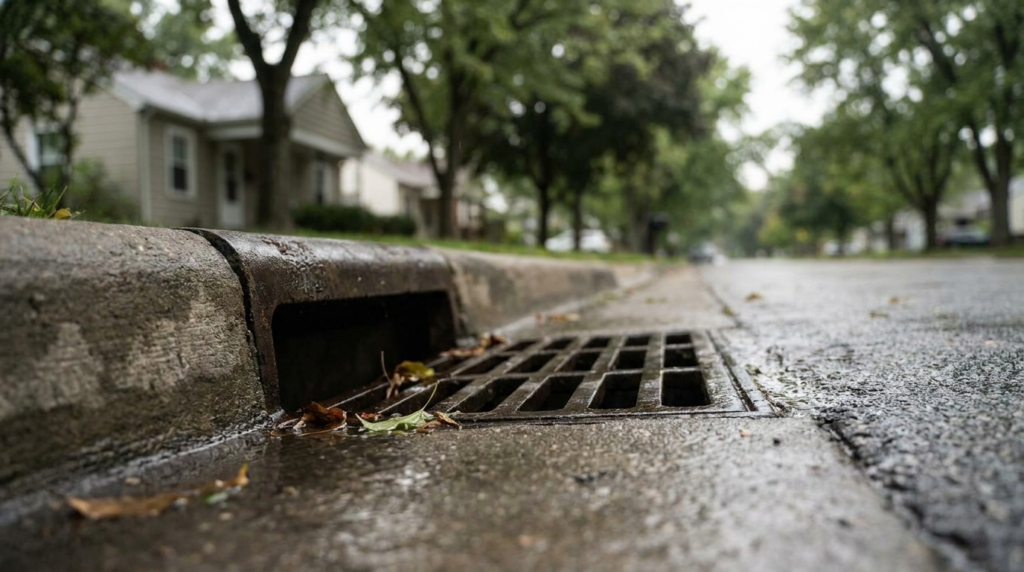
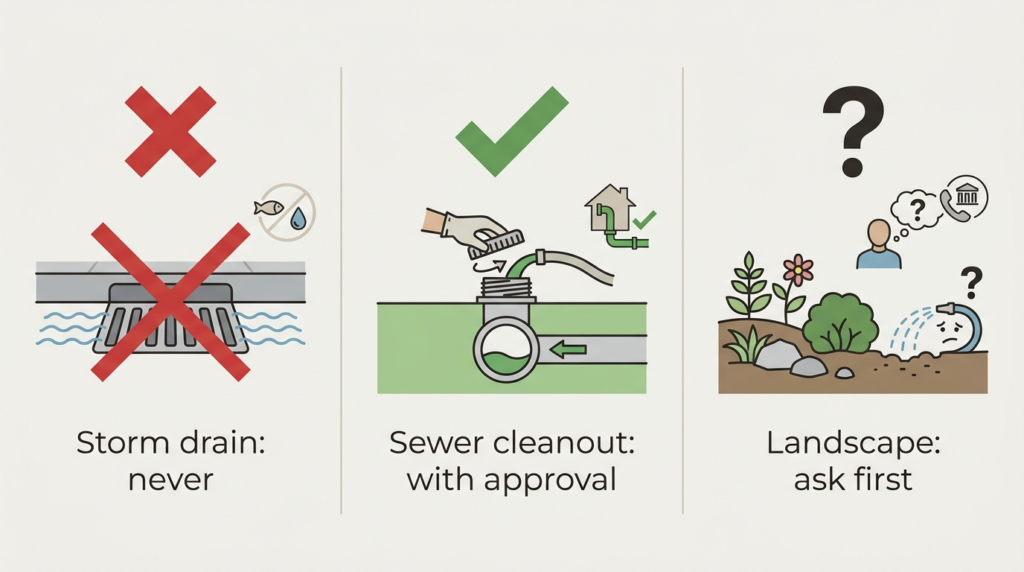
No. In both counties, pool, spa, and fountain water is not supposed to go into the street, the gutter, or a storm drain.
Storm drains do not lead to a treatment plant. They run to local creeks and the San Francisco Bay. Pool water can carry residual chlorine, copper from algaecide, and filter solids, all of which harm fish and plants. The City of Alameda’s clean water materials describe draining to the street or storm drain as illegal. Contra Costa’s program says the same, and its permit information states that pool discharges no longer belong in the storm drain system.
Contra Costa’s program materials also warn that noncompliance can lead to administrative citations and fines that keep accruing daily. We cannot promise that following a blog post will keep you clear of a fine. What we can do is show you how to drain a pool using the official steps below, which are the ones the agencies themselves recommend.
How to Drain a Pool the Right Way in Contra Costa and Alameda County
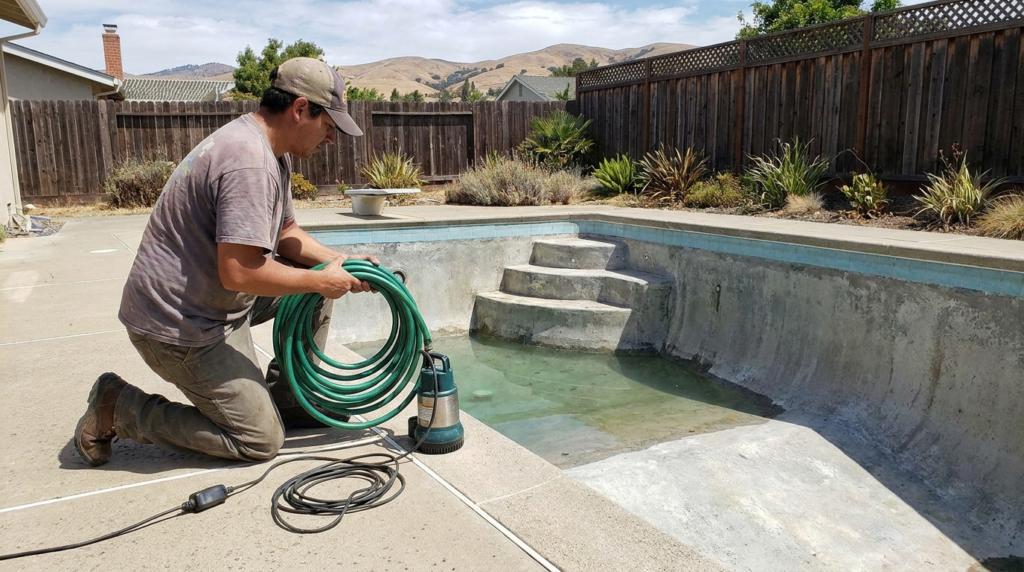
Learning how to drain a pool correctly comes down to five rules, and the first one is a phone call. Each rule below comes from the public guidance of the Contra Costa Clean Water Program, the Alameda County and City of Alameda clean water programs, and local sanitary districts.
Rule 1: Contact your sewer district before anything else
The agencies point pool water to the sanitary sewer, and they want approval first. Contra Costa’s guidance says to use a sanitary sewer cleanout only with approval from your local sanitary district. Central Contra Costa Sanitary District, for example, requires a discharge permit and asks for roughly two days’ notice, along with details such as where the water will go and what is in it.
In Alameda County, the City of Alameda’s sheet says that draining to a sewer cleanout needs EBMUD approval. Other Alameda County providers listed in the program materials include Union Sanitary District, Oro Loma Sanitary District, and Castro Valley Sanitary District. Not sure who serves your address? Check your sewer bill or ask your city.
While you have them on the line, ask whether you must dechlorinate or wait a set time before draining. The public brochures do not give a universal answer, so do not guess.
Rule 2: Find your sanitary sewer cleanout
A sanitary sewer cleanout is the access point to your home’s sewer line. Look for a small circular cap on a pipe, often with a raised square or mushroom-shaped cone, sticking out of the ground or the side of the house. You may also find a concrete or metal cover marked “SEWER,” “C.O.,” or “S.” Cleanouts often sit near bathroom or kitchen walls.
If you cannot find it, call your sewer district. Guessing at a pipe in the yard is not a plan.
Rule 3: Drain into the cleanout the careful way
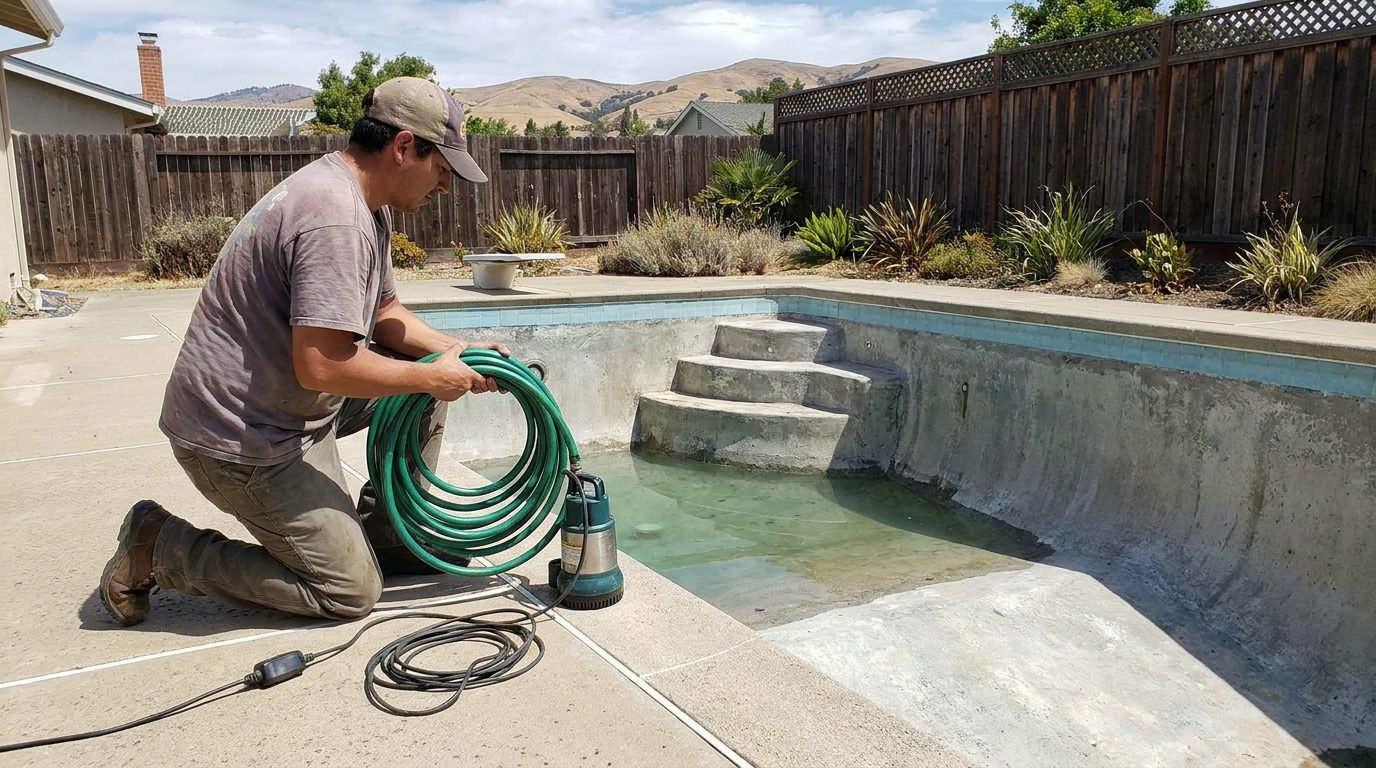
Once approved, this is how to drain a pool into a cleanout: remove the cap and place the hose in the pipe. Keep the end of the hose from touching the bottom of the pipe, because contact can cause backflow. Districts ask for the call first partly because too much water too fast can overload a sewer line.
Rule 4: Ask whether landscape discharge is allowed
Contra Costa’s permit information lists discharge to landscape as an option, and Alameda’s sheet describes a landscaped area for discharging pool water. Whether your water qualifies depends on what is in it, especially chlorine and copper algaecide. Ask your agency before you point a hose at the lawn.
Rule 5: Keep filter cleaning out of the street
Never rinse a filter in the street, gutter, or storm drain. Rinse cartridges over landscaped areas where you can. For sand or diatomaceous earth (DE) filters, the guidance says to ask your sewer district, and Central San states that DE material cannot be dumped into the sanitary sewer.
The Problem Nobody Mentions: an Empty Pool Can Be Damaged
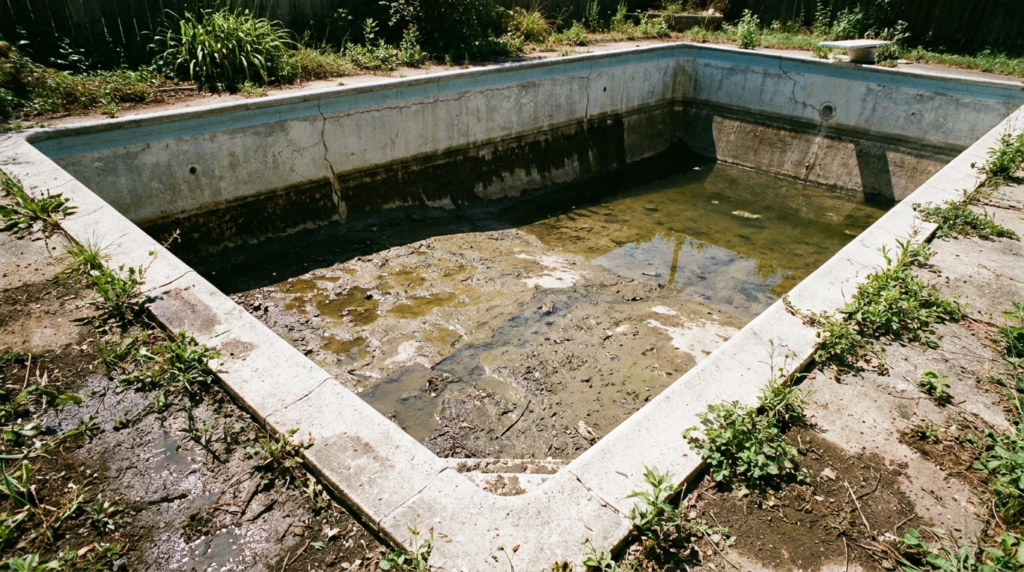
Emptying a pool completely can damage the pool itself. Groundwater can press against the shell from below and from the sides. With the water gone, nothing balances that pressure, and a shell can crack or even lift. People in the trade call it pool pop.
The risk goes up when the soil is saturated, which is why guides often warn against draining during or right after heavy rain. A wet Bay Area winter changes how to drain a pool safely compared with a dry September. Different pool types also react differently to being emptied, and the Contra Costa brochure itself says to consult a pool professional before draining.
Here is how people reduce the risk:
- Ask a pool professional what the soil and groundwater around your pool are likely to do.
- Avoid draining during or right after heavy rain.
- Do not leave a drained pool sitting empty longer than the job requires.
- Ask whether your pool has any built-in way to relieve groundwater pressure.
- Never leave a draining pool unattended.
One question worth asking any contractor: “What is your plan if the shell starts to move?” A good answer is specific. A vague answer tells you what you need to know.
Where Should the Water Go? A Quick Decision Guide
Where the water goes decides whether your plan for how to drain a pool is legal, so compare the options before you start. The table summarizes what local programs say, and the bullets after it flag the mistakes we hear about most.
| Destination | What local programs say | Common mistake |
|---|---|---|
| Street, gutter, or storm drain | Not allowed. Water flows untreated to creeks and the Bay. | Thinking a short hose to the curb is harmless. |
| Sanitary sewer cleanout | The recommended option, with approval from your sewer district. | Skipping the call or letting the hose touch the pipe bottom. |
| Landscaped area | Listed as an option, depending on water quality and local rules. | Flooding the yard with chlorinated or copper-treated water. |
| Any other drain | Unknown until your agency confirms. | Assuming a floor drain or indoor drain is the same as a cleanout. |
- Storm drain: The most common error is also the most serious. If a drain sits at the curb, it is almost certainly a storm drain.
- Sanitary sewer cleanout: The usual error is assuming approval is optional. Ask first.
- Landscape discharge: The usual error is draining too much water too fast onto one area, so the runoff ends up in the street anyway.
Pool drained and ready for the next step? Reach out to us and we will explain what happens next, from fill-in to full removal.
When Should You Drain It Yourself, and When Should You Call a Pro?
You can reasonably handle a drain yourself only when several things line up. Your sewer district has approved the plan, you know exactly where your cleanout is, the ground is dry, and a pool professional has told you a drain is safe for your pool type. That is a lot of conditions, and many homeowners will not meet all of them.
Call a professional before you try how to drain a pool when any of these apply:
- The ground is wet, or the rainy season is close.
- You cannot find your cleanout or cannot confirm who serves your address.
- The pool has visible cracks or leaks that suggest soil movement.
- You are unsure how your pool type will react to being emptied.
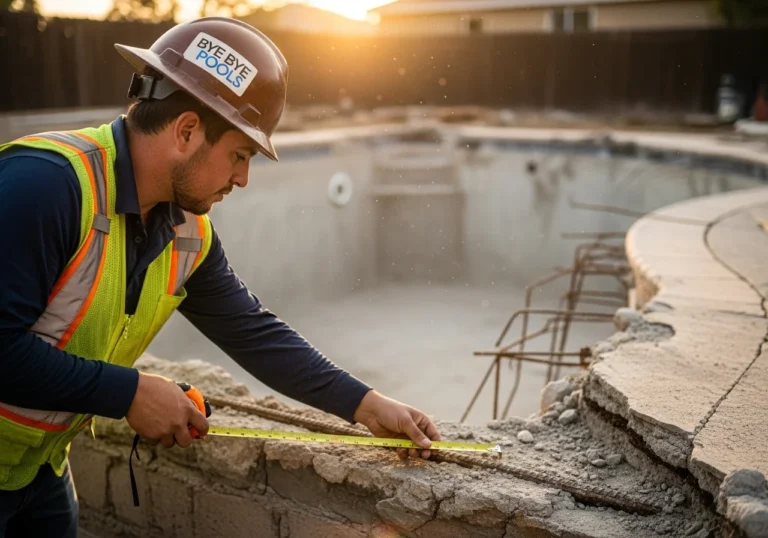
The decision about how to drain a pool changes if the pool is not staying. A Concord homeowner who is done with an aging pool is solving a different problem than someone in Alameda who only needs a liner repair. Repair means draining carefully. Removal means planning the water as part of a bigger job. Our guide on pool fill-in services in California explains how fill-in compares with full removal, and the two are not the same service.
Draining is also the wrong move when the pool simply needs cleaning. A well-maintained pool reduces the need to drain at all, according to the Alameda and Contra Costa guidance. Regular cleaning, balanced chemistry, and working filtration take far less effort than emptying a shell.
A Typical Project: Draining Before a Pool Removal
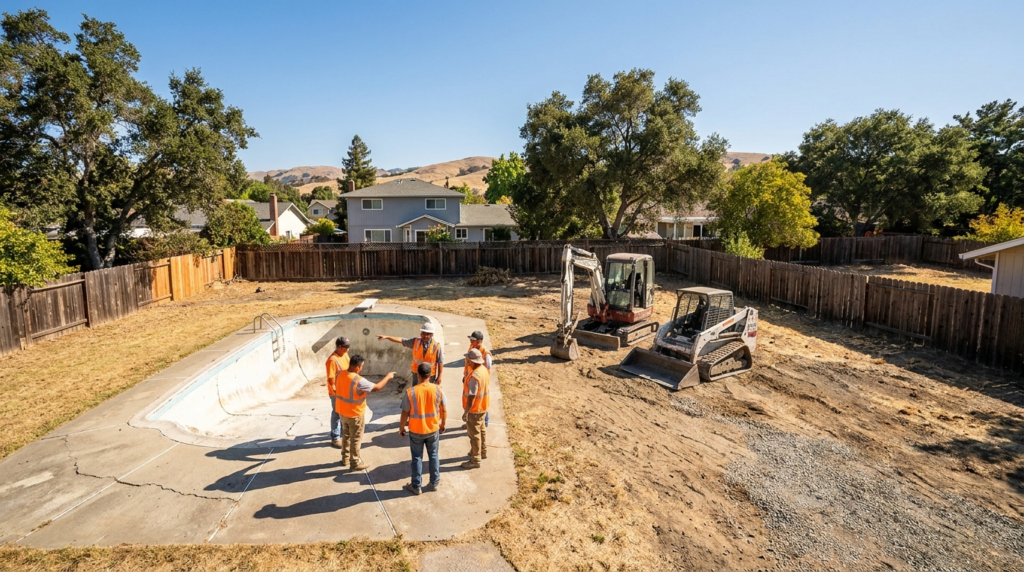
This is a general scenario, not a specific client. Picture a Walnut Creek homeowner with an older concrete pool that no longer gets used. The family decides to remove it, and the first question is how to drain a pool without creating a drainage problem.
They call their sewer district, confirm the cleanout location, and ask about timing and any chlorine requirements. The district gives approval and instructions. They also learn that the pool should not be emptied during a rainy stretch, so the schedule shifts to a dry week.
Settling the water question first keeps the rest of a removal project on track. Demolition and fill-in cannot start until the pool is safely handled, and a drain that goes wrong delays everything after it. If you are in a similar situation in Contra Costa County or Alameda County, we are glad to talk through the order of operations.
Frequently Asked Questions
Is draining a pool the same as removing it?
No. Draining only removes the water, and the pool shell and equipment stay in place. Removal and fill-in are separate projects that deal with the structure itself. If you plan to remove the pool, the drain becomes one step inside a larger plan, which is why it helps to talk to a removal company before you pull a plug.
Can I drain my pool onto the street, a storm drain, or my lawn?
Not onto the street or into a storm drain. Local clean water programs in both counties prohibit it. A landscaped area is listed as an option in some official guidance, but only if the water quality and local rules allow it. Ask your sewer district or city before you try, because the answer depends on chlorine and algaecide levels.
How often should a pool be fully drained?
Less often than most people think. Official guidance says a well-maintained pool reduces the need to drain, and regular cleaning and filtration do much of the work. A full drain is usually a response to a specific need such as a repair, not a routine task. If you are unsure, ask a pool professional what your pool actually needs.
Why can an empty pool crack or lift out of the ground?
Groundwater pushes against the shell, and the weight of the water normally holds the pool in place. When the water is removed, that balance is gone. Saturated soil after rain makes the pressure worse. Ask a professional about your pool type and local soil conditions before emptying it completely.
How much does it cost to drain a pool?
It depends on several factors rather than one fixed number. Pool size, where the water will go, access to a cleanout, local district requirements, and whether you need a professional all shape the effort involved. Draining as part of a removal project is also handled differently than draining for maintenance. Contact us to talk through your situation.
What should I ask before I start draining?
- Who is my sewer provider, and do I need approval or a permit?
- Do I need to dechlorinate or wait after stopping chlorine?
- Where exactly is my sanitary sewer cleanout?
- Is landscape discharge allowed for my water?
- What are the groundwater and soil risks to my pool?
- What is the plan if the pool starts to move?
Write the answers down before you start. They also help any contractor you hire.
Before You Open a Valve, Make One Call
Knowing how to drain a pool in Contra Costa and Alameda County comes down to a short list. Keep the water out of the street and storm drains, get approval for the sewer, find your cleanout, and check the groundwater risk with someone who knows your pool. Skipping any of those is how a one-day chore becomes a problem.
If the pool is coming out, we can help you plan the whole project. Get in touch with Bye Bye Pool to start the conversation. You can also see what other homeowners say about working with us on our Yelp page, follow recent jobs on Facebook, or browse photos on Instagram.
Bye Bye Pool
4918 Clayton Rd, Concord, CA 94521
Phone: +1 925-940-9978
Hours: Mon to Fri 7:30 AM to 5:00 PM, Sat 7:30 AM to 12:00 PM, Sun closed